As global taste tests crown familiar names, Africa’s ginger beer market is quietly writing its own story, one worth billions.
A 12-brand taste test by Food & Wine this week crowned a household name as the best ginger beer, citing bold ginger heat, balanced sweetness, and bubbles that hold up past the first sip. For much of the Western world, the ranking settled a bar-cart debate. For Africa, it barely scratches the surface of a far older, far fiercer obsession with the spicy brew.
Brewed ginger beer originated in Yorkshire, England in the mid-18th century, and as it spread throughout Britain, its colonies carried it, including to South Africa, Ireland, the United States, and Canada, reaching a peak of popularity in the early 20th century. But on this continent, centuries of cultural layering have made it entirely African in identity.
“It’s not just sugar and ginger root. It’s a cultural handshake.”
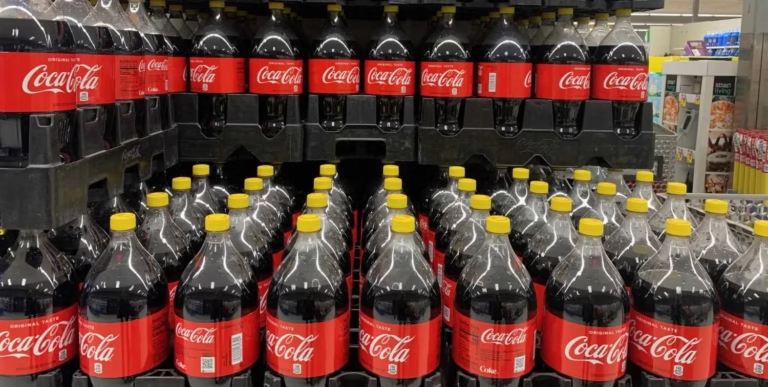
Nowhere is that truer than with Stoney Tangawizi, Coca-Cola’s iconic African ginger beer whose Swahili name simply means ginger. Introduced in South Africa in 1971, Stoney is distributed by The Coca-Cola Company across the continent. Its ginger flavour is especially intense compared to lighter ginger ales, with the East African version carrying a notably stronger ginger punch, while the Southern African version tends to be more carbonated and sweeter.
Stoney draws inspiration from Gemere, a traditional non-alcoholic ginger-based beverage from Southern Africa, made from fresh ginger, sugar, water, and sometimes tartaric acid, providing the conceptual foundation that Coca-Cola adapted into its commercial offering. That indigenous heritage, more than any marketing budget, is the root of its enduring dominance.
Yet there is an important nuance. Stoney’s standard formulation lists carbonated water, sugar, citric acid, and ginger flavouring, not confirmed whole ginger root, alongside stabilisers and preservatives. For a brand so deeply embedded in tradition, it is a commercially manufactured product, not a craft brew, a distinction that matters increasingly as premium artisanal options enter the market.
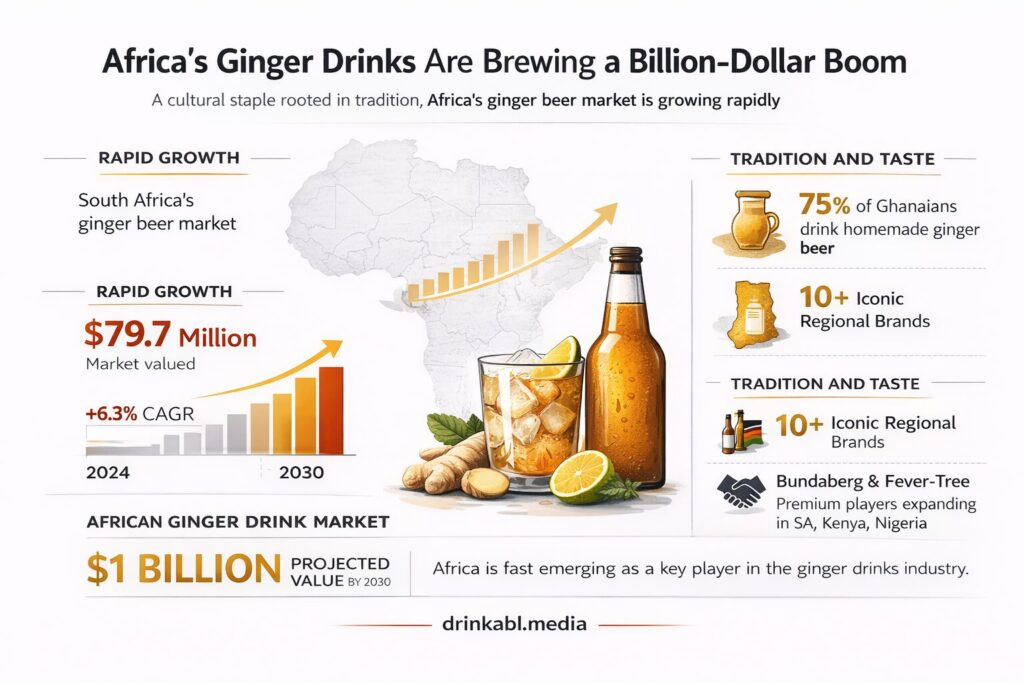
The commercial stakes behind this cultural dominance are rising fast. South Africa’s ginger beer market generated USD 79.7 million in 2024 and is projected to reach USD 114.4 million by 2030, growing at a compound annual growth rate of 6.3%. That trajectory mirrors a broader global surge. The global ginger beer market was valued at USD 5.54 billion in 2024 and is expected to grow to USD 6 billion in 2025, with a CAGR of 8.25% projected through 2033.
“Research shows beverage consumers in Africa are choosing more non-alcoholic options today.”
Africa is among the key engines of that growth. The Middle East and Africa region is an emerging market for ginger beer, with rising demand for low-alcohol and healthy beverages, a growing premium segment, and increased interest in natural and organic formulations shaping the industry. Driving this momentum is a fast-expanding urban middle class, health awareness, and a generational shift toward alternatives to mainstream sodas.
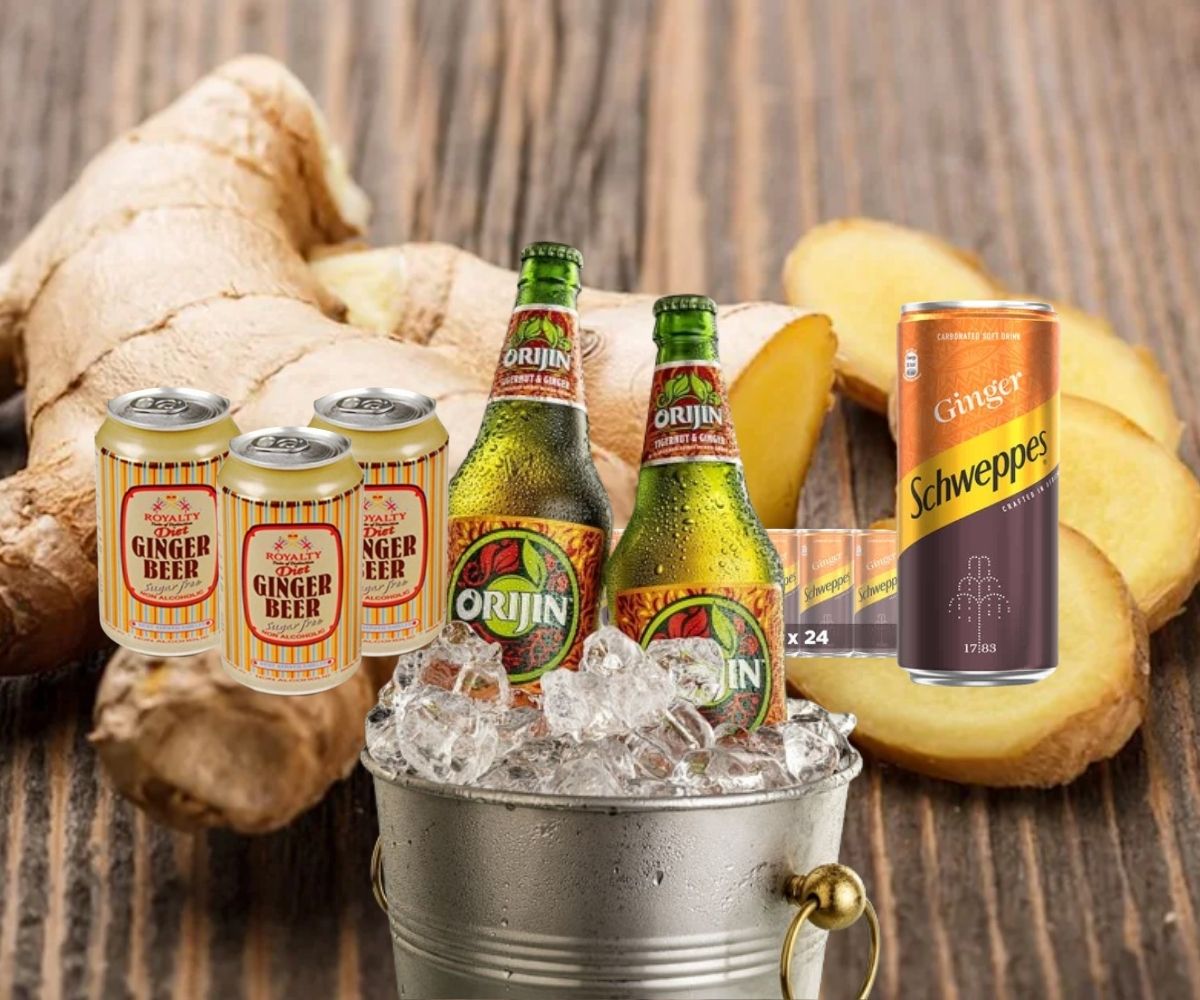
In West Africa, homemade ginger beer sits alongside zobo and fermented drinks as festive staples. In Ghana, it is served fresh, brewed from pounded ginger, lime, and peppercorns. These are not craft experiments, they are household traditions that predate modern bottling. Local craft producers such as Soul Barrel Brewing are already benefiting from a continental premiumisation trend, blending local heritage with contemporary taste preferences, a pattern increasingly reflected in ginger beer too, as premium brands Bundaberg and Fever-Tree expand across South Africa, Kenya, and Nigeria.
Stoney’s endurance, meanwhile, is built not just on taste but on cultural embedding. The brand’s Yiba Strong! campaigns, with the phrase drawn from Nguni languages of South Africa and translating to “Be Strong!”, have targeted consumers with deep community roots, using indigenous cultural connections as a marketing anchor. It is a strategy that mass-market competitors struggle to replicate.
As the Food & Wine taste test reminds the rest of the world that not all ginger beers are equal, Africa has known this for decades. The continent’s next chapter is deciding who else earns a seat at that table.
Further reading from Drinkabl.media: , Jacqueline Dongmo: The Woman Who Quietly Took Over Cameroon’s Coca-Cola Market , Japan’s Asahi Cracks Africa Wide Open With Landmark $4.8bn EABL Deal , Champion Breweries Drops Its Compliance Flag, Completes a Pan-African Power Play