The Cola Wars just claimed their biggest hotel room, and the beverage industry will be feeling the reverberations for years.
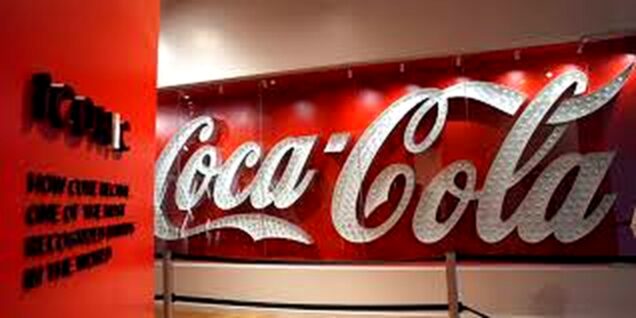
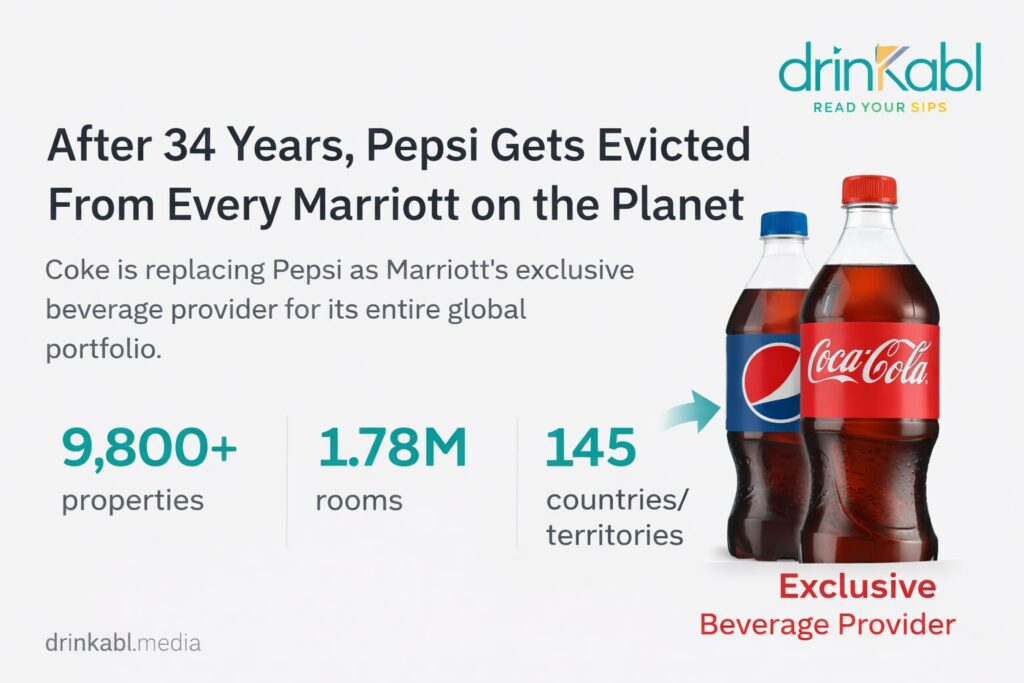
The Coca-Cola Company has signed a global agreement with Marriott International, unseating arch-rival Pepsi as the hotel giant’s exclusive beverage provider, ending a partnership that had been in place since 1992. The transition begins this summer and will roll out across nearly 10,000 properties worldwide.
For the beverage industry, this is not merely a supplier swap. It is a seismic shift in on-premise distribution that will echo across boardrooms in Atlanta and Purchase, New York.
Coca-Cola is replacing Pepsi as Marriott’s exclusive beverage provider across a global system of over 9,800 properties and nearly 1.78 million rooms in 145 countries and territories. The changeover spans 450 million room nights. The volume implications for Coke’s fountain, minibar, lobby market, banquet, and catering segments are enormous.
The backstory behind why it took this long is as compelling as the deal itself. At that point in time, Marriott had a 20-year relationship with Coca-Cola. In view of the relationship, the hotel firm asked for a loan of $50 million to $100 million at a below-market interest rate. Although Marriott was one of its largest accounts, Coca-Cola refused the loan, with an executive writing internally: “In effect, they were asking us to become a ‘banker.'” PepsiCo agreed to lend Marriott between $40 million and $50 million, and PepsiCo’s decision proved extremely lucrative in the ensuing years as Marriott offered Pepsi products exclusively.
Three decades on, data has finally won out over financial loyalty. Marriott recently informed hotel owners that internal research shows over 70% of Bonvoy members prefer Coca-Cola over Pepsi. The Marriott internal communication put it plainly: “The Coca-Cola portfolio is preferred globally by a margin of 2:1.”
There is also an important piece of Marriott history that gives this switch additional weight. When Marriott acquired Starwood in 2016, Starwood had been a Coke property. That changed quickly, as Starwood switched from Coke to Pepsi following the Marriott merger, much to the dismay of Starwood loyalists who were already coming to terms with losing their beloved SPG programme. Sheraton, Westin, W Hotels, all went Pepsi. The full circle is now complete.
Coca-Cola’s statement left little room for ambiguity:
“Marriott’s decision reflects the strength of our brands and the preference their guests have for our total beverage portfolio. This partnership underscores our shared commitment to quality, consistency, and elevating every moment of the stay.”
Practically speaking, once a property makes the switch, the in-room minibar will go from Aquafina to Dasani, from Pepsi to Coke, and from Mountain Dew to Sprite.
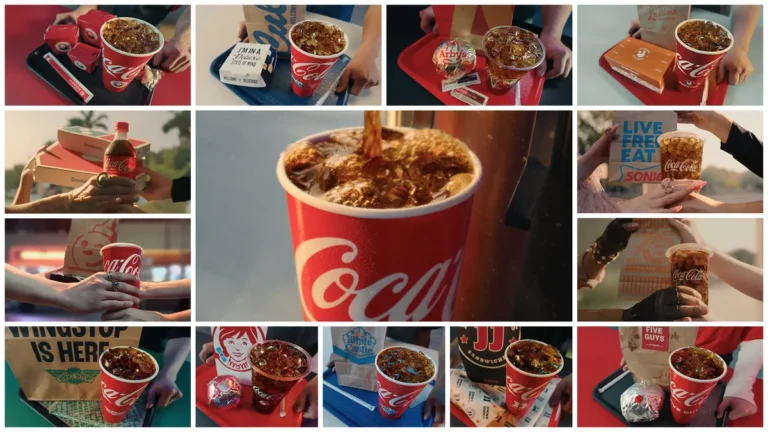
The timing for Coke is no coincidence. The company is in the midst of a full-court press to dominate on-premise channels. Just days before the Marriott deal broke, Drinkabl reported on Coke’s “And a Coke” campaign, its most ambitious foodservice marketing push ever, uniting 13 restaurant chains in a single national campaign. In 2025, Coke’s North American organic sales rose 4%, but its domestic unit case volume fell 1%, a signal that structural volume wins like the Marriott deal matter enormously to the company’s growth story.
For Pepsi, losing Marriott stings beyond the revenue line. It is a brand visibility loss spanning every continent, a daily reminder, at every checkout and minibar, of ground ceded in the oldest rivalry in beverages. Marriott’s answer to “Is Pepsi okay?” is now, definitively, no.
Further Reading:
Coca-Cola Launches Boldest Fast-Food Push Yet With “And a Coke” Campaign