India’s biggest tea-producing state bankrolls an orthodox production push, just as Middle East conflict threatens to choke off 41% of the country’s tea export routes
With coordinated US-Israel strikes on Iran having triggered the closure of the world’s most critical oil and trade waterway, India’s most iconic beverage industry finds itself caught between record momentum and real peril, and Assam just wrote a cheque it may struggle to cash.
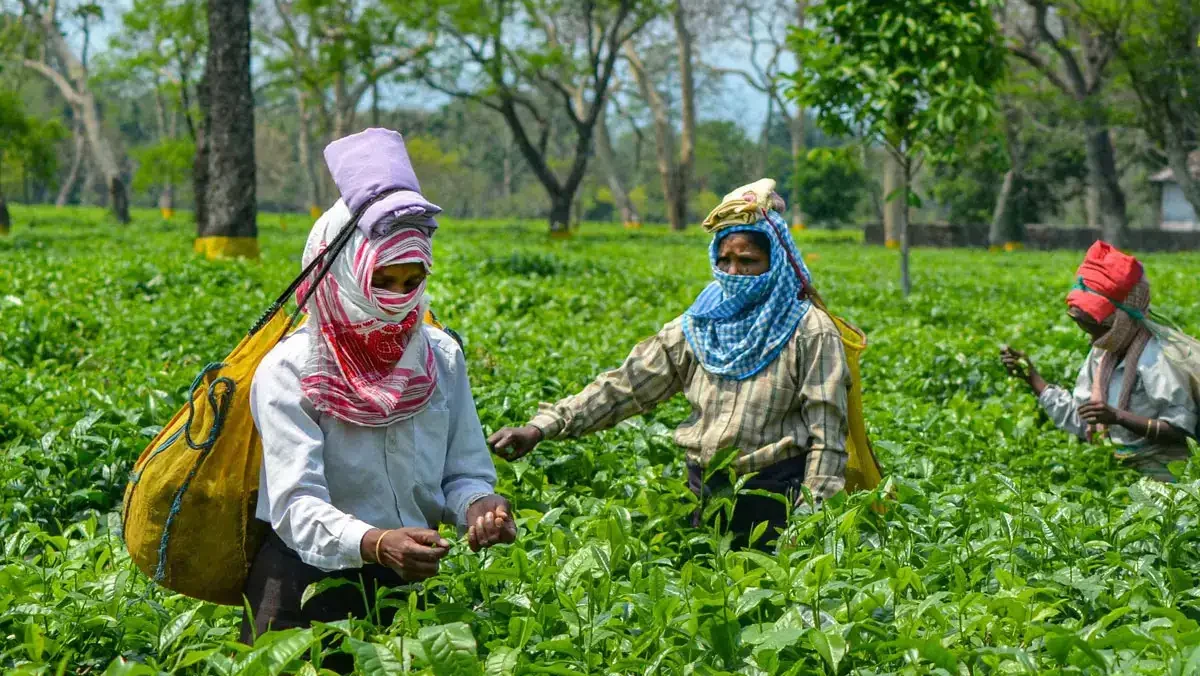
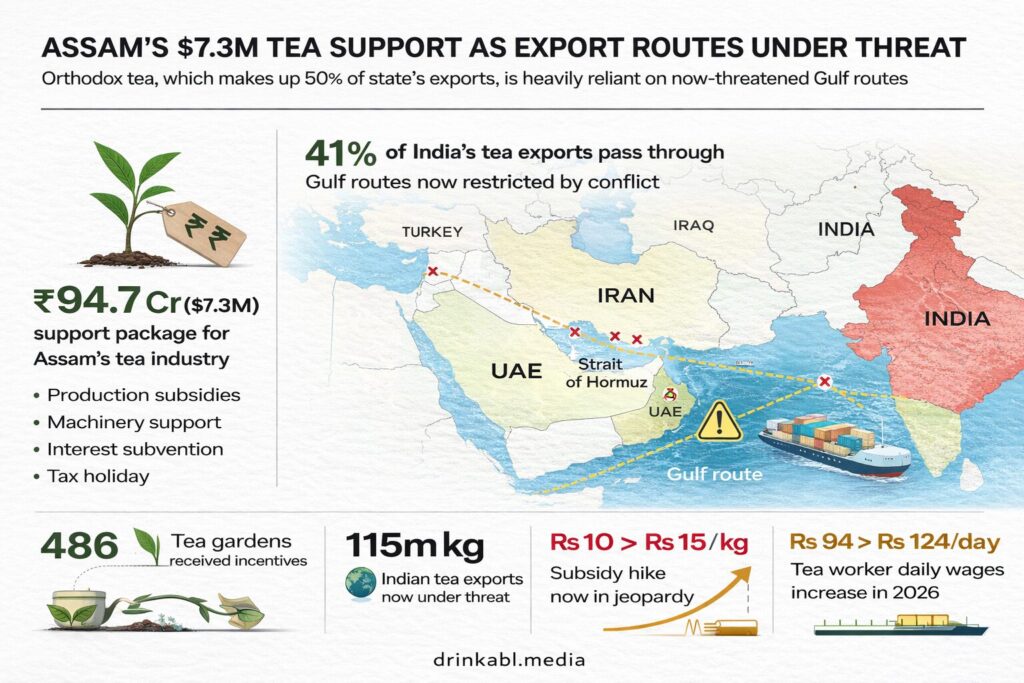
The government of Assam has released Rs 94.70 crore under the Assam Tea Industries Special Incentive Scheme to support the tea industry affected by export disruptions, with 486 tea gardens receiving benefits during the current financial year. State Finance Minister Ajanta Neog ceremonially distributed the funds, which cover interest subvention on working capital loans, orthodox tea production subsidies, machinery cost support, and an agricultural income tax holiday through 2026,27.
The backdrop to this disbursement is a genuinely remarkable turnaround. Chief Minister Himanta Biswa Sarma announced that Assam produced 50 million kg of tea in 2025,26, of which 40 million kg was exported, the strongest export performance in 25 years, with nearly 50% of the exported produce being orthodox tea. At the Guwahati Tea Auction Centre, orthodox tea sales doubled, rising from 4.19 million kg to 9.15 million kg, while overall tea sales in the state increased by 19 million kg. The golden era, Sarma suggested, was returning.
Then the Strait closed.
“Amid reports of possible closure of the Strait of Hormuz, even though there are assurances from the US on insurance coverage and keeping the route open, the outlook for Indian tea exports appears grim for now.” — Shailja Mehta, President, Tea Association of India
India exported about 280 million kg of tea in 2025, of which nearly 41%, equating to 115 million kg, was shipped collectively to the UAE, Iran and Iraq, all markets whose supply routes pass through the Strait of Hormuz. Iran has stated it will not allow vessels through the strait except for Chinese cargo. Around 50% of Assam’s orthodox tea exports are destined for those same Gulf markets, making the segment especially vulnerable to disruptions in the region.
The crisis deepened on 2 March 2026 when the IRGC officially confirmed the strait was closed, and by 5 March announced it would remain closed to ships from the US, Israel and their Western allies, a restriction reconfirmed on 8 March. For Assam’s tea exporters, the practical impact is already biting.
“As the war between Iran and Israel-US has now accelerated to all the Gulf countries, it is also impacting the Indian economy. Our orthodox tea export depends on the Gulf countries. Iran is our major orthodox tea buyer.” — Dinesh Bihani, Secretary, Guwahati Tea Auction Buyers’ Association
Bihani confirmed that exporters are no longer receiving fresh orders from Gulf buyers, warning that if the conflict continues, the industry may have to fundamentally rethink orthodox tea production.
The timing could hardly be worse. Riding the export wave, the Assam government had just announced it would increase the orthodox tea subsidy from Rs 10 to Rs 15 per kg. Sarma had expressed confidence that Assam’s tea sector would benefit from the recently signed free trade agreements with the EU and the UK, as well as expected tariff gains with the United States. The industry noted, however, that the ongoing conflict could undermine these gains before they are realised.
The Indian Tea Association has described the sector as being at a “defining moment of transition.” ITA Vice Chairman Sunil Sikand noted that India’s total tea production reached 1,369.98 million kilograms in 2025, a 5.1% increase over 2024, though growth was largely driven by small tea growers, while production by organised estates declined slightly. Sikand also confirmed that daily wages for Assam tea garden workers will increase by Rs 30 from April 1, 2026, adding further pressure on margins already under strain.
There are reasons not to despair entirely. The Tea Board of India has made laboratory testing mandatory for all imported tea consignments entering India from May 1, 2026, restoring physical sampling and quality verification at ports that had been discontinued since 2018, a move widely welcomed as protection for domestic producers against low,quality imports being passed off as Indian,origin tea. And the ATISIS disbursement, whatever the shipping headwinds, keeps gardens financially afloat while the industry waits for geopolitical clouds to lift.
For now, Assam’s tea story is one of record ambition meeting raw geopolitical reality, a cup carefully brewed, and now at risk of going cold.
📖 Read More: