With 1.4 billion people now living with hypertension and fewer than one in five adequately controlled, a glass of beet juice at sunrise is emerging as one of the most evidence-backed interventions money can buy.
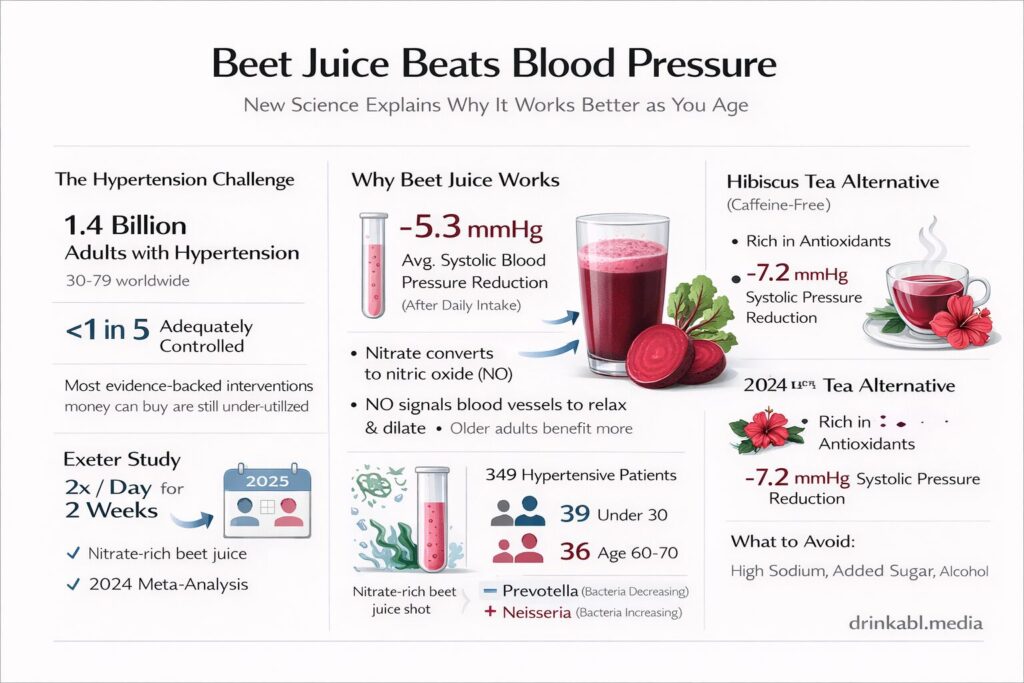
The WHO’s 2025 Global Hypertension Report confirmed that 1.4 billion adults aged 30 to 79 were living with the condition in 2024, yet fewer than one in five had it adequately controlled. Against that backdrop, a convergence of dietitian consensus and peer-reviewed science is pointing to a surprisingly humble answer: beet juice.
Three registered dietitians, in findings published this week by Health magazine, are unanimous in naming beet juice as the single best morning drink for blood pressure management, a verdict powerfully underscored by a landmark study from the University of Exeter published in Free Radical Biology and Medicine in July 2025.
The Exeter study, the largest of its kind, found that when older adults drank a concentrated beetroot juice shot twice a day for two weeks, their blood pressure decreased, an effect not seen in the younger group. The researchers compared 39 adults under 30 with 36 adults in their 60s and 70s, and the divergence between the two age groups was striking.
The older age group experienced a notable decrease in the mouth bacteria Prevotella after drinking the nitrate-rich juice, and an increase in beneficial bacteria such as Neisseria, which support the conversion of nitrate to nitric oxide. That biochemical reset, the researchers say, is the key to why beet juice works so much more effectively in older adults.
“We know that a nitrate-rich diet has health benefits, and older people produce less of their own nitric oxide as they age. They also tend to have higher blood pressure, which can be linked to cardiovascular complications like heart attack and stroke. Encouraging older adults to consume more nitrate-rich vegetables could have significant long-term health benefits.”
That was Professor Anni Vanhatalo, lead author of the Exeter study. She added that for those who don’t enjoy beetroot, equally nitrate-rich alternatives include spinach, rocket, fennel, celery, and kale.
The Exeter findings build on a robust body of evidence. A 2024 meta-analysis covering 11 randomised controlled trials involving 349 hypertensive patients found that daily beet juice consumption produced a mean reduction of 5.31 mmHg in clinical systolic blood pressure, with effects sustained for up to 90 days. The analysis noted that a daily nitrate intake of 200 to 800 mg appears most effective, with no sign of tolerance developing over that period.
Dietitian Avery Zenker, MAN, RD, explains the central mechanism:
“Nitric oxide helps support healthy blood vessels, which play a role in maintaining healthy blood pressure.”
Zenker also highlights beet juice’s broader nutritional profile: alongside its nitrate content, it provides antioxidants, folate, and potassium, a mineral that helps the kidneys excrete excess sodium, addressing one of hypertension’s key dietary drivers.
Hibiscus Tea: The Caffeine-Free Runner-Up
For those who can’t stomach beet juice’s earthiness, hibiscus tea is a compelling alternative backed by its own clinical trail. A randomised, double-blind, placebo-controlled trial conducted in 65 pre- and mildly hypertensive adults found that drinking three cups of hibiscus tea daily for six weeks lowered systolic blood pressure by 7.2 mmHg, compared to just 1.3 mmHg in the placebo group.
Dietitian Jennifer Pallian, BSc, RD, describes why:
“Hibiscus tea contains antioxidants like anthocyanins that may help relax blood vessels and support healthy blood pressure, and researchers believe these compounds may even work in ways similar to certain blood pressure medications.”
A broader meta-analysis comparing hibiscus against pharmaceutical interventions found that hibiscus produced blood pressure reductions statistically similar to those of single-drug antihypertensive therapy. Hibiscus is also naturally caffeine-free, making it suitable for morning or evening use.
What Makes a Good Blood Pressure Drink?
The dietitians are equally clear about what to avoid: sodium, added sugars, and alcohol. Choose 100% beet juice without added sugars, or brew hibiscus from dried Hibiscus sabdariffa petals rather than reaching for sweetened commercial blends.
Critically, neither drink replaces medication. Dietitian Carlyne Remedios, RD, of JM Nutrition, notes their role is supportive: the evidence shows measurable but moderate reductions in systolic pressure, most valuable when combined with a heart-healthy dietary pattern rich in vegetables, whole grains, and low-sodium foods.
For a world where over 600 million people remain unaware they even have hypertension, accessible, evidence-backed interventions that cost less than a morning coffee could prove consequential, one glass at a time.
Further reading on Drinkabl.media: Is Your Smoothie Actually Healthier Cooked? New Science Is Rewriting the Rules on Pasteurisation , What Decades of Research Now Tell Us About Drinking Water First , Who Is Silencing South Africa’s Sugar Warning? Inside the ARB’s Conflict of Interest Crisis