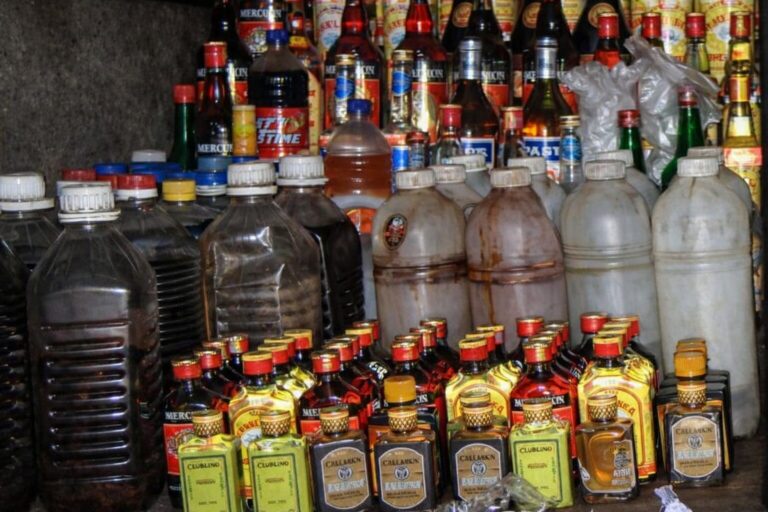
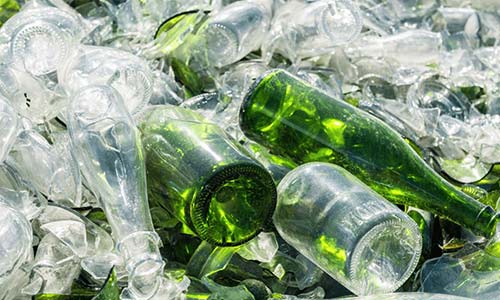
They weren’t stealing bottles to resell them. They were destroying them, crushing glass and shredding crates to sell the rubble as scrap. And they did it at scale, across multiple sites in Nigeria’s South-East, until a months-long intelligence operation finally caught up with them.
Nigeria’s beverage manufacturers have escalated their campaign against organised packaging theft, with the Manufacturers Association of Nigeria (MAN) formally condemning what it calls deliberate economic sabotage, weeks after a landmark police operation dismantled illegal recycling networks in Anambra State.
As we reported in February, the February 19 raid, coordinated by the Beer Sectoral Group (BSG) and the Nigeria Police Force — tore through multiple illegal facilities in Onitsha and surrounding areas, leading to the arrest of several suspects. What they found wasn’t opportunistic petty theft but an organised operation: returnable glass bottles and plastic crates belonging to beverage companies were being systematically crushed and shredded, then sold as raw materials into informal recycling networks.
“The police, working with member companies, acted on credible intelligence and stormed the factories to crack down on illegal disposal, theft, and unauthorised recycling of the returnable packaging materials of the affected companies, notably returnable glass bottles and plastic crates.” — Segun Ajayi-Kadir, Director-General, Manufacturers Association of Nigeria
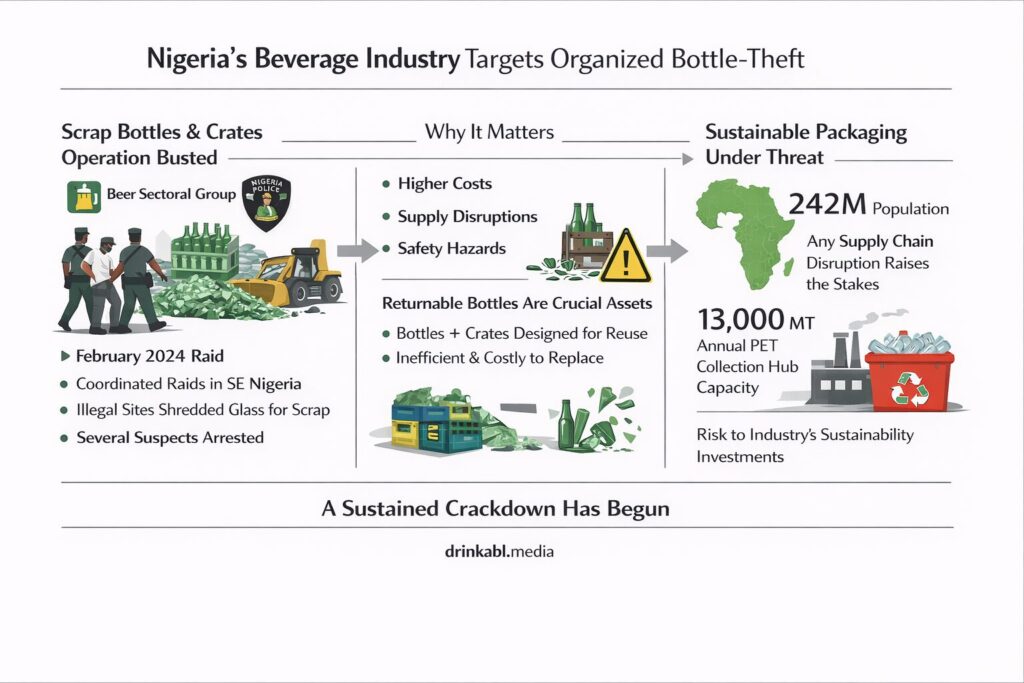
The raid was the culmination of sustained, months-long intelligence gathering. Investigators identified multiple active processing sites across the South-East where packaging, meant to be returned to manufacturers under a deposit-refund system, cleaned and reused, was instead being stripped of all value and funnelled into a grey market for scrap material.
“These Returnable Packaging Materials are company-owned assets designed for multiple reuse cycles and form a critical part of their sustainability, cost-efficiency, and product quality systems. It’s a criminal activity to destroy them.” — Abiola Laseinde, Executive Secretary, Beer Sectoral Group
What’s at stake goes beyond the factory floor. Returnable packaging systems sit at the centre of how Nigerian beverage companies control costs, manage supply chains, and deliver on sustainability commitments. Disrupting them triggers a cascade: supply bottlenecks, higher operational costs, and potential shortages at the shelf, pressures that ultimately reach the consumer. For an industry already absorbing the sustained impact of naira volatility and rising input costs, the theft is a compounding wound.
The BSG has also flagged the public safety dimension. Unregulated industrial crushing and shredding of glass and plastic exposes workers and surrounding communities to real physical hazards, a layer of harm that regulators have not yet fully addressed.
The criminal networks are undermining an industry that has invested heavily in sustainable infrastructure. Just last year, the Coca-Cola System inaugurated a state-of-the-art Packaging Collection Hub in Apapa, Lagos, designed to collect up to 13,000 metric tonnes of PET plastic bottles annually, the equivalent of 500 million plastic bottles, when fully scaled. Northwestern Law That kind of infrastructure commitment is precisely what illegal recycling networks corrode.
Nigeria’s beverage sector serves a consumer base of over 242 million people The Coca-Cola Company , the largest in Africa, and the stakes of a compromised packaging supply chain are proportionally enormous.
This crackdown fits a broader pattern of enforcement hardening across Nigeria’s drinks industry. In parallel, regulators have moved against sachet alcohol linked to violent crime and counterfeit spirits — NAFDAC recently secured a landmark 40-year custodial sentence against a Lagos fake spirits ring. The message is consistent: the informal criminal economy preying on Nigeria’s beverage sector is being confronted on multiple fronts simultaneously.
MAN has warned those still involved in the illegal practice that the association will continue sharing intelligence with law enforcement until offenders face the full weight of the law. The public has been urged to report suspicious activity to police or directly to beverage companies’ consumer care lines.
“These assets remain the property of beverage companies that have invested heavily in these sustainable packaging materials to protect the environment. Offenders will be held liable and made to face the wrath of the law.” — Segun Ajayi-Kadir
The Anambra raid was not an endpoint. It was a declaration.
📖 Further Reading from Drinkabl.media: