India makes award-winning whisky and wine celebrated globally, but in Uttarakhand, you can’t find them at the mall. The domestic industry has had enough.
India’s homegrown spirits industry is crying foul over what it calls a brazen double standard hiding in the hills. The CIABC has formally accused the Uttarakhand state government of running an excise policy that shuts domestically produced liquor out of premium retail outlets, malls and departmental stores, while rolling out the red carpet exclusively for imported brands.
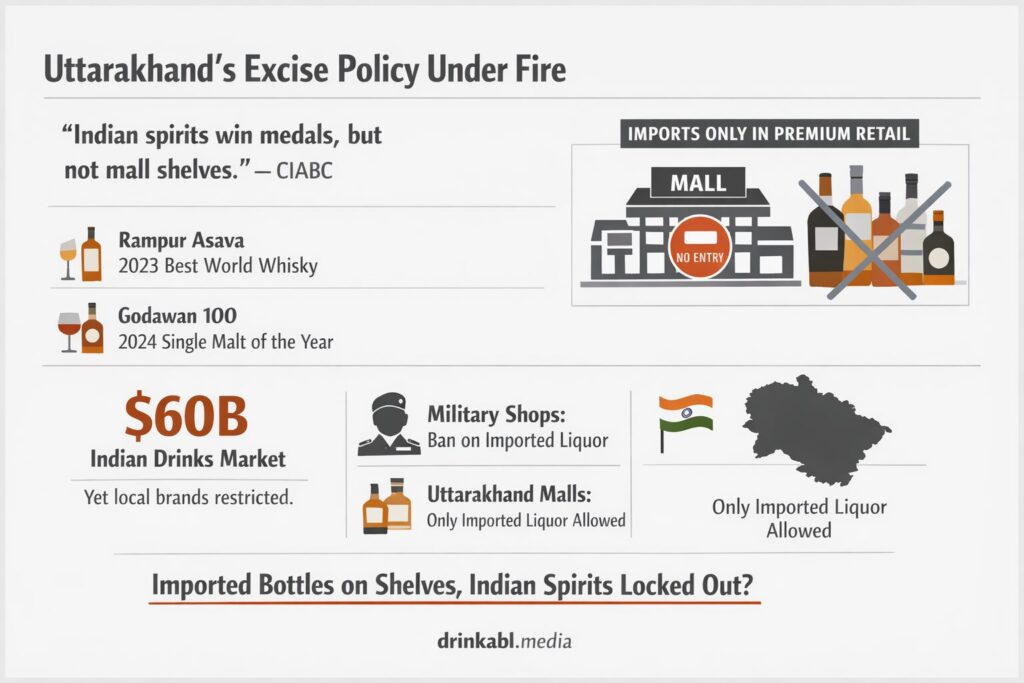
The accusation lands at a moment of soaring pride for Indian spirits. Radico Khaitan’s Rampur Asava was named Best World Whisky at the 2023 John Barleycorn Awards, beating American and Irish rivals in a blind tasting. Meanwhile, Diageo India’s Godawan 100 was crowned Single Malt Whisky of the Year at the 2024 London Spirits Competition, scoring 96 points to lead its category globally. For Indian distillers, being barred from high-street retail in their own backyard stings twice as hard.
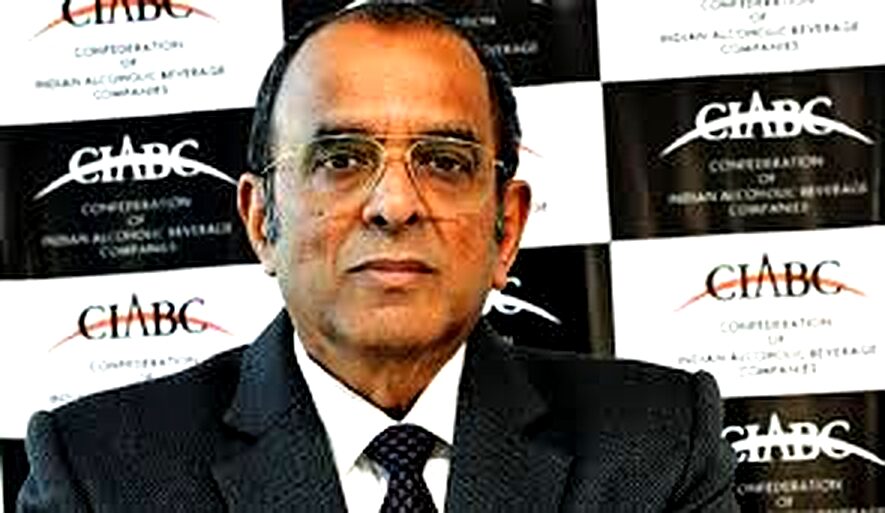
“Denying popular and globally-awarded Indian wines and spirituous beverages access to mall and departmental stores simply because they are not produced in Uttarakhand is grossly unfair,” said Anant S. Iyer, Director General of CIABC.
The industry body has made multiple representations to the Dhami government seeking a revision of the framework. So far, those calls have gone unheeded.
At the heart of the dispute is the state’s restriction of premium retail channels, the kind of high-footfall outlets increasingly favoured by aspirational consumers and tourists, to imported liquor only. This creates what CIABC describes as a “virtual monopoly” for importers, directly undermining the spirit of the central government’s Make in India and Atmanirbhar Bharat initiatives. It is a particularly jarring contradiction in a country where the total Indian drinks market is now worth US$60 billion, with shares of homegrown producers like United Spirits, Radico Khaitan and Globus Spirits rising up to 14 times in value over four years, even as global alcohol giants have seen their valuations collapse.
Iyer pointed to raw material geography as a structural constraint that makes local production in Uttarakhand impractical for many Indian brands. Grapes for Indian wine, for instance, are sourced predominantly from Maharashtra and Karnataka, making winery operations in a mountain state inherently difficult. “Many brands produced in India are popular worldwide,” he said. “Why should local residents and tourists be denied these Indian offerings? It goes against the ethos of encouraging Swadeshi goods.”
The industry body also drew a pointed contrast with national defence institutions. In October 2020, the MoD issued an order banning the procurement of directly imported items, including foreign liquor, from its network of approximately 4,000 Canteen Stores Department outlets serving the armed forces, citing Prime Minister Modi’s Atmanirbhar Bharat Abhiyan. That ban remains firmly in place with no signs of reversal. CIABC’s argument is pointed: if the Indian military trusts Indian spirits, why won’t a state government put them on its shelves?
The irony is not lost on observers familiar with India’s complex, state by state liquor regulation landscape. Uttarakhand’s 2025 excise policy includes provisions for exempting wineries in hill states from excise duty for 15 years if they produce wines using locally grown fruits, and also aims to attract investment by cutting export duty and offering special incentives to malt and spirit units in hill areas. The same policy framework that courts investment and touts local development appears to simultaneously shut out established Indian brands through its premium retail restrictions, a contradiction the CIABC says cannot stand.
According to IWSR, imported spirits volumes in India grew at a compound annual growth rate of 16% between 2019 and 2024, a trend the domestic industry fears is being actively accelerated by state level policies that favour foreign labels in high visibility retail formats.
CIABC has called on the Uttarakhand government to adopt what it describes as a “non-parochial” approach, one that supports Indian-made products, including IMFL and wines, across all retail formats in the state.
“The domestic Indian alcoholic beverage industry urges the Government of Uttarakhand to support Indian-made products, including Indian-Made Foreign Liquor and wines,” the confederation said in its statement.
With Indian single malts earning global medals and the premiumisation wave sweeping the country’s drinks market, the question the industry is putting to Uttarakhand’s policymakers is a simple one: if India’s armed forces back Indian spirits, why is a state government handing mall shelves to foreign importers?
Read More on drinkabl.media