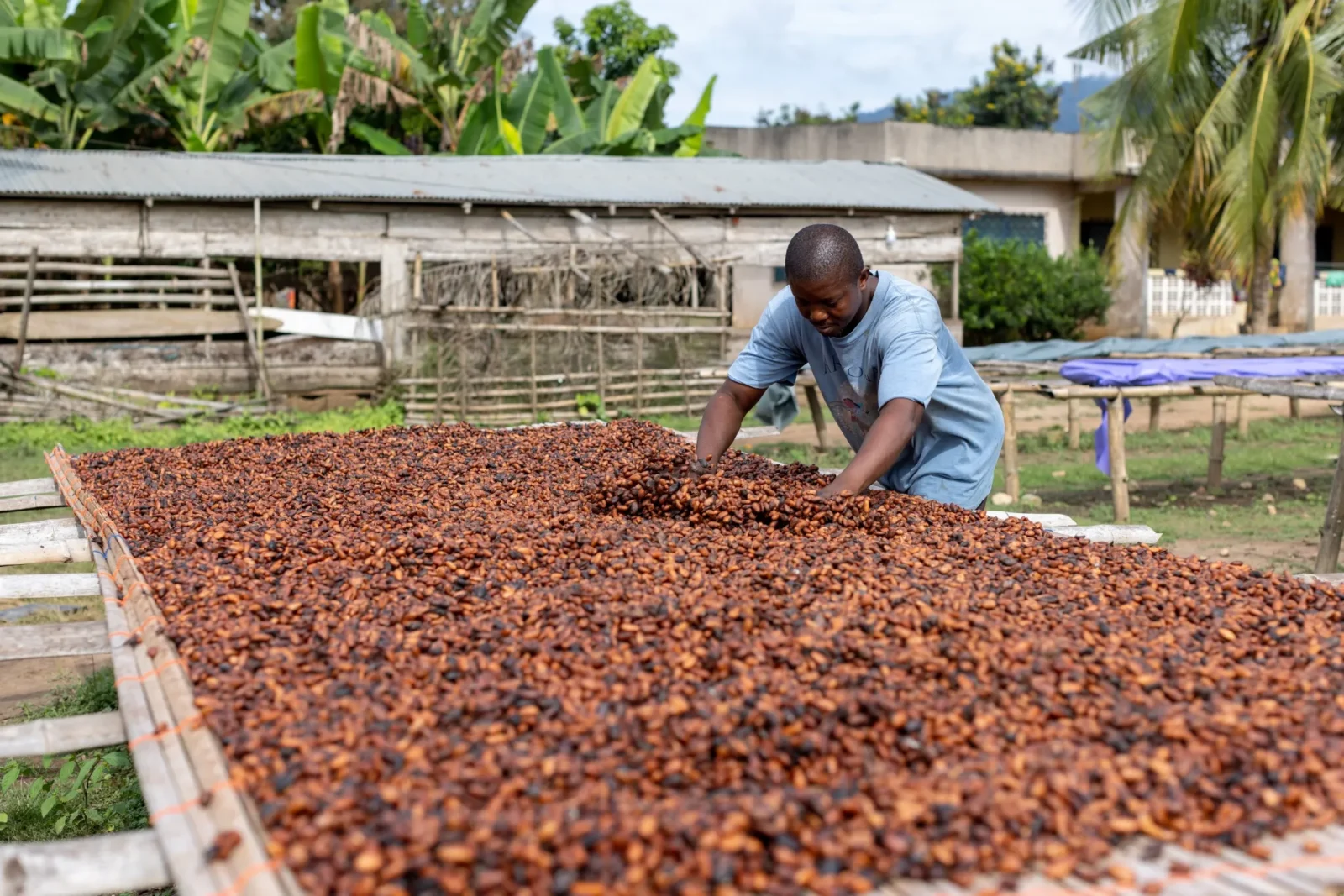
Every cup of hot chocolate you’ve ever sipped started in a West African village. Now those villages are in crisis, and the people who made your favourite drink possible are dying broke.
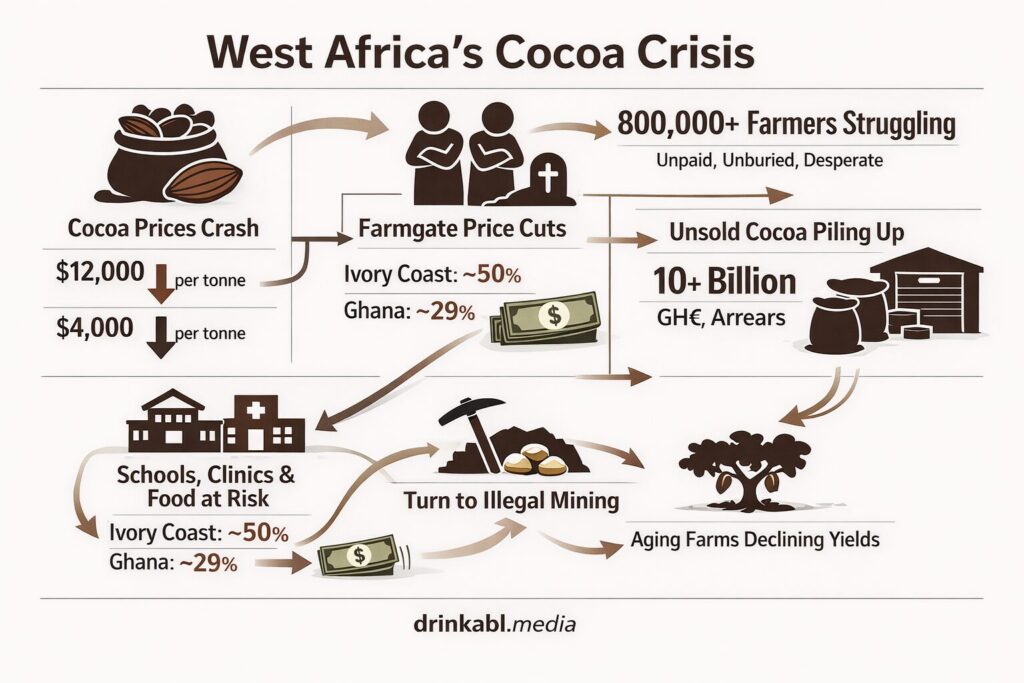
News making the rounds has it that Ivory Coast this week slashed the price it pays cocoa farmers by more than half, the latest blow in a deepening crisis that has left over 800,000 farmers across West Africa unpaid, unsupported, and in some cases, unable to bury their dead.
After cocoa futures surged to more than $12,000 per metric tonne on international markets, the highest in decades, prices have since crashed to around $4,000 as supply outstripped demand. The reversal has been swift and brutal.
Ghana and Ivory Coast together account for nearly 70% of the world’s cocoa supply, the raw ingredient behind a global chocolate and hot cocoa drinks market worth hundreds of billions of dollars. But both countries operate fixed-price systems, setting farmer payouts at the start of each season. When global prices collapsed mid-season, those fixed rates became a financial trap.
“My husband fell sick, and I couldn’t get money to take him to the hospital. So he died at home.” — Akosua Frimpong, Ghanaian cocoa farmer
Frimpong, 52, from the village of Suhenso in western Ghana, is one of hundreds of thousands caught in the fallout. She blames Ghana’s Cocoa Board (Cocobod), which licenses companies to purchase the country’s crop at set prices. With no buyers willing to pay above collapsing market rates, payments to farmers have stalled. By February 2026, outstanding farmer arrears in Ghana alone had exceeded GH₵10 billion.
Ghana’s Finance Minister cut the farmgate price by nearly 29% in mid-February, a painful but necessary correction after the country’s domestic price had become wildly uncompetitive. Ivory Coast followed this week, slashing its own price by more than half, to $2.13 per kilogram for 2026.
The knock-on effects stretch across entire rural economies. Schools, hospitals, and food security are all at stake.
“I harvested my cocoa and sent it to the village, but there’s no buyer. I don’t know how I’ll feed my 10 children or support their education.” — Sella Aga Josiane, Ivorian cocoa farmer
Josiane, 38, farms outside Bangolo in western Ivory Coast, where warehouses have been stacking with unsold sacks for weeks. Some of her children were already sent home from school for unpaid fees before this week’s price cut was even announced.
In neighbouring Ghana, farmer Robert Addae, 62, warns that the revised prices don’t even cover costs. “The prices of farm inputs and implements remain the same, the cost of labour has not reduced,” he said.
Some farmers have begun leasing their land to illegal gold miners to survive, with one Ivorian farmer noting that gold is now more profitable than cocoa. Many of the region’s cocoa trees are over 25 years old and less productive, compounded by climate change, disease outbreaks including the Cocoa Swollen Shoot Virus, and ageing infrastructure.
Ghana has since announced an emergency package including bond-based financing, a forensic audit of Cocobod’s finances, and a target of 50% local processing, one of the most comprehensive reform responses the sector has seen. An emergency release of funds has begun clearing farmer arrears, though many say it is too slow and too little.
For the beverage and confectionery industries that depend on this supply chain, the crisis raises urgent questions about long-term sourcing and farmer welfare, questions that go well beyond the current price cycle.
“Today, there is no peace between me and my family because there is no more money. When there is no money in a household, there is no peace. We live through cocoa.” — Ba Siba Fabrice, Ivorian cocoa farmer
Related reading on Drinkabl.media: