Nigeria is among West Africa’s most significant cocoa producers, yet the bulk of its beans still leave the country unprocessed. European manufacturers purchase the raw commodity, grind and refine it on their own terms, and sell the finished chocolate products back into global markets at multiples of what they paid at origin. A new financing agreement signed in Abuja this week is designed to chip away at that long-standing structural imbalance.
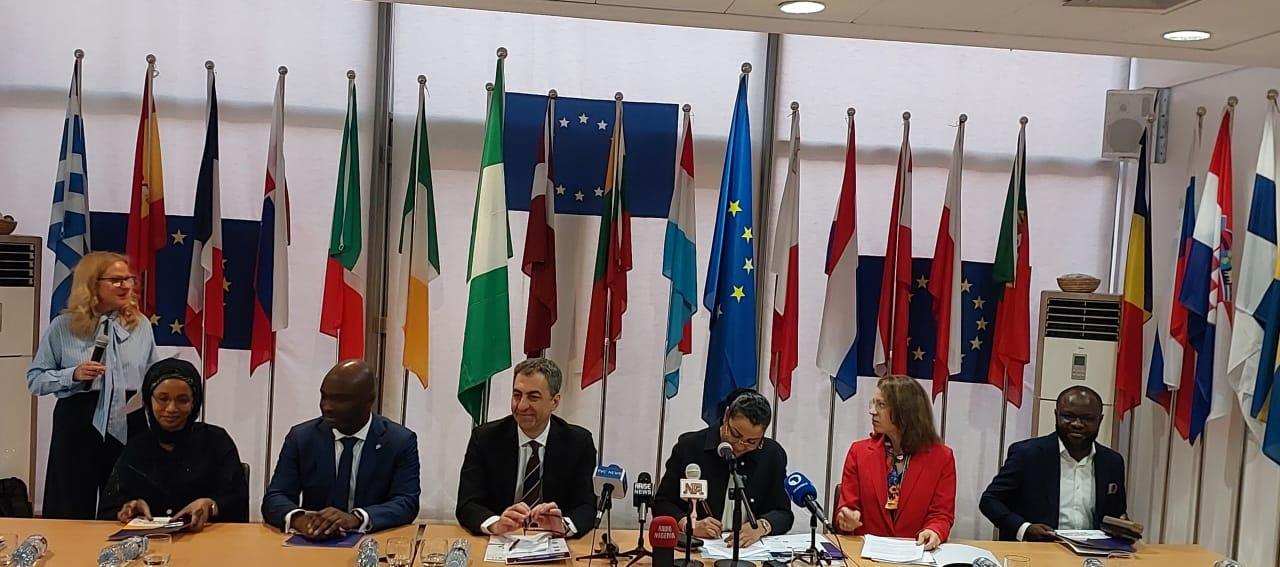
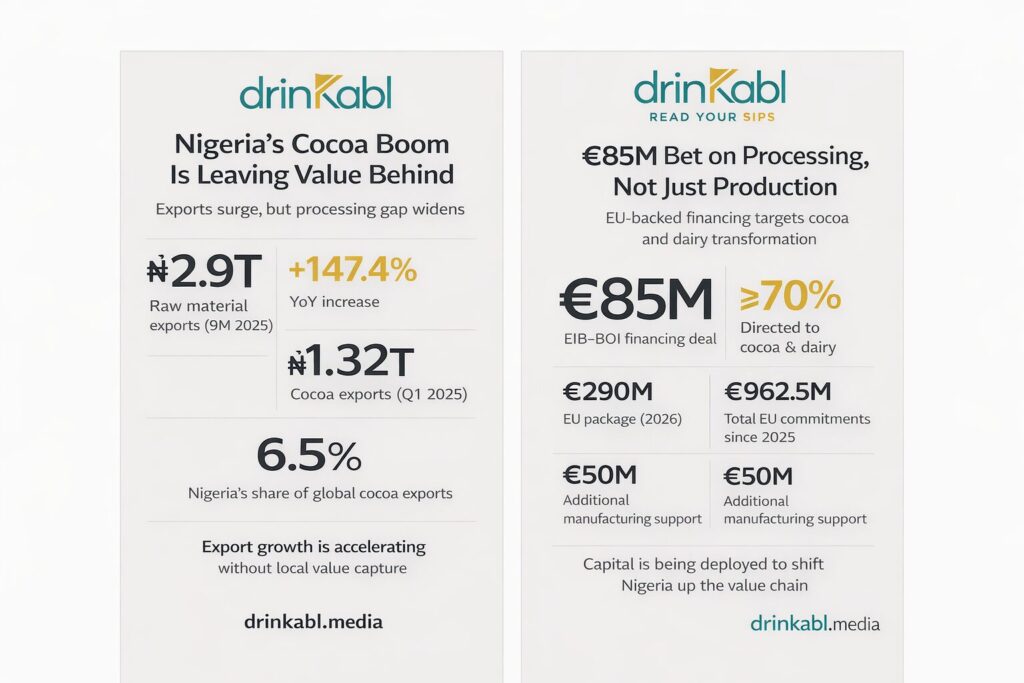
EIB Global, the development arm of the European Investment Bank, and Nigeria’s Bank of Industry (BOI) signed an €85 million financial agreement on the sidelines of the eighth Nigeria-EU Ministerial Dialogue in Abuja on March 23, 2026. The deal, part of a broader €290 million EU Global Gateway package announced at the same summit, will support private-sector companies, cooperatives, and micro, small and medium enterprises across Nigeria’s agricultural value chains, with at least 70 percent of the loans directed at the cocoa and dairy sectors.
The broader package, announced under the EU’s Global Gateway initiative, represents total Team Europe commitments to Nigeria that have now reached €962.5 million since 2025. Beyond the agricultural credit line, EIB Global and BOI also signed a separate €50 million agreement to support local manufacturers of pharmaceuticals, vaccines, and diagnostic equipment, a deal that received less attention but is equally significant for Nigeria’s import-substitution ambitions.
“I am delighted that EIB is financing this project with the Bank of Industry for the development of agricultural value chains in Nigeria, including sustainable cocoa. Such investment is important for the country in terms of employment, health, and economy, with real impact on local populations.”
— Ambroise Fayolle, Vice President, European Investment Bank
The financing aims to increase value addition, improve productivity, and strengthen supply chain linkages while enhancing incomes for agribusinesses and processors. The project complies with EIB Environmental and Social Standards, the EU Regulation on Deforestation (EUDR), and EU sustainability standards, a compliance framework whose importance for Nigerian exporters has grown substantially in recent years.
THE COCOA PRICE BACKDROP
The timing of the deal reflects a market that has been through historic turbulence. Cocoa futures surged 177 percent in 2024, driven by persistent supply shortfalls, adverse weather linked to El Niño, crop diseases, including outbreaks of cocoa swollen shoot virus in Ghana, and the regulatory pressures generated by the EU’s deforestation rules. Futures reached an all-time high of $12,646 per tonne on December 18, 2024, shattering the previous record set in 1977.
Prices have since pulled back sharply, falling to around $4,106 per tonne in London by October 2025, and hovering near $5,000 per tonne at the start of 2026, but remain well above the 2012–2022 historical average of approximately $2,525 per tonne. For Nigeria’s beverage manufacturers who depend on cocoa powder, from Bournvita and Milo to emerging local brands including Oluji Pure Cocoa Powder, supply security and local sourcing have rarely carried more strategic weight.
THE RAW EXPORT PROBLEM
Data from Nigeria’s National Bureau of Statistics illustrates the structural problem this deal is designed to address. Exports of unprocessed raw materials reached ₦2.9 trillion in the first nine months of 2025, a 147.4 percent increase over the same period in 2024. Cocoa beans, shipped in their raw, unprocessed state, were among the primary drivers of that figure. Nigeria contributes approximately 6.5 percent of global cocoa exports, making it the fourth-largest exporter in the world by volume, and does maintain a domestic grinding industry, with multinationals including Olam and Barry Callebaut operating local processing facilities. Yet even accounting for that capacity, the overwhelming share of beans still leaves as raw commodity, and the country captures only a fraction of the value generated along the downstream processing chain.
In the first quarter of 2025 alone, Nigeria exported raw cocoa beans worth ₦1.32 trillion, more than three times the ₦421.78 billion recorded in the same period of 2024, driven by both elevated global prices and increased volumes. The Netherlands remained the single largest destination for Nigeria’s cocoa, importing beans valued at ₦344.17 billion in Q1 2025. Belgium and Indonesia were also significant buyers. Europe overall absorbed ₦843.48 billion of Nigeria’s agricultural exports in the third quarter of 2025.
“This agreement reinforces the Bank of Industry’s commitment to unlocking long-term, affordable finance for priority sectors that drive inclusive growth,” said BOI Managing Director and CEO Dr. Olasupo Olusi. “By partnering with EIB Global, BOI is scaling support for sustainable agriculture, strengthening critical value chains, and enabling Nigerian agribusinesses to grow competitively while meeting international environmental and social standards.”
DAIRY AND THE BEVERAGE SUPPLY CHAIN
Beyond cocoa, the dairy component of the deal carries its own weight for Nigeria’s beverage industry. Milk-based drinks, from Peak Milk to Viju, and the chocolate-milk hybrids that dominate Nigeria’s breakfast table, depend on a reliable, competitively priced domestic dairy supply. Strengthening that supply chain directly reduces the foreign-exchange pressure that has long squeezed local manufacturers, who have historically relied heavily on imported powdered milk.
EU officials confirmed that the initiative aligns with Nigeria’s ambition to expand domestic dairy production and build stronger cocoa export credentials with European buyers. The agricultural financing package, backed under the EU’s Global Gateway initiative, is structured to support cooperatives, agribusinesses, and SMEs while promoting sustainable production and environmental standards.
THE EUDR COMPLIANCE DIMENSION
The EUDR compliance element embedded in this deal is not a footnote. The EU’s Regulation on Deforestation-Free Products, formally Regulation (EU) 2023/1115, was adopted in 2023 and requires businesses to demonstrate that goods placed on or exported from the EU market are not linked to land that was deforested after December 31, 2020. After two consecutive delays, the regulation now takes effect from December 30, 2026, for large and medium operators, and from June 30, 2027, for small and micro enterprises, following a formal vote by the European Parliament in December 2025 and publication in the EU’s Official Journal.
For Nigeria’s cocoa exporters, whose primary buyers are European, EUDR compliance is rapidly becoming a baseline market-access requirement rather than a differentiator. Buyers are already building traceability systems, demanding geolocation data on plots of land, and selecting suppliers able to produce due diligence statements. Locking in EU-standard environmental and social compliance now, as this EIB-BOI deal explicitly requires, protects the market access that Nigeria’s cocoa-based drink industry ultimately depends on.
The project also includes a technical assistance component to support BOI’s climate action strategy and build capacity in environmental and social risk management across the agriculture sector. It seeks to promote biodiversity conservation and support inclusive rural development, in line with the EIB Climate Roadmap and the Team Europe Initiative on Green Economy.
EIB’S NIGERIA FOOTPRINT
EIB Global has invested €2.3 billion in Nigeria since beginning operations in the country in 1978, supporting projects across sustainable urban transport, climate adaptation, innovation and digitalization, agribusiness logistics, and SME financing. The Bank of Industry, established in 1959 and reconstituted in 2001, disbursed more than ₦1.27 trillion to businesses across Nigeria between 2023 and 2025, supporting over one million enterprises during that period.
The March 2026 agreement was witnessed by EIB Head of Unit Svetla Stoeva, BOI Managing Director Dr. Olasupo Olusi, Nigeria’s Minister of Budget and Economic Planning Senator Abubakar Atiku Bagudu, and the EU Ambassador to Nigeria and ECOWAS, Gautier Mignot.
European Commissioner for International Partnerships Jozef Sikela, speaking at the summit on the broader investment package, said: “This investment strengthens cocoa and dairy value chains in Nigeria, where both sectors already employ thousands of farmers and workers and have clear potential for local processing and growth. By supporting value addition within Nigeria, we can retain more economic benefits locally and create jobs for communities across the country.”
For beverage industry watchers, the implications are material. This is capital directed precisely at the upstream raw material base that feeds everything from hot chocolate powders to dairy-based drinks, a market whose growth trajectory is tied directly to what happens at the farm gate in Nigeria’s cocoa belt. Whether the financing translates into more processing capacity within Nigerian borders, rather than more raw beans on European docks, will be the test that matters.
Read More
Nigeria’s Street Zobo makes its debut at Royal State Banquet in Windsor
Ultimum Limited set to disrupt Nigeria’s Beverage South with new factory
When will enough finally be enough on counterfeit drinks in Nigeria?