…Why the Day Could Easily become World Wine Day
By Victor Owencho
Today and every January 22nd, two individuals share the calendar. One is Félix Kir, the French priest-turned-Resistance-fighter-turned-politician who gave his name to an iconic cocktail, and Saint Vincent of Saragossa, the patron saint of winemakers whose feast day has been celebrated for centuries across Europe’s vineyards. Their convergence on this date has made it an unofficial celebration of wine culture, which makes it a day when the sacred and the convivial, the historical and the contemporary, meet in a glass.
A Tradition Rooted in the Vineyard
Long before Félix Kir became a household name, January 22nd belonged to Saint Vincent. Born around 300 AD in Huesca, in what is now Aragon, Spain, Vincent was a deacon to Bishop Valerius of Saragossa during one of Christianity’s darkest chapters: the persecutions under Roman Emperor Diocletian, who sought to stamp out the faith through systematic terror.
According to tradition, when Vincent refused to renounce Christianity, he endured torture that reads like a catalogue of Roman cruelty. He was stretched on a rack, torn with iron hooks, and roasted on a gridiron. When these torments failed to break him, he was thrown into a dungeon, where he reportedly converted his jailers before succumbing to his injuries. His body was cast into the Mediterranean, but legend holds that it washed ashore at the promontory now known as Cape St. Vincent in Portugal, the southwesternmost point of continental Europe.
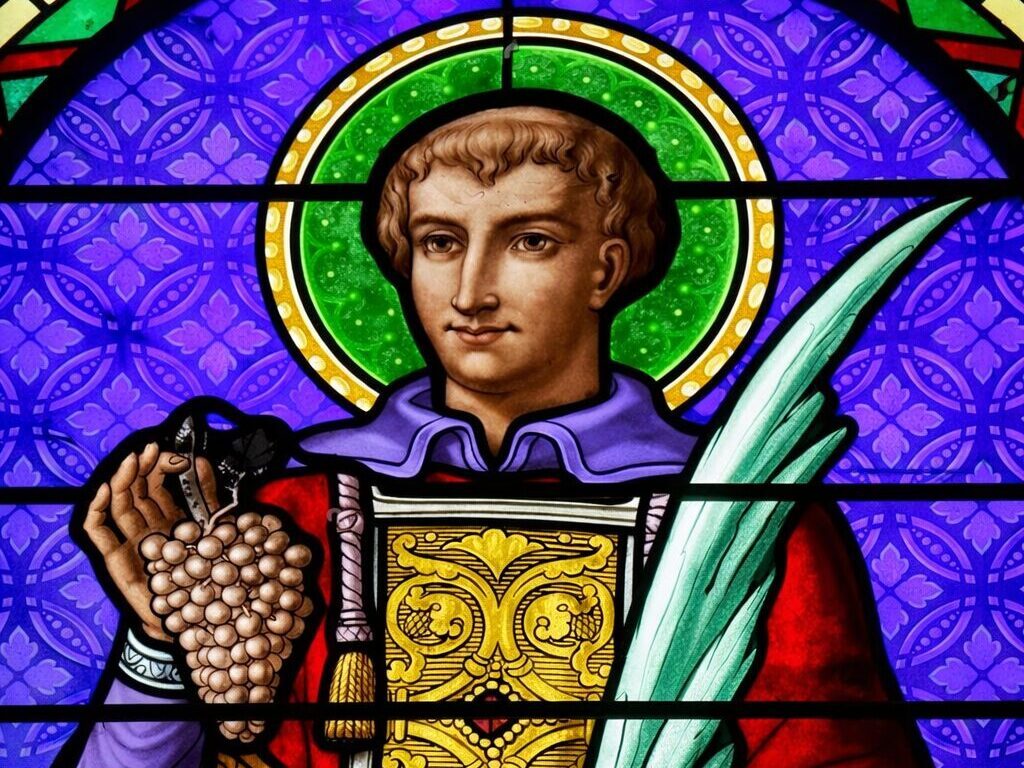
The link between this martyred deacon and viticulture emerged over centuries of tradition. Several theories attempt to explain the connection: Some suggest the association arose because Vincent’s feast day falls during a critical period in the wine-growing calendar, which is late January, when winter pruning traditionally begins, and vintners assess their vines after the dormant season. Others point to the etymological resonance of his name: “Vincent” derives from the Latin vincens, meaning “conquering” or “prevailing”.
Whatever its origins, the tradition took deep root. Across France’s wine regions, from Burgundy, Champagne, Bordeaux, the Loire Valley, and Alsace, Saint Vincent’s Day has become, and remains, a major event in the viticultural calendar. In Burgundy’s Côte d’Or, the celebration rotates annually among different wine villages, each hosting elaborate processions, vineyard blessings, masses, and communal tastings. Winemakers don traditional dress, carry statues of the saint through frost-touched vineyards, and gather for festivals that blend reverence with revelry.
The Saint Vincent Tournante, as Burgundy’s rotating festival is known, can draw tens of thousands of visitors to whichever village hosts it in a given year. It’s both a sacred observance and an economic celebration.1
A Clergyman’s War
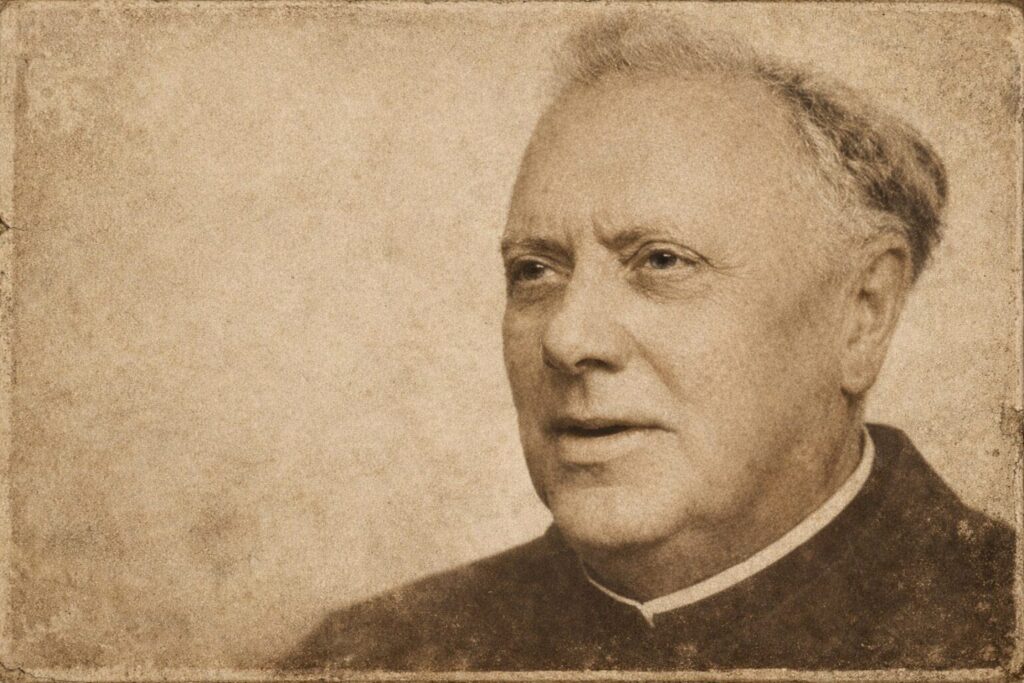
Into this deep tradition stepped Félix Kir, born on January 22, 1876, sharing his birthday with the saint’s feast day. Ordained as a Catholic priest in 1901, Kir spent decades in quiet ministry in his native Burgundy before history thrust him into a different kind of service.
When German forces occupied Dijon in June 1940, they systematically plundered Burgundy’s greatest treasure: its wine. Nazi officers requisitioned cases of Burgundy’s finest vintages, shipping them back to Germany by train while leaving winemakers facing economic ruin. For the region’s vignerons, many of whose families had tended the same plots for generations, this was devastation on multiple levels: financial, cultural, spiritual.
Kir, then in his sixties, responded with action that would have made his namesake saint proud. He organised Resistance activities, using his position as a priest to provide cover for clandestine operations. While the specific details of train sabotage remain somewhat murky in historical records, Kir’s broader Resistance work is well-documented: he helped smuggle thousands of prisoners of war and Allied airmen to safety through escape networks, coordinated intelligence gathering, and facilitated communication between Resistance cells. His clerical collar allowed him to move with less suspicion than others might have faced. Who would suspect an elderly priest of harbouring fugitives and coordinating sabotage?
The risks were enormous. Discovery would have meant torture and execution, likely in ways that would have echoed Saint Vincent’s own martyrdom. But Kir persisted, driven by a conviction that protecting his people and their way of life, including their viticultural heritage, was a sacred duty.
From Wartime Hero to Cocktail Ambassador
After the Liberation in 1944, Kir’s heroism made him a natural political leader. In 1945, at age 69, he was elected mayor of Dijon, a position he would hold for 23 years until his death on April 25, 1968, at age 92. He also served as a deputy in the French National Assembly from 1945 to 1967.
As mayor, Kir became famous for a particular form of hospitality. At every official reception, civic function, and public event, he served guests the same drink: a measure of crème de cassis… blackcurrant liqueur from Dijon, topped with Bourgogne Aligoté, a crisp white wine from the region’s Aligoté grape.
The combination wasn’t Kir’s invention. Burgundians had been mixing cassis with white wine since at least the 19th century as a simple apéritif. But Kir’s relentless, decades-long promotion changed it from a regional custom into an international standard. He understood, instinctively, what Saint Vincent’s devotees had known for centuries: wine is an expression of place, tradition, and identity.
The pairing made practical sense. Crème de cassis de Dijon, made from Burgundy’s renowned blackcurrants, held protected geographical status, a point of intense local pride. Aligoté, meanwhile, was Burgundy’s “other” white grape, more affordable and acidic than Chardonnay, sometimes considered a lesser cousin. The sweet, intensely fruity cassis balanced Aligoté’s tartness while giving the wine a beautiful ruby-pink hue. Together, they created an accessible, elegant apéritif that showcased two local products that might otherwise struggle in the shadow of Burgundy’s more prestigious wines.
By the 1950s, the drink bore Kir’s name, a tribute to his tireless advocacy. The classic proportions remain one part crème de cassis to five parts white wine, served chilled in a wine glass. The Kir Royale, which substitutes champagne or sparkling wine for still white, emerged as a more celebratory variation perfect, perhaps, for toasting both Kir’s birthday and Saint Vincent’s feast day.
A Day to Celebrate Wine’s Meaning
While January 22nd isn’t officially designated as “World Wine Day” by any international organisation (that honour is attributed to various dates depending on the body declaring it), Saint Vincent’s Day serves as wine’s most traditional and deeply rooted celebration. Across wine-producing regions, it marks the moment when the year’s agricultural cycle truly begins, when communities gather to bless their vines and pray for a successful vintage.
In Burgundy, where both Kir’s legacy and Saint Vincent’s veneration run deepest, the day is the convergence of everything wine means: faith and festivity, labour and luxury, terroir and tradition, resistance and resilience.
Modern celebrations of January 22nd blend both legacies. In wine bars across France and beyond, patrons order Kir and Kir Royales, while winemakers in Burgundy’s villages process through frost-touched vineyards, carrying Saint Vincent’s statue and blessing the dormant vines that, if fortune and the saint smile upon them, will yield another vintage by autumn.