A poison factory disguised as a homestead. A syndicate operating in the shadow of two churches. And a community that had buried too many of its young. Trans Nzoia’s worst-kept secret just ran out of time.
It was hidden between two churches. And that, perhaps, says everything about the brazenness of Kenya’s counterfeit alcohol trade.
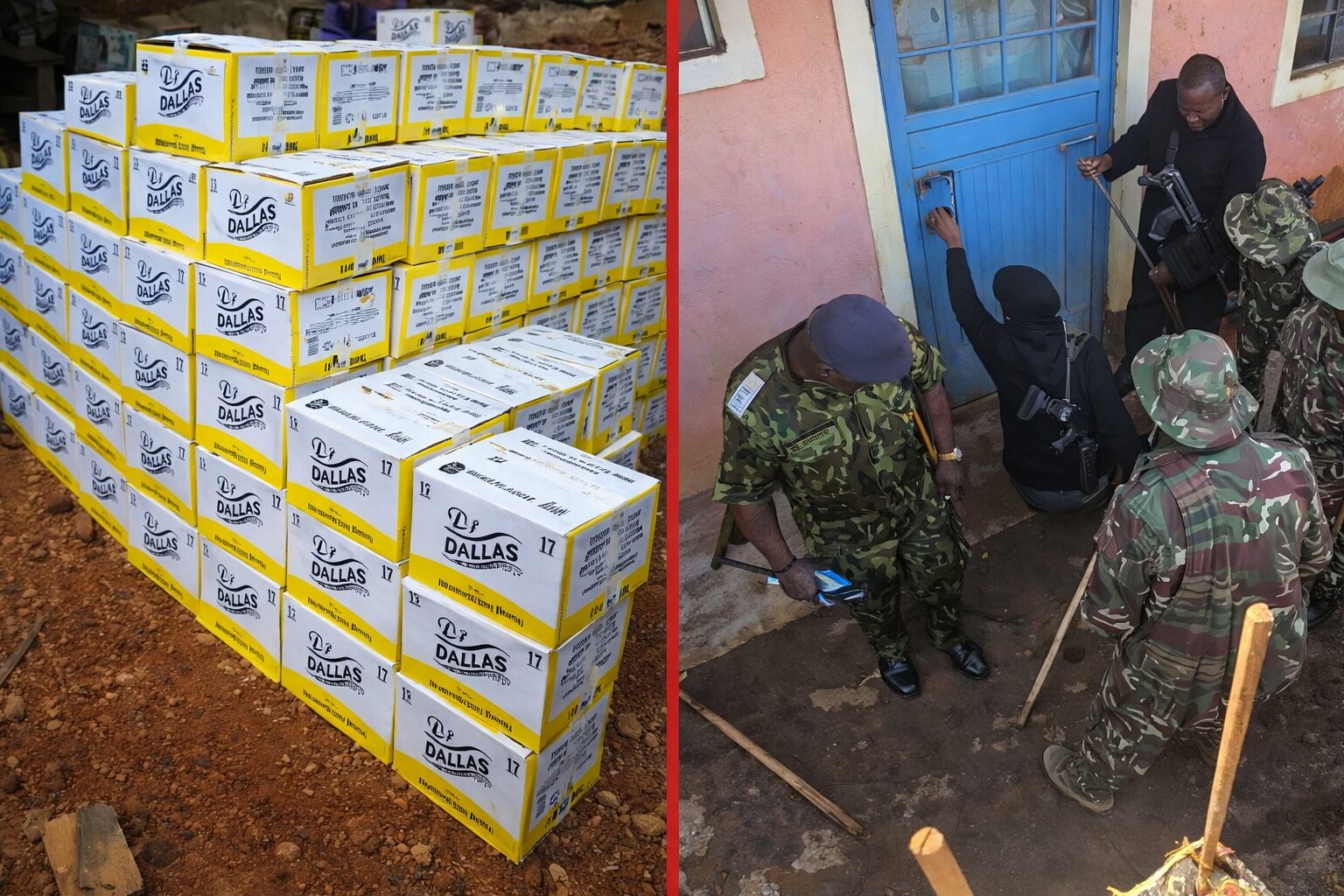
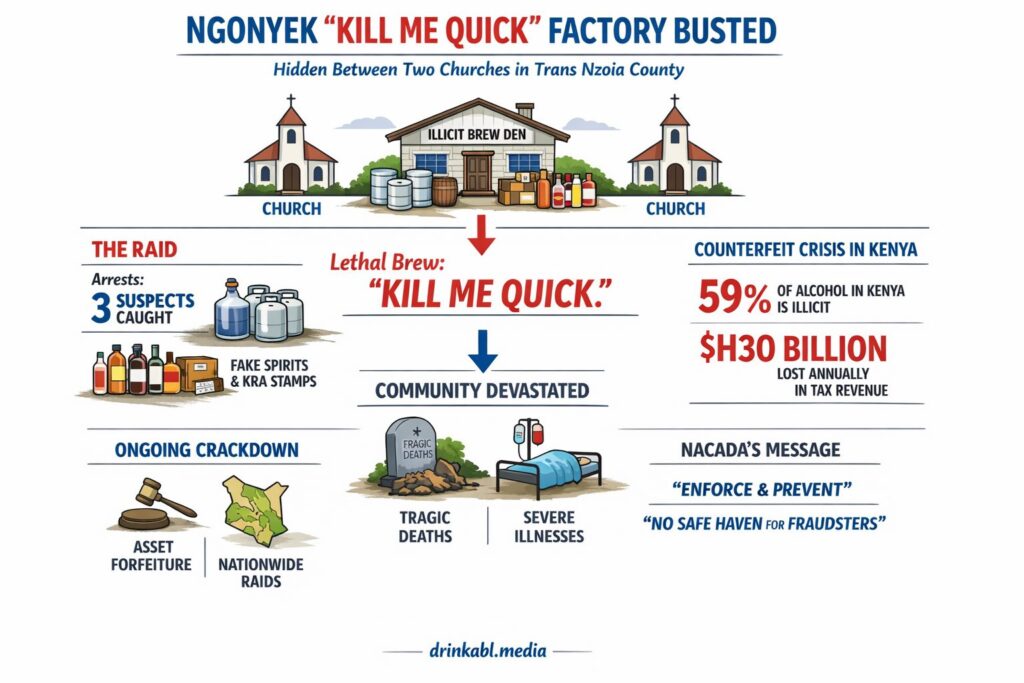
In a dramatic pre-dawn operation on Thursday, a NACADA-led multi-agency team unravelled a sophisticated counterfeiting and illegal ethanol distribution network operating out of a quiet homestead in Ngonyek, Trans Nzoia County. The raid resulted in the arrest of three suspects and the seizure of over 400 litres of industrial ethanol, a substance strictly prohibited for human consumption.
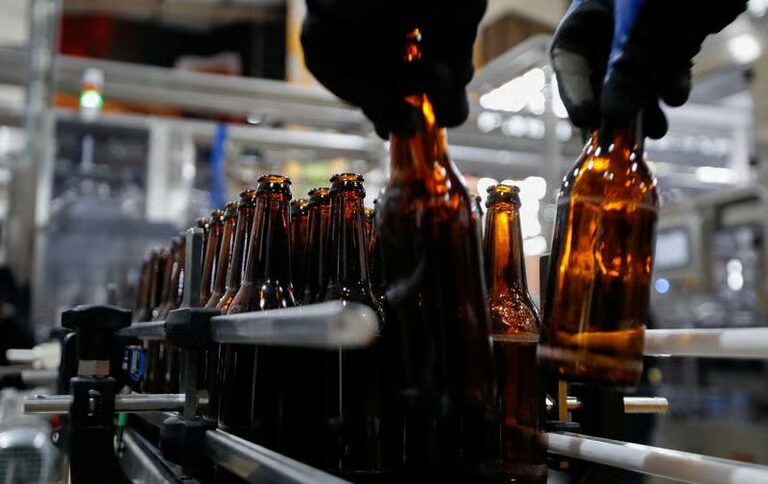
The homestead, belonging to a previously “untouchable” influential local businessman, had been converted into a fully operational illegal packaging centre. Inside, investigators found hundreds of empty 250ml branded spirits bottles, thousands of fake cartons, and counterfeit Kenya Revenue Authority (KRA) excise stamps designed to fool consumers and tax inspectors alike.
The ethanol powering this operation is industrial-grade, the same substance used in manufacturing, not drinking. Locally, the lethal brew it produces goes by one chilling name: kumi kumi. “Kill me quick.”
A County Exhausted by Grief
Community members welcomed the raid, citing the terror the illegal brew had inflicted on the area. Residents recounted incidents of young people falling gravely ill, and in some cases, dying, after consuming suspected counterfeit alcohol laced with toxic industrial ethanol.
Within 12 hours of the Ngonyek bust, NACADA struck again, dismantling a cannabis distribution hub operating directly opposite Kitale Town’s central bus terminal. Six suspects were arrested across both operations, laying bare the depth of Trans Nzoia’s substance abuse crisis.
The Quote That Defines This Crackdown
NACADA CEO Dr Anthony Omerikwa has been direct and unapologetic throughout the national crackdown. After the Trans Nzoia operations, he stated:
“The President’s directive is bearing fruit. These are not just arrests; they are the beginning of a process. We are compiling dockets to ensure that beyond prosecution, we pursue asset forfeiture. We want to ensure that these businessmen lose the value of their illicit trade.”
Kenya Is Drowning in Fake Booze
What happened in Ngonyek is not a local scandal. It is a national emergency with a paper trail.
According to Euromonitor International, approximately 59 per cent of all alcoholic beverages sold in Kenya are illicit, meaning for every 10 bottles a customer buys, roughly six are likely counterfeit or unregulated. The KRA estimates the country loses over Sh30 billion annually to tax evasion linked to illicit alcohol, with total revenue losses from the broader illegal market estimated at more than Sh71 billion annually.
The fake KRA stamps found in Ngonyek are not a cottage industry. They are part of a sophisticated, nationally embedded fraud, one the Kenya Revenue Authority’s own Auditor-General flagged in 2024, when it emerged the agency could not account for nearly 10 million excise stamps in a single financial year.
Enforcement Is Escalating, But So Is the Trade
The Trans Nzoia raids are part of a rapidly intensifying national offensive. Since President Ruto declared substance abuse a national development and security emergency, NACADA has conducted back-to-back operations across Murang’a, Emali, Kapsabet, Kirinyaga, and Kitui.
But Omerikwa is clear-eyed about the limits of enforcement alone:
“Enforcement disrupts availability, but prevention addresses vulnerability. We are scaling up both approaches because lasting impact requires a comprehensive response.”
The seized ethanol and packaged items have been transported to a NACADA laboratory for chemical analysis. Results will be tendered as court evidence. The three Ngonyek suspects face charges of illegal possession and distribution of industrial ethanol, manufacturing counterfeit goods, and defrauding the government through fake excise stamps.
The churches next door still stand. But the factory between them is gone.
📖 Further Reading on Drinkabl:
- Economic Shifts and Changing Tastes: The Impact on Premium Spirits in Nigeria : How adulteration fears are reshaping what Africans choose to drink
- These Are the 20 Nigerian Beverage Companies to Watch in 2026 : The industry battle against excise fraud and counterfeiting
- Liberia’s Beverage Market Immersion: A Nigerian Traveller’s POV : How counterfeit culture shapes consumer trust across West Africa