A Lagos court has handed Nigeria’s food and drug regulator its most visible courtroom win in recent memory, but the verdict lands against a backdrop of a fake alcohol crisis that regulators, legislators, and the drinks industry are still struggling to contain.
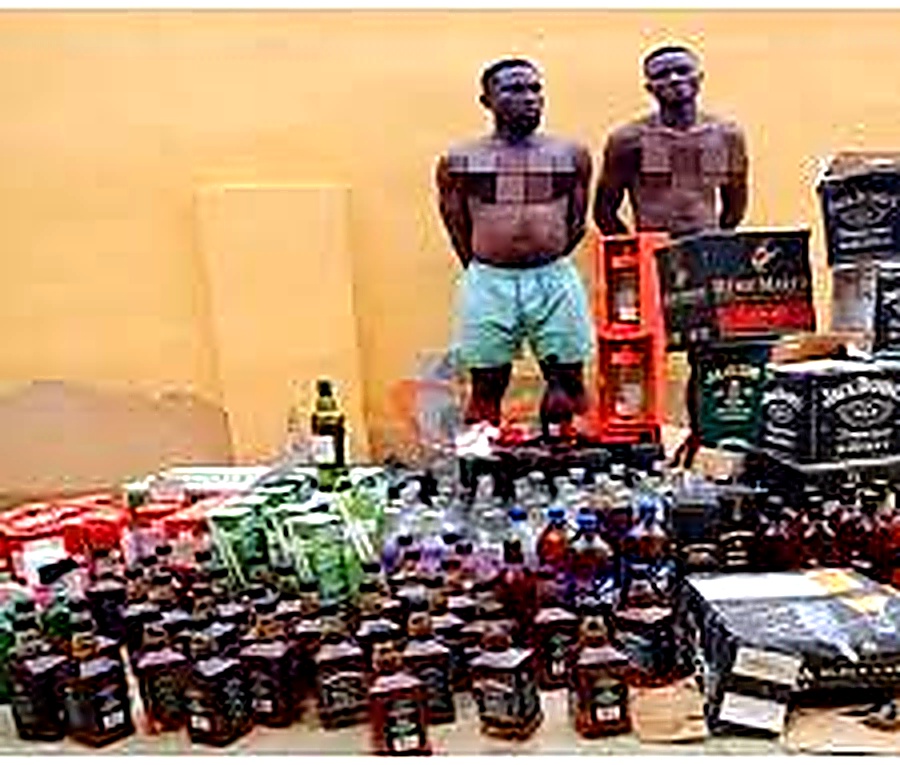
Nigeria’s Federal High Court in Ikoyi convicted two men, Nelson Aziakpono, 58, and Ikegwuonu Ikechukwu, 28, on eight counts and sentenced each to five years per count, or a fine of ₦10 million per count, delivering a combined 40-year term. The case was prosecuted by the National Agency for Food and Drug Administration and Control (NAFDAC).
The conviction followed a December 3, 2025 enforcement raid at Kojo Street, Ijanikin, and Vespa Market in Lagos, where NAFDAC operatives uncovered large quantities of fake and unregistered alcoholic beverages, including counterfeit versions of Hennessy, Jameson Irish Whiskey, William Lawson’s, and Gordon’s Gin. Laboratory investigations confirmed the seized products were unwholesome, misleadingly packaged, and unsafe for consumption.
“The defendants were charged on eight counts bordering on possession of unwholesome products, manufacture and distribution of counterfeit beverages, and related offences under applicable laws.” — NAFDAC
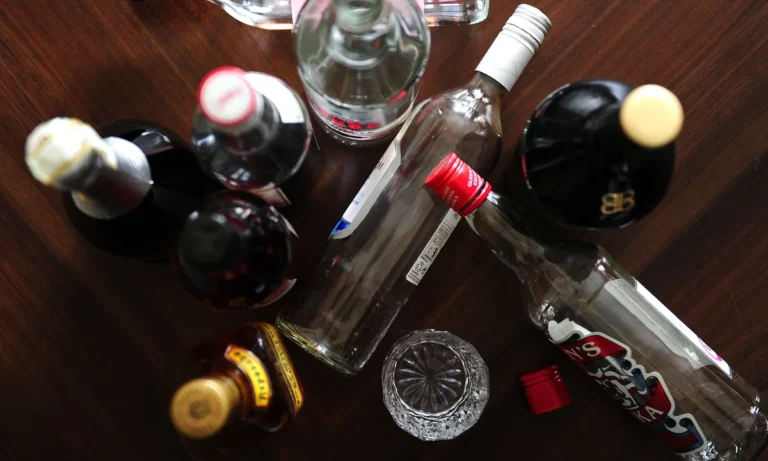
The sentence is significant, but it is a single conviction inside a vast and growing shadow market. Industry experts estimate that roughly 30% of alcoholic beverages in Nigeria are adulterated, counterfeiters substitute ethanol with cheaper, toxic chemicals like methanol to make fake alcohol potent. Methanol has no colour or flavour, which makes it particularly difficult to detect in drinks.
The health stakes are severe. According to the WHO’s Global Status Report on Alcohol and Health, more than three million people die worldwide annually as a result of alcohol poisoning. NAFDAC also notes that the International Agency for Research on Cancer found that 4.7 percent of all cancer cases in Nigeria in 2019 can be attributed to consumption of adulterated alcohol.
Nigeria’s counterfeit spirits problem has grown loud enough to reach international corridors. The UK’s Foreign, Commonwealth and Development Office issued a renewed travel advisory warning British citizens about the growing risk of methanol poisoning from counterfeit drinks in several countries, including Nigeria, noting a documented rise in cases of serious illness and death.
“Loads of fake drinks out there, selling at the price of the original. Better to revert to beer.” — @NickIyke, quoted in Drinkabl.media’s analysis of Nigeria’s premium spirits market
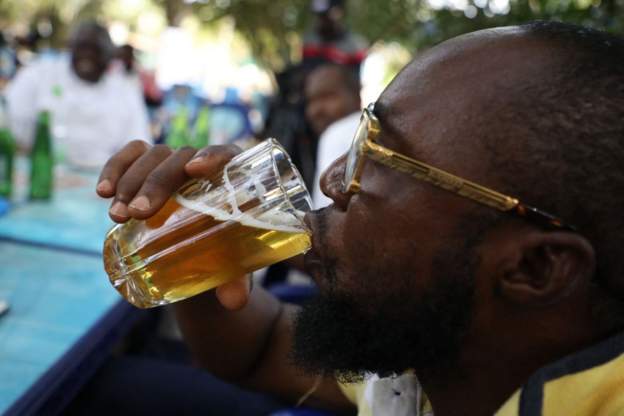
That consumer cynicism isn’t just anecdotal, it’s reshaping category behaviour. As Drinkabl.media has reported, adulteration fears are actively pushing consumers away from premium spirits, with some shifting to beer as a safer, more reliable alternative.
The enforcement momentum is real. In the last three quarters of 2024, over ₦500 million worth of fake drinks were reportedly seized in Lagos in a series of NAFDAC raids. But counterfeiters are becoming more sophisticated — increasingly erasing unique stamps that brands place on bottles, blurring the line between genuine and fake product.
NAFDAC itself described the illicit operations as “shops-turned-factories” using water from unhygienic sources, harmful chemicals, saccharin, colouring, dirty recycled bottles, and cloned packaging of well-known brands.
Meanwhile, the regulatory environment around alcohol in Nigeria remains unsettled. As Drinkabl.media reported, the government’s sachet alcohol ban, designed to cut off a key vector of informal and adulterated spirits consumption, remains politically contested, with enforcement halted and resumed multiple times since December 2025.
NAFDAC urged Nigerians to remain vigilant. The agency advises consumers to buy only from licensed retailers, scrutinise packaging for spelling errors or tampered seals, and report suspicious products to the nearest NAFDAC office.
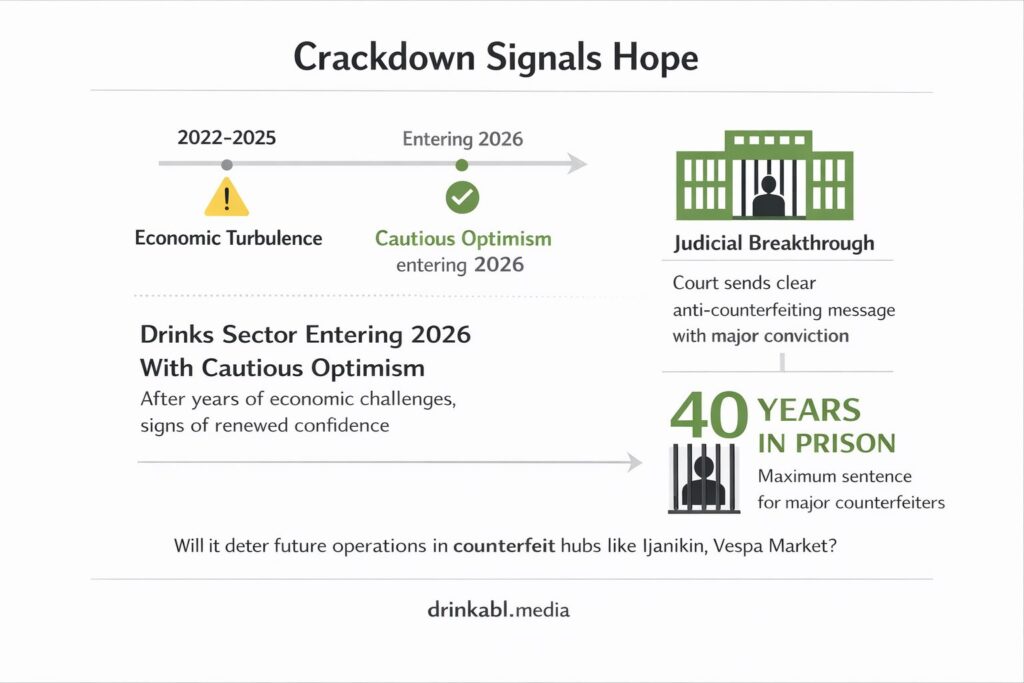
For a country whose drinks industry is entering 2026 with cautious optimism after years of economic turbulence, this conviction is a signal that the courts are willing to hold counterfeiters accountable at scale. Whether 40 years in prison deters the next operation in Ijanikin or Vespa Market remains to be seen.
Further Reading from Drinkabl.media: