Two of Nigeria’s biggest brewers are raising prices days apart, a signal that despite easing inflation, the economics of making beer in Nigeria remain brutally unforgiving.
Nigerian Breweries (NB) Plc and Guinness Nigeria have separately notified distributors of price increases on selected stock-keeping units (SKUs) across their portfolios this March, each citing the same relentless pressure: the soaring cost of doing business in Africa’s largest economy.
NB, majority-owned by Heineken N.V. of the Netherlands with a 56.69% stake and Nigeria’s biggest brewer by market share, issued a notice to distributors dated March 13, signed by Zonal Business Manager (West) John Oloche Ademu. The new prices take effect on March 20.
“As the country’s economic landscape continues to evolve, we want to inform you about an upcoming price adjustment. Due to increases in operational and input costs, we will be implementing a price increase on select SKUs, effective Friday March 20, 2026.”
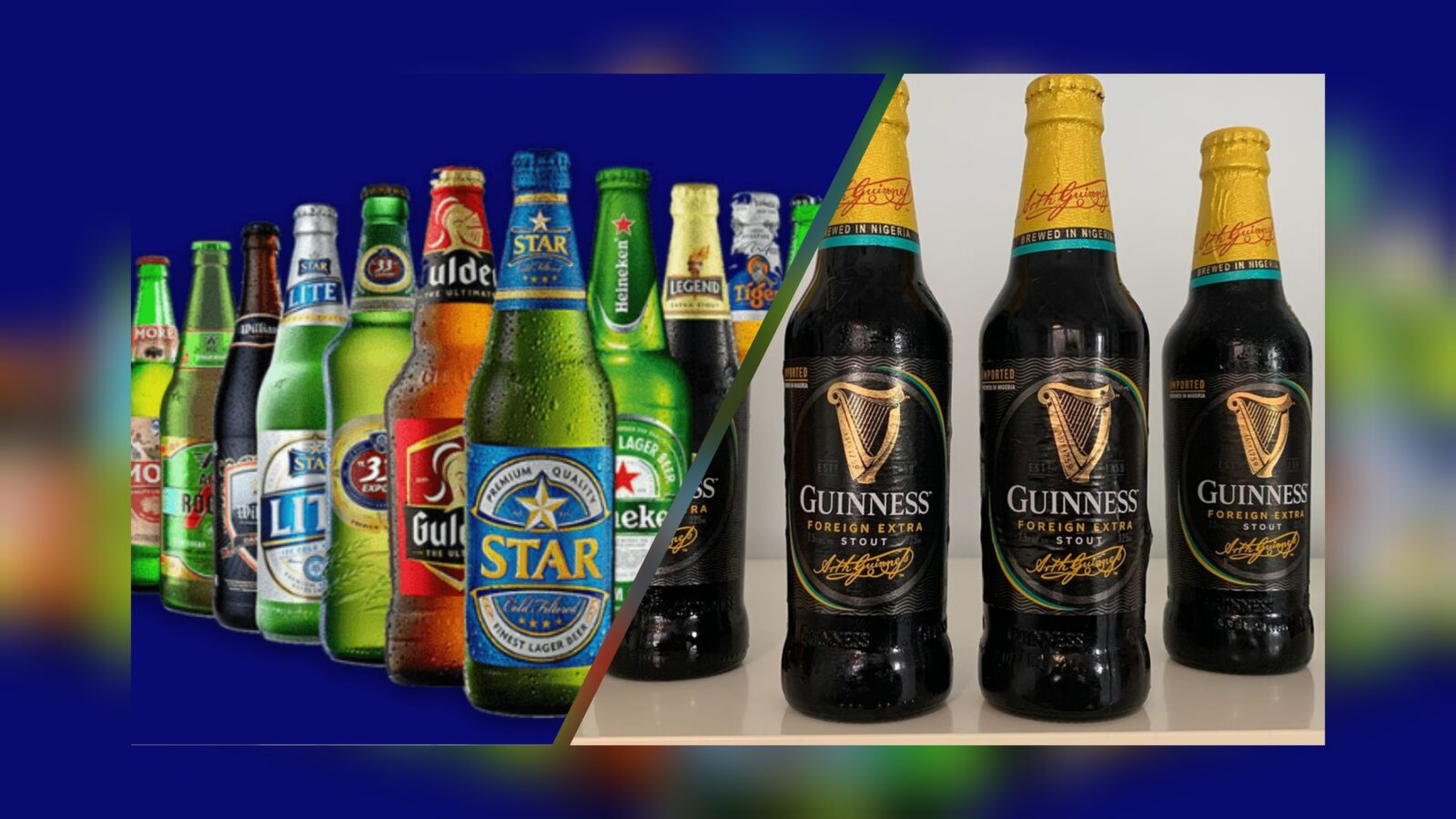
NB’s portfolio spans some of Nigeria’s most recognisable labels, Star Lager, Gulder, Legend Extra Stout, Heineken, Goldberg, Life, and Star Radler on the alcoholic side, and Maltina, Amstel Malta, Fayrouz, Climax Energy Drink, and Malta Gold in its non-alcoholic range. The company said fully funded and confirmed orders already in its system before March 20 would be honoured at existing prices.

Guinness Nigeria followed with its own distributor notice on March 14, announcing price adjustments across categories effective March 27.
“Following the prevailing economic conditions which have impacted significantly on our cost of doing business, this is to inform you that we plan to take a price increase on selected SKUs across categories.”
Guinness Nigeria, now under the stewardship of Tolaram, the Singapore-headquartered conglomerate that completed its acquisition of Diageo’s 58.02% shareholding on September 30, 2024, similarly offered distributors a window to lock in current prices on fully funded orders raised before March 27. Crucially, Diageo retains ownership of the Guinness brand, licensed back to Guinness Nigeria under a long-term royalty agreement. Neither company disclosed specific percentage increases or which SKUs are affected.
A Sector Crawling Back From the Brink
The back-to-back announcements land at a pivotal moment for Nigeria’s brewing industry, one that is finally clawing its way back to profitability after two devastating years.
The sector recorded a second straight annual Loss Before Tax of ₦364.8 billion in 2024, weighed down by high operating costs, currency depreciation, and expensive fuel. Yet the tide began turning: in the fourth quarter of 2024, all four major players, Nigerian Breweries, Guinness Nigeria, International Breweries, and Champion Breweries, posted a combined Profit After Tax of ₦7.4 billion, their first quarterly profit since Q1 2022.
The recovery has since gathered pace. Nigerian Breweries swung back to full-year profit in 2025, posting net income of ₦99.1 billion for the year ended December 31, reversing a ₦145 billion loss in 2024, as revenue climbed 35% to a record ₦1.47 trillion. The rebound was driven by price increases, cost discipline, and sharply lower finance charges following a 2024 rights issue that cut the company’s foreign currency exposure.
Yet cost pressures have not fully relented, and the March price hikes suggest both brewers are not done shoring up margins. As Drinkabl.media previously reported, the Beer Sectoral Group, representing NB, Guinness Nigeria, and International Breweries, escalated its campaign against Nigeria’s proposed 2026 to 2028 excise duty framework, warning that a combination of ad valorem excise taxes, tax stamps, and traceability requirements could wipe out ₦425 billion in industry value and accelerate job losses. The industry body engaged the Federal Ministry of Industry, Trade and Investment directly on the issue.
Macro Relief, But Unevenly Felt
There is measured comfort in Nigeria’s wider economic data. Nigeria’s annual inflation rate eased to 15.10% in January 2026, a sharp decline from 27.61% in January 2025, marking the tenth consecutive monthly decline, the lowest level since November 2020, partly reflecting a stronger naira that has trimmed the cost of imports. Alcoholic beverages and tobacco inflation specifically moderated to 13.62% year-on-year in January, down from 14.98% the prior month.
But the relief is uneven for industrial operators. Nigeria’s naira lost 46.2% of its value in 2024, closing the year at ₦1,625 per dollar, and petrol prices averaged ₦939.5 per litre in December, having peaked at ₦1,184.83 per litre in May 2024. For brewers dependent on imported raw materials, barley, packaging inputs, and equipment, the cost scars of that depreciation have not fully healed.
The moves by NB and Guinness echo a pattern repeated across Nigeria’s consumer goods sector, where manufacturers have cycled through multiple rounds of price reviews since 2023, testing just how much wallet fatigue Nigerian consumers will absorb, and how far volume can hold before drinkers trade down or opt out entirely.
Further Reading
Nigeria’s Brewers Sound the Alarm on Three-Year Excise Plan, With ₦425bn on the Line