By Victor Owencho
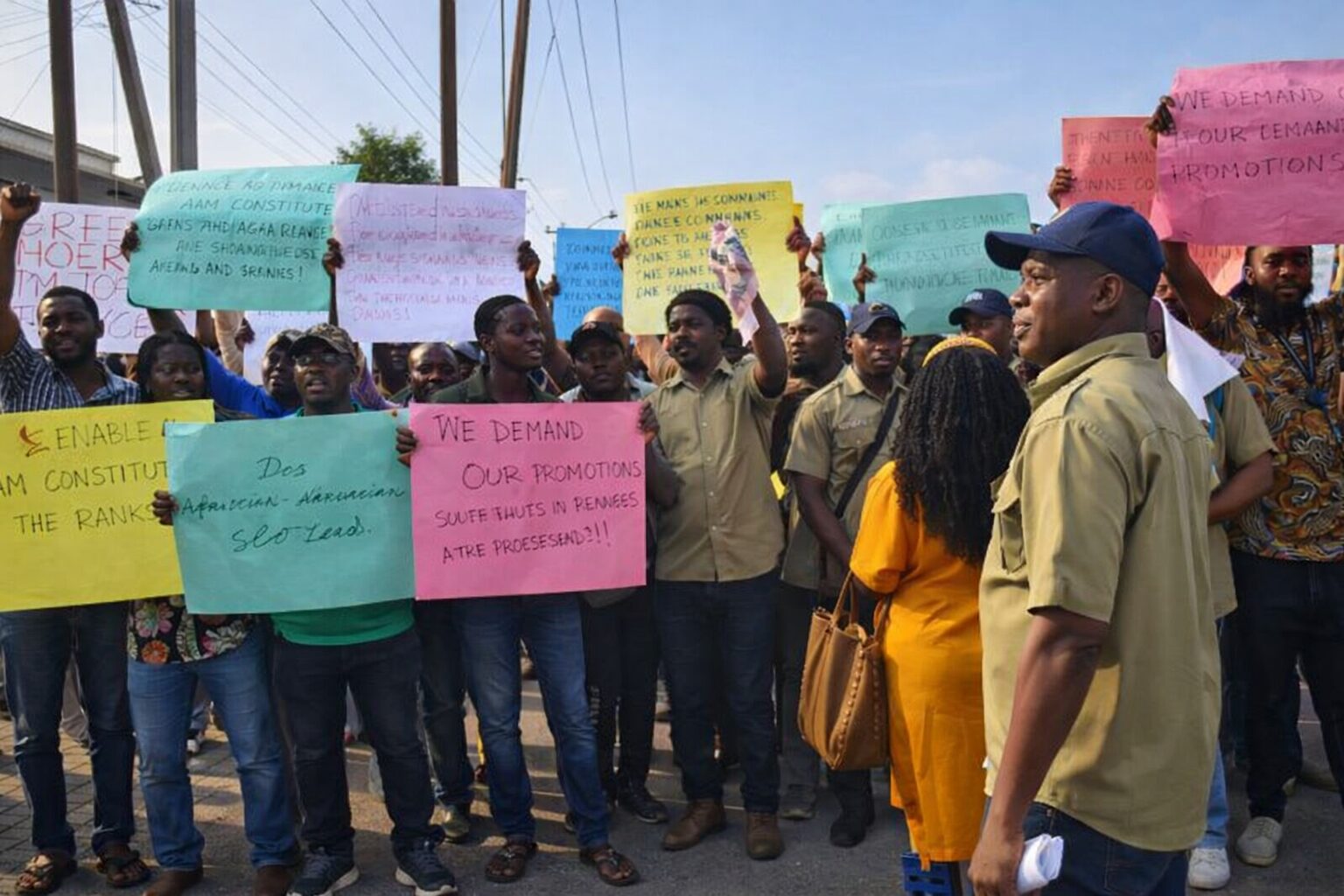
The Distillers and Blenders Association of Nigeria (DIBAN) stormed the Lagos office of the National Agency for Food and Drug Administration and Control (NAFDAC) on Thursday to protest the agency’s ban on manufacturing and selling alcoholic beverages in sachets and small PET bottles.
The demonstration drew support from the Nigeria Labour Congress (NLC) and the Trade Union Congress (TUC), with protesters brandishing placards bearing messages such as ‘Stop destroying local manufacturers’, ‘N2 trillion investment deserves protection’, ‘5.5 million Nigerians cannot be pushed to the streets’, and ‘The Renewed Hope Agenda must work for all Nigerians’.
NAFDAC announced on Wednesday that it had commenced full enforcement of the ban on alcohol packaged in sachets and polyethene terephthalate (PET) bottles nationwide, a directive that has sparked significant backlash from industry stakeholders.
The ban originated from a Senate directive issued in 2024, following a motion by Asuquo Ekpenyong, senator representing Cross River South, which called for an end to the production of alcoholic beverages in sachets and small bottles by December 2025. NAFDAC subsequently announced it would implement the total ban by that deadline.
The beverage industry has warned of severe economic consequences. The Manufacturers Association of Nigeria (MAN) and various civil society organizations argue that the policy could cost the economy trillions of naira and eliminate millions of jobs in the production, distribution, and retail sectors.
During a media briefing in Lagos on Wednesday, Mojisola Adeyeye, NAFDAC’s director-general, defended the enforcement action as necessary for public health protection. She stated that high-alcohol-content beverages in sachets and small containers have become problematic due to their affordability, accessibility, and ease of concealment, making them particularly attractive to vulnerable populations, including minors.
The affected products have been a staple in Nigeria’s informal economy for decades, with sachet alcohol typically retailing between N50 and N200, making it accessible to low-income consumers. Industry figures indicate that the sachet alcohol segment accounts for approximately 40% of Nigeria’s total alcohol market by volume.
NAFDAC’s enforcement action includes raids on production facilities, seizure of banned products, and potential sanctions against non-compliant manufacturers. The agency has positioned the ban as part of broader efforts to combat alcohol abuse and protect public health, citing concerns about underage drinking and alcohol-related health issues.
The protest underscores growing tensions between regulatory health measures and economic considerations in Nigeria’s manufacturing sector, particularly as the country grapples with high unemployment and economic pressures under the current administration’s economic policies.