Nigeria’s non-alcoholic beverage sector is staring down what many producers are calling a fiscal ambush, and this time, the entire organised private sector is standing in the way.
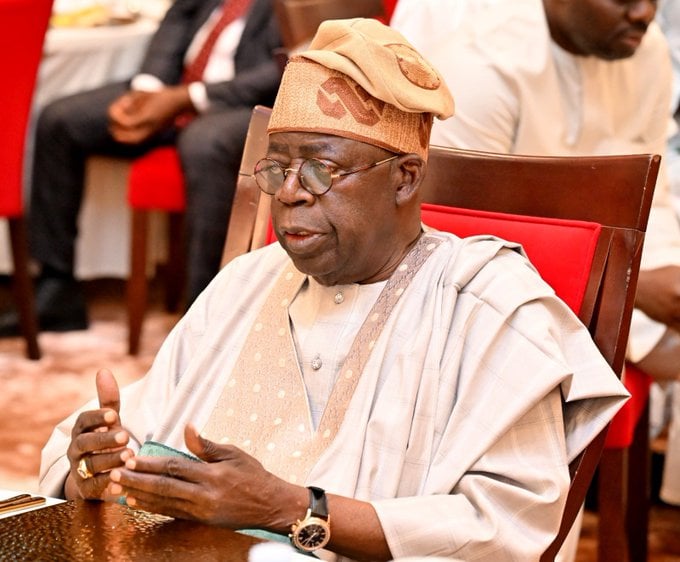
In a coordinated, full-page advertorial published across major national newspapers this week, five of Nigeria’s most powerful business groups delivered an urgent message to President Bola Tinubu: stop the proposed bill before it dismantles one of the country’s most critical economic pillars.
At the centre of the controversy is a provision in the Customs, Excise and Tariff Amendment Bill that would replace the current fixed ₦10 per litre excise duty on non-alcoholic beverages with a percentage-based levy tied to retail price, a move the Organised Private Sector of Nigeria says could impose severe additional strain on both businesses and consumers.
The bill is sponsored by Senator Ipalibo Harry Banigo of Rivers West, a medical doctor and former Deputy Governor of Rivers State. She has framed it as a public health investment, arguing the amendment is not a new tax but a reorientation of existing sugar-sweetened beverage revenue toward primary healthcare and preventive health initiatives. The private sector sees it differently. Entirely.
“An additional excise burden would further increase production costs, reduce capacity utilisation, delay or cancel planned investments, and threaten the livelihoods of thousands of small distributors, retailers, and informal traders who depend on high-volume, low-margin sales. These pressures would inevitably be passed on to consumers through higher prices, leading to reduced demand and potential further job losses across the value chain.”
The warning from the OPS, comprising the Manufacturers Association of Nigeria, NACCIMA, NECA, NASSI, and NASME, is not merely rhetorical. Nigeria’s non-alcoholic drinks sector currently supports an estimated 1.5 million jobs, drives backward integration under the Nigeria Sugar Master Plan II, and contributes between 40 and 45 per cent of gross tax revenues, yet it already operates under thin margins and severe macroeconomic pressure.
The timing is particularly alarming. Nigeria’s beverage manufacturers are still absorbing the shock of naira devaluation, spiralling energy costs, and rising prices for imported inputs and packaging materials. Piling a retail-price-based levy on top of these pressures, the OPS argues, would tip an already fragile industry into contraction.
The proposed amendment also introduces mathematical, legal, and administrative contradictions, worsens Nigeria’s already fragmented fiscal environment, and directly conflicts with national industrialisation priorities, including the Nigeria Sugar Master Plan.
“While we fully support well-designed fiscal reforms and evidence-based public health interventions, we are concerned that the Bill, in its current form, raises significant social, economic, administrative, and legal issues that could undermine Your Excellency’s broader fiscal reform objectives.”
The groups also raised a pointed irony: the bill could end up costing the government more than it generates. When the formal market shrinks, VAT and corporate income tax collections fall, and consumers shift to lower-cost, informal beverages that are untaxed and unregulated, reducing traceable economic activity and leaving states facing fresh revenue pressure at the worst possible moment.
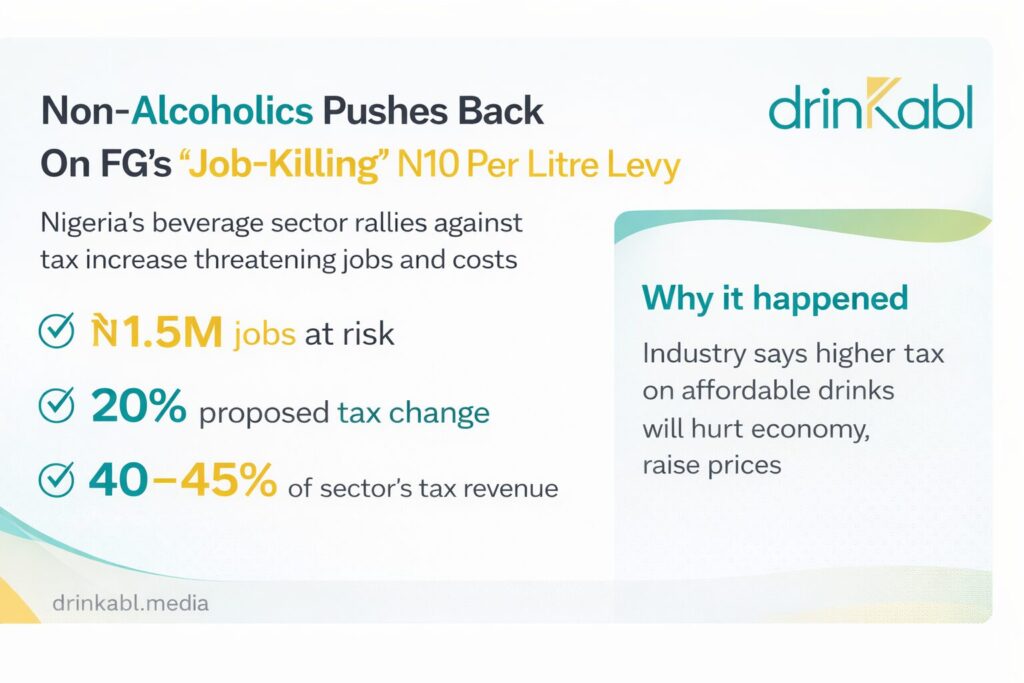
There are also serious administrative red flags. The current proposal, which suggests a 20 per cent levy per litre of retail price, contains internal contradictions that make consistent implementation impossible, the OPS stated in its submission to the National Assembly. Lawmakers were also faulted for advancing the bill without consulting the Ministry of Finance, the Presidential Fiscal Policy and Tax Reform Committee, FAAC, and other key institutions.
The broader health debate around beverage taxation is hardly unique to Nigeria. Health advocacy group CAPPA has separately called for a far more dramatic intervention, urging the government to raise the SSB tax from the existing ₦10 per litre to at least ₦130 per litre, arguing it would reduce consumption and push manufacturers to reformulate their products. But the OPS insists these arguments draw primarily from foreign market studies with little relevance to Nigeria’s economic realities, and that no national evaluation of the current levy has even been published.
The bill’s trajectory also puts Nigeria in conflict with itself. The administration has publicly committed to stability, predictability, and the removal of barriers that discourage investment. Introducing a retail-price-based levy now risks adding uncertainty to a sector already under pressure, and appears to be moving forward without the fiscal coordination such a sensitive change requires.
The OPS is asking Tinubu to engage National Assembly leadership to halt the legislative process entirely and step down the bill pending broader stakeholder consultations. The pressures now building on Africa’s beverage industry are as much about policy as they are about production.
Whether the presidency acts, or allows the bill to proceed, will say a great deal about whose interests Nigeria’s fiscal framework is truly designed to protect.
FURTHER READING