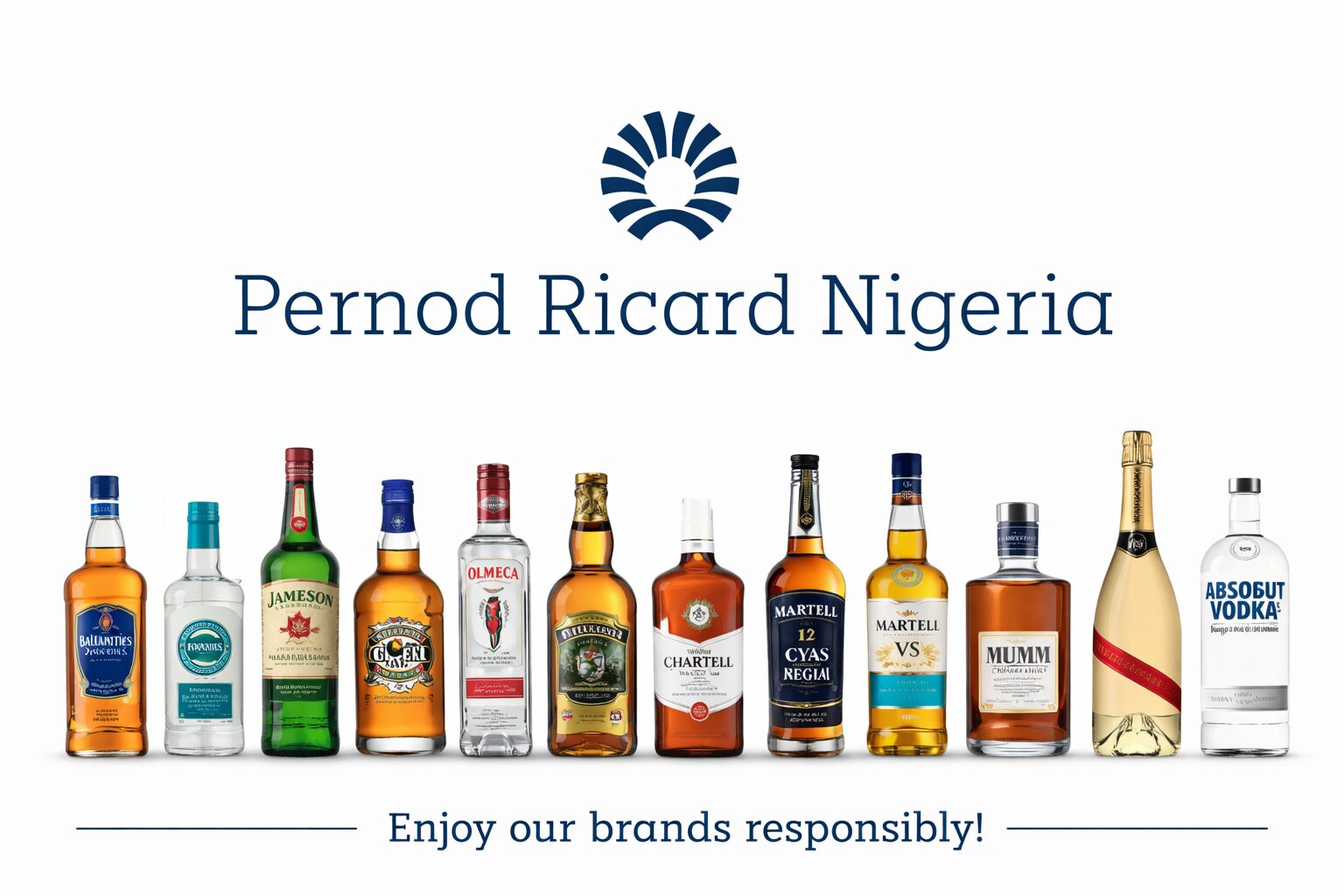
Nigeria is drinking up. And the world’s second-largest spirits group wants to be there for every pour.
As global spirits giants navigate turbulent markets, Pernod Ricard’s group-wide revenues slipped 7.6% in Q1 fiscal 2026, dragged down by sharp declines in China and the US, Nigeria is emerging as one of the brightest spots on the map. Michael Ehindero, Managing Director of Pernod Ricard Nigeria, says the company is doubling down on the market, anchoring its local strategy in the premiumisation wave reshaping how Nigerians drink.
“Our approach is guided by extensive research which highlights where growth lies and how consumer tastes are evolving in line with global premiumisation trends.”
That confidence is backed by numbers. Nigeria recorded 81% sales growth for Pernod Ricard in fiscal 2022, among the highest in any emerging market globally, and has since been flagged by the group as a standout performer. Jameson has become the number one whiskey brand in Nigeria, a feat that would have seemed improbable when the company launched with just a handful of staff in Lagos over a decade ago.
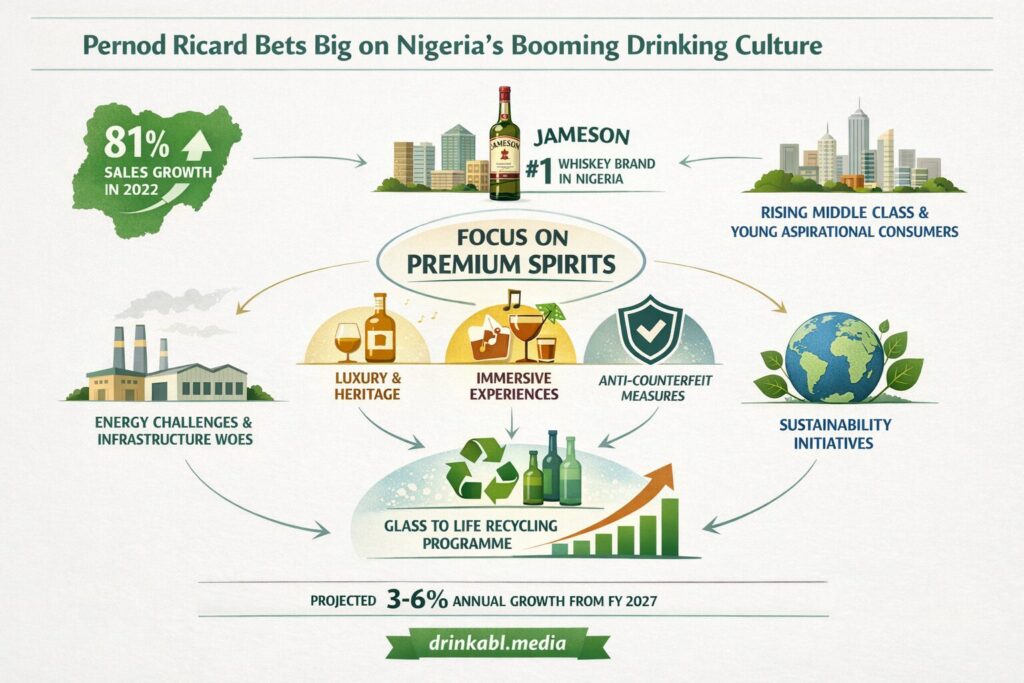
The Nigerian story is not just about volume. It’s about trade-up. A growing middle class, rising urbanisation, and a young, aspirational consumer base are pulling drinking culture toward internationally recognised labels, trends explored in detail in Drinkabl’s roundup of the 20 Nigerian beverage companies to watch in 2026.
Ehindero is leaning into brand storytelling to cement loyalty.
“It is about relevance, essence, and experiences. Our brands stand for something: Martell represents audacity and luxury, while Jameson stands for heritage and craftsmanship.”
That philosophy is being translated into immersive, culturally rooted activations, artist collaborations, experiential pop-ups, and events that embed the brands within Nigeria’s creative class. It’s a playbook designed to make the portfolio sticky with younger consumers.
But growth ambitions here come wrapped in complexity. Counterfeiting remains a serious threat. Ehindero has called for decisive action against fake alcohol, warning that counterfeit products pose real dangers to consumer safety and brand integrity. The company maintains an internal brand security unit working directly with enforcement agencies. Nigeria’s broader regulatory environment for alcohol brands is also under strain, as the sachet alcohol debate highlights in a recent Drinkabl report on the NAFDAC crackdown.
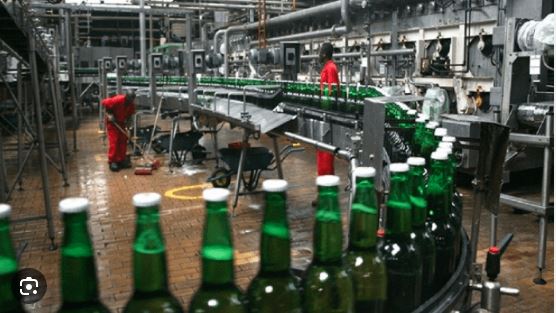
Then there’s the infrastructure headache. Nigerian beverage operators are contending with spiralling energy costs, a challenge Drinkabl recently exposed in its investigation into how beverage plants are losing money on energy without even realising it.
On sustainability, Pernod Ricard Nigeria is walking a local line within a global framework. The company has eliminated single-use plastics from offices and activations, and launched the Glass to Life recycling programme, collecting post-consumer bottles and feeding them back into the circular economy.
“Local solutions are critical to addressing global sustainability challenges.”
For a group navigating pressure in its biggest markets, Africa , with Nigeria at the Centre, is expected to carry meaningful weight in Pernod Ricard’s projected recovery of 3–6% organic net sales growth annually from FY2027. The bet on quality over volume, on experience over transaction, may well be Nigeria’s defining moment.
Further Reading on Drinkabl.media: