Another week, another protest in Abuja. The sachet alcohol ban has become one of the most contested regulatory standoffs, particularly in recent times, and it shows no sign of resolution. We have been tracking this policy collision since it first ignited in late 2025, and every new development confirms that the NAFDAC sachet alcohol ban is now a full-blown crisis straddling public health, industry survival, and the limits of regulatory authority.
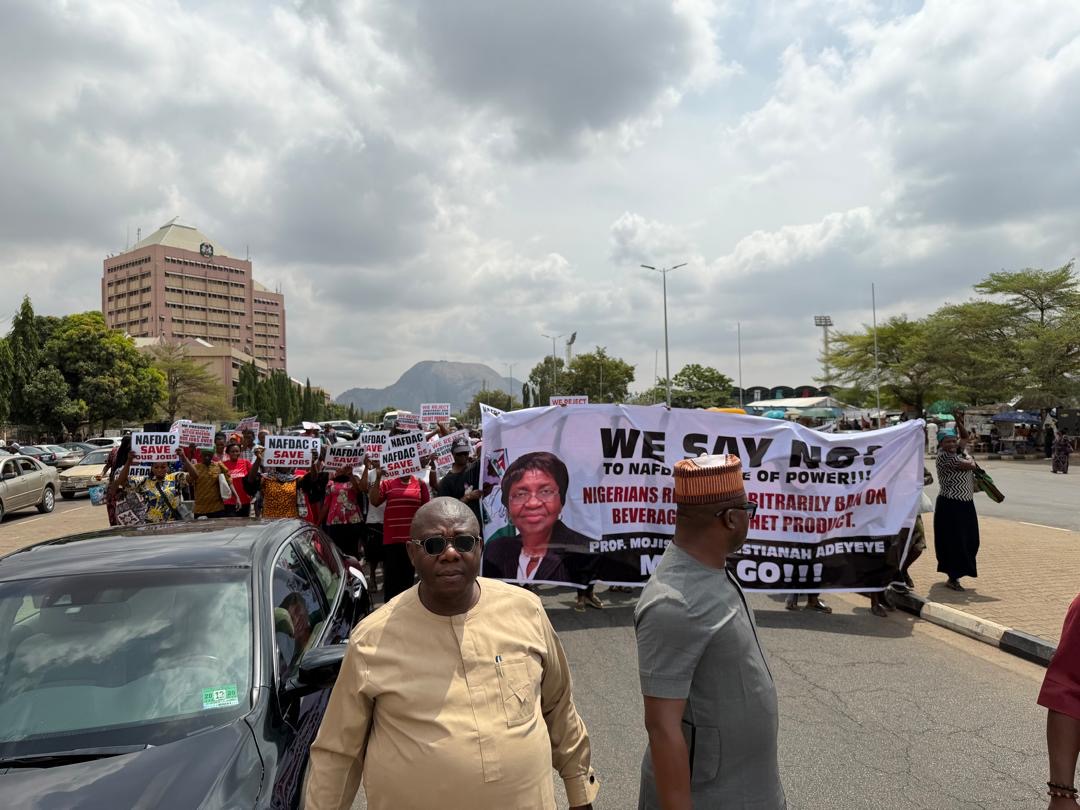
The last may not be heard on the ban of sachet alcohol in Nigeria as latest developments show that a group under the aegis of the Concerned Citizens for Change and CELCE-Africa staged a demonstration at the Federal Ministry of Health in Abuja, targeting NAFDAC’s continued enforcement of the ban on sachet alcohol and alcoholic beverages in bottles below 200ml.
The group’s director, Ambassador Kingsley Enwelim Nwanze PhD, described the enforcement as illegal, arbitrary and economically damaging, alleging it contravenes a directive that had instructed NAFDAC not to disrupt affected businesses pending the outcome of a joint committee review, as well as earlier resolutions from the House of Representatives calling for stakeholder consultation before action.
“Sustaining the ban could negatively impact government revenue, disrupt the value chain, and encourage smuggling of substandard alternatives into the country.” — Amb. Kingsley Enwelim Nwanze, Concerned Citizens for Change
That is a sharper charge than initial reports conveyed. The protesters explicitly called on President Bola Ahmed Tinubu to take decisive action and remove the NAFDAC Director-General, Prof. Mojisola Christianah Adeyeye, insisting that her continued stay in office was no longer in the public interest.
It is not the first time that call has been made on the streets of Abuja. As we reported in February, the Rebirth Nigeria Movement made the same demand, with the NLC and TUC blockading NAFDAC’s Lagos headquarters in solidarity with sealed factories. The protest map is widening.
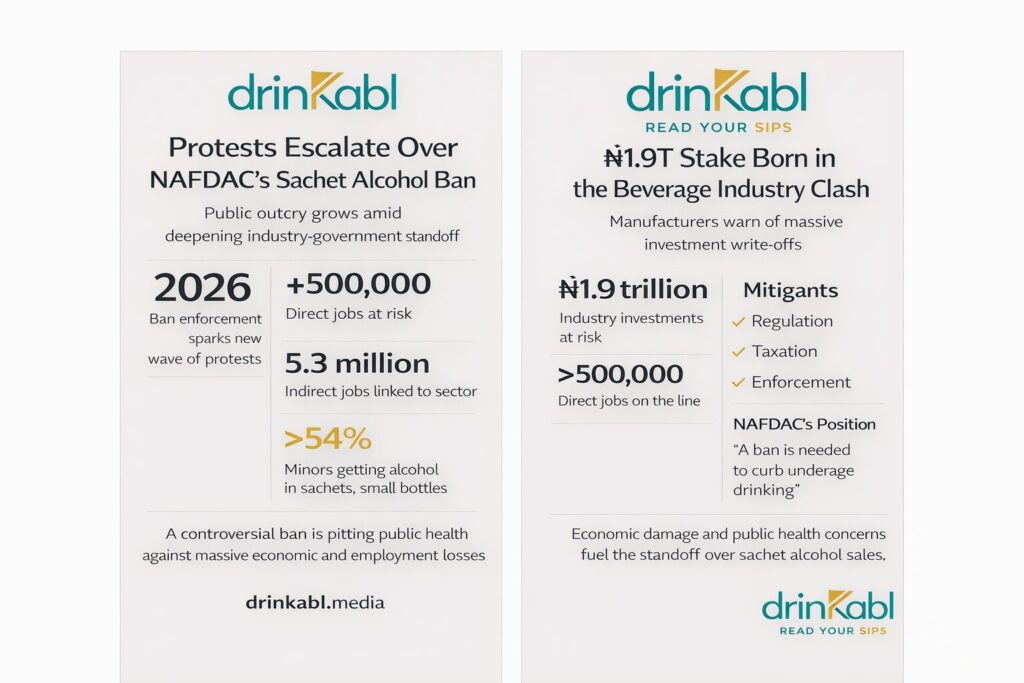
The economic stakes anchoring these demonstrations remain significant. The Manufacturers Association of Nigeria has warned that the ban could wipe out over ₦1.9 trillion in investments by indigenous companies, trigger the direct retrenchment of more than 500,000 workers, and put approximately five million people in indirect employment, across logistics, marketing and retail, at risk. MAN’s Director-General, Segun Ajayi-Kadir, has described the enforcement as “counterproductive,” arguing that it contradicts the consensus reached at the October 2025 validation of the National Alcohol Policy, which recommended regulation, taxation and enforcement, not outright prohibition.
NAFDAC, however, is not standing down. In a significant March escalation, the agency partnered with the National Orientation Agency and the Federal Competition and Consumer Protection Commission to launch a nationwide enforcement campaign, a deliberate signal that this is no longer just a NAFDAC fight. Prof. Adeyeye has leaned heavily on data to anchor the agency’s position. A 2021 national survey conducted in collaboration with the Distillers and Blenders Association of Nigeria across six geopolitical zones found that 54.3% of minors obtained alcohol themselves, with 49.9% purchasing directly from retailers selling sachet packs and small PET bottles.
“Access to alcohol by children can be limited if pack sizes that can be easily concealed are not available. A ban on small pack sizes, sachets and less than 200ml bottles, can reduce the menace of underage drinking.” — Prof. Mojisola Adeyeye, NAFDAC Director-General
The legal battle is running in parallel. The Federal Ministry of Health has told a Federal High Court that NAFDAC holds exclusive statutory authority to enforce the ban, distancing the ministry from any power to direct or restrain the agency. The Socio-Economic Rights and Accountability Project is before the same court pushing to permanently insulate enforcement from any political moratorium.
As we documented in our analysis of Africa’s drinks industry, this is a policy that is technically active, politically contested, and practically incomplete, with the presidency, legislature, judiciary, and regulators pulling in opposite directions while the beverage industry absorbs the turbulence. NAFDAC has not responded publicly to Thursday’s protest as of filing time.
The next scheduled pressure point is the Federal High Court, where a ruling could determine whether Nigeria’s regulators or its politicians hold the final word. The industry, and the livelihoods tied to it, are waiting.
📖 Related Reading:
Sack NAFDAC’s DG, Group Tells Tinubu Over Sachet Alcohol Crackdown
Africa’s Drinks Industry Has a Sober Problem, & a Bigger Opportunity
When Will Enough Finally Be Enough on Counterfeit Drinks In Nigeria?