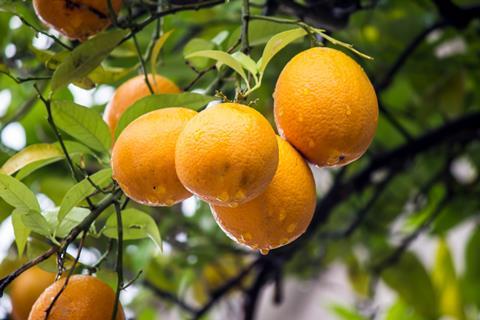
Juice buyers, drink formulators, and beverage brands sourcing citrus ingredients should sit up: South Africa just posted its biggest citrus export season on record, and it is already signalling another one.
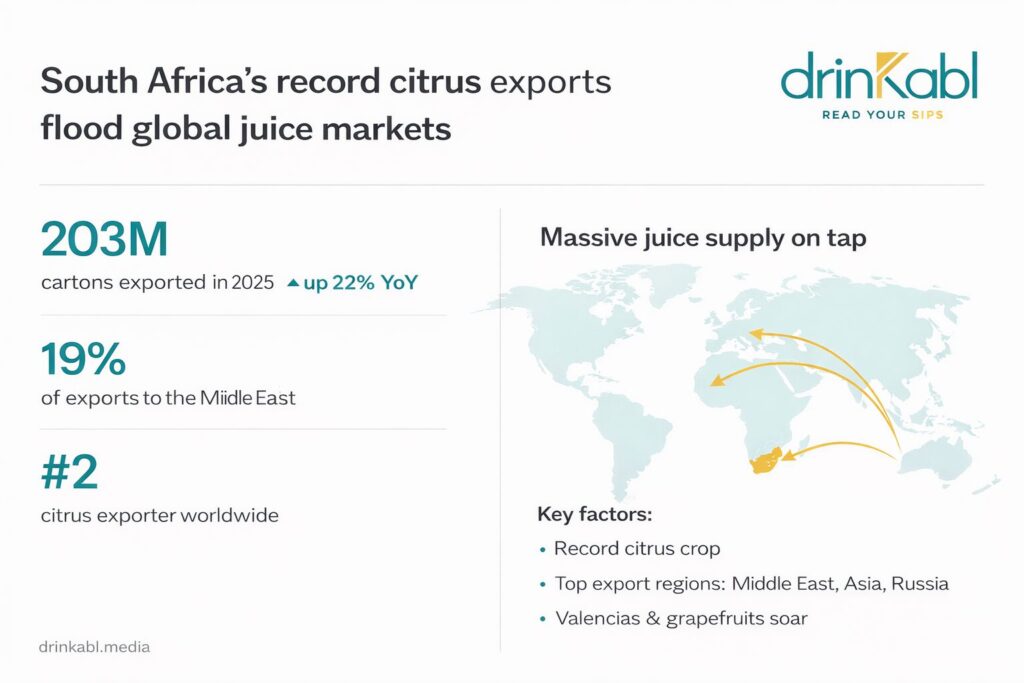
South African citrus exports could rise by as much as 5% this year after a record 2025, though the sector is wary of the impact of the Iran war on demand, fuel pricing and availability, the Citrus Growers’ Association of Southern Africa (CGA) said this week. The world’s second-largest citrus exporter behind Spain, South Africa delivered 203.4 million 15kg cartons to global markets in 2025, a 22% increase over 2024. This year’s target sits between 210 and 215 million 15kg cartons, with Valencia oranges alone projected at 63 million cartons and grapefruit exports estimated up 16% from last year.
For a global juice industry that has spent the better part of two years scrambling for affordable, high-quality citrus supply, that pipeline matters enormously.
The Juice Behind the Numbers
What makes South Africa’s surge particularly significant for drink makers is what is being grown, and why the world is buying it. CGA CEO Dr Boitshoko Ntshabele pointed to “exceptional demand in overseas markets for processing-grade juicing oranges and lemons,” with an early end to Northern Hemisphere supply extending South Africa’s profitable selling window into additional weeks at the start of the season.
The 2025 season saw Valencia oranges reach 61.8 million cartons, up 26.9%, while mandarins surged 28% and lemons climbed 19%. These are the varieties that juice processors and beverage manufacturers depend on most. For drink brands sourcing ingredients for everything from orange juice concentrates to citrus-flavoured functional drinks, the volume represents real supply relief at a time when Brazilian orange juice prices have been volatile and Florida’s citrus output has declined sharply over the past two decades.
Global demand for citrus in juice production rose sharply in 2025, with 19% of South Africa’s total exports going to Middle Eastern markets, 15% to Asia, and 9% to Russia. The export season starts in April with European markets first in line.
The ingredient story connects directly to a wider beverage market opportunity. The global orange juice market stood at approximately $6.16 billion in 2025, with steady growth projected through 2035, driven by rising consumer preference for natural, functional beverages, with low-sugar and clean-label variants now accounting for over 26% of total demand. For manufacturers reformulating to meet that demand, a stable, quality citrus supply chain from the southern hemisphere is not a luxury, it is a competitive necessity.
The War Shadow
But the bullish export forecast comes with a caveat the industry cannot ignore.
“We are acutely aware of the uncertainties the industry faces with the current war in the Middle East’s potential effect on demand, shipping, fuel availability and input costs. But, should all that is possible be done to limit the impact of these factors, steady growth towards another record export season is within reach.” , Citrus Growers’ Association of Southern Africa
The Middle East is not just a conflict zone right now, it is South Africa’s third-largest citrus export destination. Shipping route disruptions and fuel cost surcharges are live threats to margin. South Africa’s government has already moved to temporarily reduce its fuel levy to cushion the broader economy from war-driven price spikes.
There are also trade headwinds outside the Middle East. Dr Ntshabele has flagged serious concern over the impact of a 30% US tariff on the 2026 season, calling for an urgent, mutually beneficial trade deal between South Africa and the United States, and suggesting that citrus exemptions could prevent unnecessary price inflation in the US market.
Vision 260 and the Long Game
The CGA’s long-term industry strategy, Vision 260, targets annual export volumes of 260 million cartons by 2032, a plan projected to create an additional 100,000 jobs and significantly boost South Africa’s foreign currency inflows. For Africa’s own fast-growing non-alcoholic drinks sector, that trajectory has upstream implications, more volume means greater price competition among suppliers, which is good news for local juice producers and brands buying citrus inputs.
South Africa’s citrus story is unfolding against a backdrop of broader beverage industry anxiety about ingredient supply chains and water access. The $6 trillion global food and beverage sector consumes around 70% of the world’s freshwater, and water scarcity is already reshaping where and how citrus can be grown sustainably.
Meanwhile, the debate about juice, sugar, and health claims is growing louder in the very market that produces this citrus, as regulators and advertisers clash over how the industry communicates with consumers.
For now, the oranges are ripening in the Western Cape and the first ships of the 2026 season are not far away. Whether geopolitics and tariffs allow South Africa to fully capitalise on its extraordinary agricultural momentum remains the open question. But the supply is there. It is up to the global beverage industry to make the most of it.
Read More:
- The Thirst Crisis That Could Break the Beverage Industry
- Is Your Smoothie Actually Healthier Cooked? New Science Rewrites the Rules on Pasteurisation
- Who Is Silencing South Africa’s Sugar Warning? Inside the ARB’s Conflict of Interest Crisis
- Nigeria’s Bitters Category and the Rise of Citrus-Infused Herbal Drinks