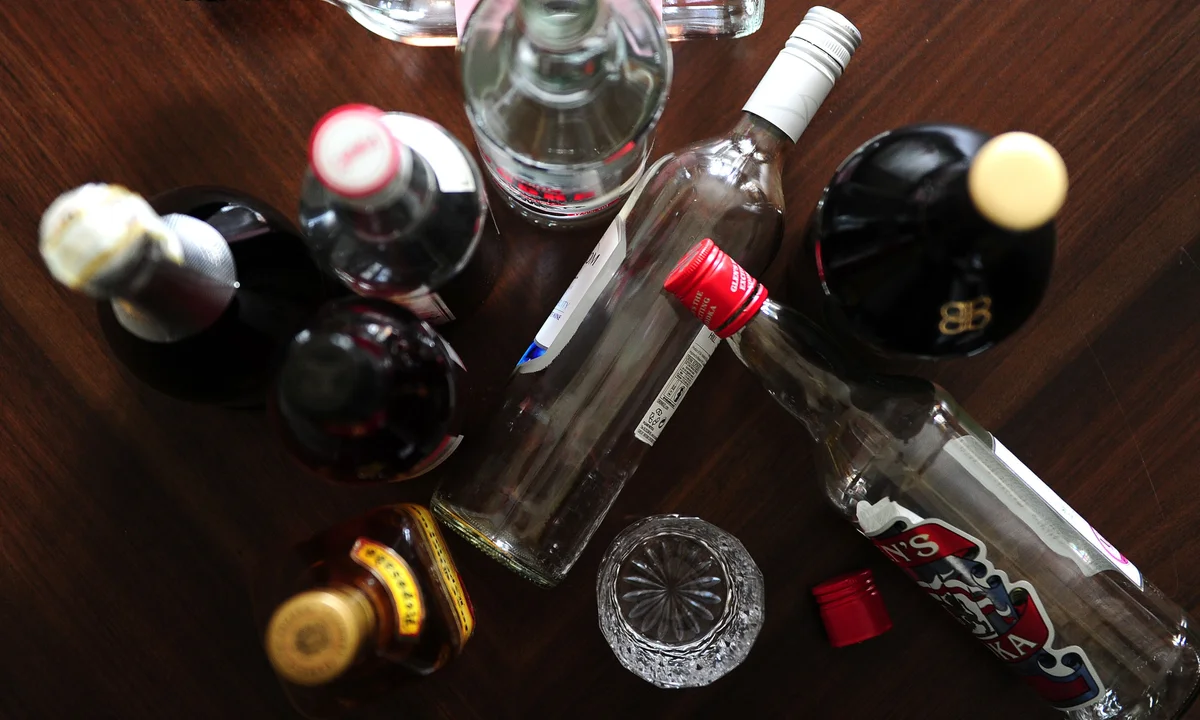
An Australian premium drink brand is at the centre of a major safety scare after its bottles were found fermenting from the inside, raising a question that hits just as hard here in Africa, the world’s fastest-growing beverage market…how safe is what’s sitting on our shelves?
StrangeLove Beverage Company, founded in Byron Bay in 2013 by childhood friends James Bruce and Stafford Fox, issued a nationwide product recall in Australia of its Salted Grapefruit drink in both 180ml and 540ml formats, after unintended secondary fermentation caused a dangerous build-up of alcohol and carbonation inside sealed bottles. The result? Bottles that can shatter without warning. Caps that launch like projectiles.
The brand was later acquired by Japanese brewing giant Asahi Beverages in 2022, a deal that underscored the explosive growth of the premium non-alcohol segment, with premium mixer sales up 40% in three years and adult soft drink sales up 65% in Australia.
The official warning was unambiguous:
“Food products containing excess alcohol and carbonation may result in bottle breakage or popping caps, and illness/injury.”
The affected stock is widely distributed. The drink was on shelves at Coles, Woolworths, Dan Murphy’s, BWS, First Choice, Liquorland and Vintage Cellars across Australia, as well as online. Consumers can contact StrangeLove at [email protected] or 1300 712 081 for safe disposal instructions and a full refund.
A Problem Without Borders
While the recall is Australian, the underlying failure, a product turning dangerous inside sealed packaging, is a universal hazard that no market is immune to. And Africa has vivid, recent proof.
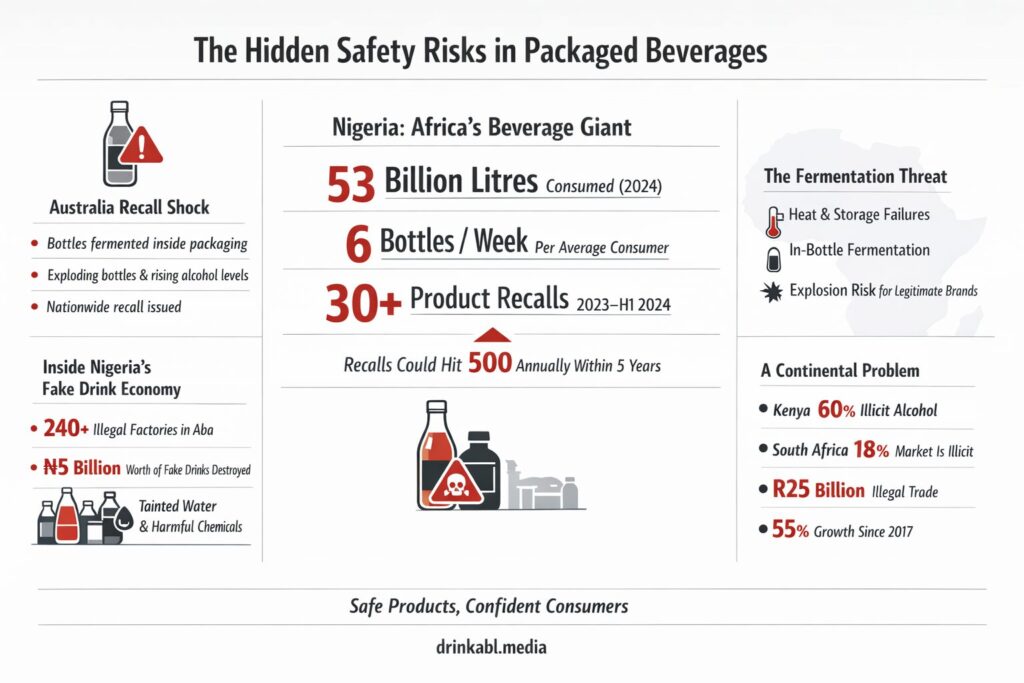
Nigeria consumed over 53 billion litres of soft drinks in 2024, placing it well ahead of other African countries such as Ghana and South Africa as the continent’s largest beverage consumer. Nigeria is one of the world’s largest soft drink markets, with the average consumer drinking roughly six bottles a week. That scale of consumption makes product safety not just a regulatory concern, it is a public health emergency.
The facts bear this out. Between 2023 and the first half of 2024, Nigeria’s food and drug regulator compulsorily recalled over 30 products from the Nigerian market, more than double the roughly 15 recalls recorded in 2022, and legal analysts warn that if this trajectory continues, product recalls could reach as many as 500 a year within five years.
Nowhere has the beverage safety crisis been more dramatic than in Aba, Abia State. Authorities sealed the Cemetery Market in Aba in December 2024, for the second time in two years, after uncovering over 240 shops operating as makeshift factories producing counterfeit versions of popular brands including Fanta, Coca-Cola, Schweppes, Sprite, Lacasera, Super Commando Energy Drink and Amstel Malta, and the value of products seized and destroyed during that operation alone was estimated at N5 billion.
Investigators confirmed the factories were using harmful chemicals, contaminated water, and recycled bottles to manufacture the counterfeits, mixing cheaper sugars and starches instead of fruit or grapes.
“These criminal elements use unhygienic sources of water, saccharin, colouring agents, and harmful chemicals unsuitable for human consumption,” a senior regulatory official said.
Industry experts estimate that roughly 30% of alcoholic beverages in Nigeria are adulterated, with counterfeiters substituting ethanol with cheaper but toxic chemicals like methanol, a colourless, odourless substance that can cause breathing disorders, lung failure and death, even in quantities as small as 25ml. NAFDAC has also moved to clarify the boundaries of its enforcement, with its deputy director Tinuola Akinnubi stating that action targets only sachets and small PET-bottled spirits below 200ml, not standard bottles or mainstream brands.
South Africa has faced its own harrowing moment. In September 2024, a popular maize porridge brand was pulled from shelves across South Africa and Namibia after the deaths of two one-year-olds and a four-year-old in Mdantsane, Eastern Cape, following a preliminary investigation that suggested the product may have been linked to the children’s deaths, and the precautionary recall was later extended to Zambia and Lesotho. Illicit alcohol in South Africa has surged 55% since 2017, now accounting for 18% of all alcohol sold in the country and representing a market worth R25 billion a year, with the state losing R16.5 billion in taxes to it annually. Independent testing has confirmed that many of these unregulated products contain dangerous substances, including methanol.
The Fermentation Risk Is Real, and Growing
The StrangeLove case is a timely warning for Africa’s booming craft beverage producers across West and East Africa, who are scaling up probiotic drinks, fermented fruit beverages, and naturally carbonated products, often stored and transported in climates far warmer than the temperature-controlled environments these products were designed for, making the risk of unintended in-bottle fermentation a very real and growing threat.
Kenya’s experience illustrates just how deeply the problem runs, with a report finding that 60% of all alcohol consumed in the country between 2022 and 2024 was illicit, generating an estimated Sh204 billion in sales that bypassed tax registers, health inspectors, and licensed retailers. Illicit consumption rose 27% over the same period, outpacing growth in the legal market on every metric.
Unlike adulteration, fermentation-related failures can strike legitimate, well-intentioned producers. A forgotten temperature excursion in a warehouse. A batch held too long in a hot distribution truck. The result can be indistinguishable from a perfectly labelled, perfectly sealed product, until it isn’t. This is precisely the concern that this year’s World Consumer Rights Day theme, “Safe Products, Confident Consumers,” sought to address, raising awareness that insufficient product safety undermines core consumer rights to life, health and safety.
Further Reading:
- We Are Only After Sachet Alcohol, Not Bottles, NAFDAC Clarifies, the full story of Nigeria’s three-way government standoff over the sachet alcohol ban and what it means for street-level enforcement.
- Inside South Africa’s R25bn Illicit Alcohol Crisis, how organised counterfeiting has grown into an R25 billion shadow market, and what the industry is doing to fight back.
- Crackdown Fears Grow as Illicit Alcohol Hits 60% in Kenya, an in-depth look at Kenya’s policy crisis and the paradox of aggressive regulation in a market already dominated by illegal trade.
- Rite Foods Pushes Beverage Safety, Transparency on Consumer Rights Day, a Nigerian manufacturer’s factory-floor response to the continent’s growing safety accountability gap.
- Beverage Industry Tightens the Noose on Bottle-Theft Networks, how packaging theft feeds the same informal economy driving counterfeiting across Nigeria.