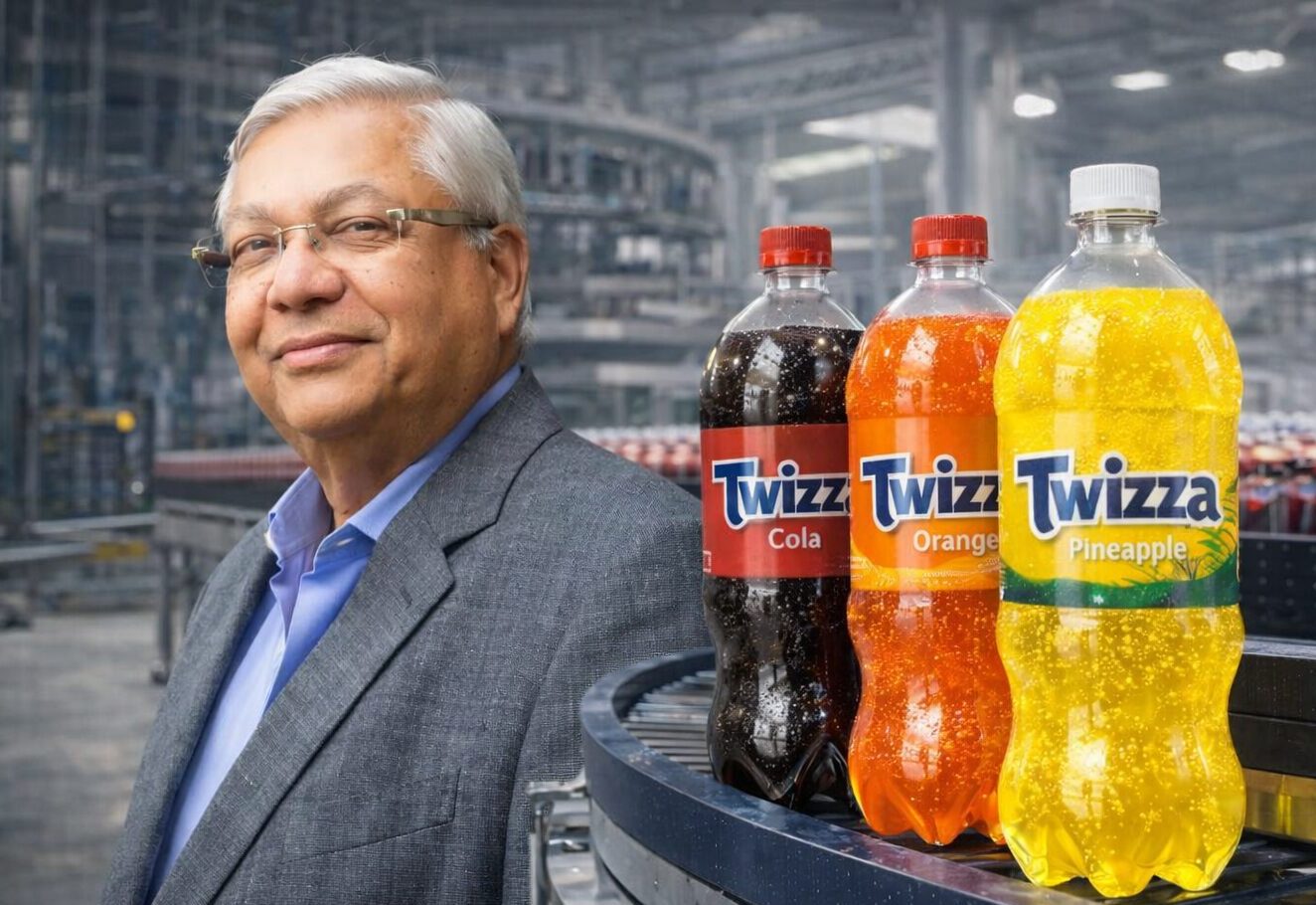
The ink on Twizza barely dried before BevCo reached for a dairy farm. Varun’s Southern Africa play is moving faster than anyone predicted.
India’s Varun Beverages has closed its $125 million acquisition of South African soft drinks maker Twizza, with Standard Bank confirming the R2.1 billion transaction after all regulatory approvals cleared across South Africa, Botswana and Eswatini. But the more revealing detail is what happened the very next day.
As reported by Drinkabl.media in March, Varun’s South African subsidiary BevCo announced it was acquiring Crickley Dairy, also founded by Twizza’s Ken Clark, for ZAR 238 million ($14.3 million). In the space of 24 hours, Varun had effectively absorbed the entire Eastern Cape beverage empire Clark spent four decades building from scratch, from five cows on a Komani farm in 1984 to a nationally distributed soft drinks and dairy portfolio.
The Twizza deal, first announced in December 2025, adds three manufacturing facilities in Cape Town, Middelburg and Queenstown (now known as Komani) to Varun’s Southern African footprint, alongside Twizza’s established distribution network across Lesotho, Eswatini, Botswana and Namibia. The transaction is a landmark deal in South Africa’s fast-moving consumer goods sector, and the largest single acquisition in Varun’s Africa campaign to date.
For Clark, who built Twizza in 2003 on the back of Crickley Dairy’s Queenstown site, the double exit marks the end of an era.
“From our beginnings in Queenstown to becoming a recognised player in South Africa’s beverage market, our focus has always been on delivering affordable, quality products to our customers. Under Bevco’s ownership, the business is well positioned to scale further, access new capabilities and continue serving consumers with the same commitment.”
The Africa Pivot
Varun Beverages, PepsiCo’s largest bottling partner outside the United States, entered South Africa in March 2024 through its acquisition of BevCo, securing PepsiCo franchise rights across South Africa, Lesotho and Eswatini. Twizza now layers a challenger brand with deep township-market penetration onto that foundation. With a vertically integrated manufacturing model, producing its own packaging and closures in-house, Twizza brought operational cost discipline that Varun’s analysts had specifically flagged as a strategic fit. For the year ended June 2025, the company posted revenue of ZAR 1.689 billion on approximately 71 million cases.
The timing of the Africa push is deliberate. India’s volume growth was flat through much of 2025 due to extended monsoon and weather-related headwinds, while Varun’s international operations, led by South Africa, continued to expand. Africa is no longer a hedge, it is the growth engine.
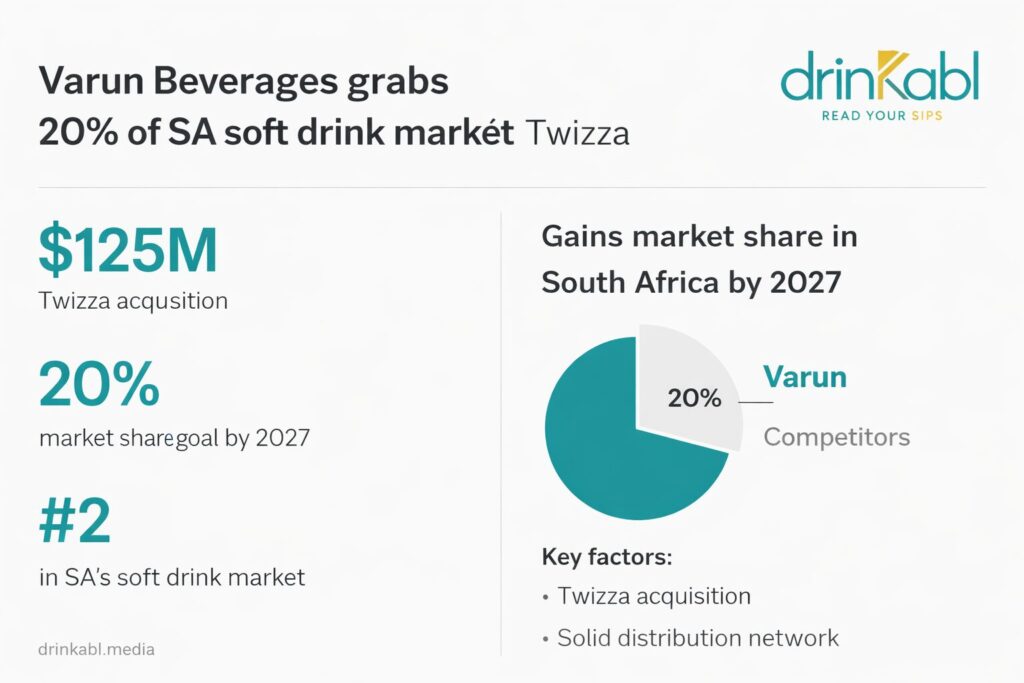
Analysts at Emkay Global projected, at the time of the Twizza announcement, that the acquisition would lift Varun’s volume market share in South Africa to around 20% by 2027, up from roughly 10%, driven by Twizza’s manufacturing infrastructure and BevCo’s distribution depth.
The Crickley Dairy addition, pending Competition Commission clearance, signals a deliberate move beyond carbonated drinks. Varun cited portfolio diversification into “value-added dairy and juice-based drinks” as the strategic rationale, a meaningful pivot for a company whose revenues have been anchored almost entirely to Pepsi, 7UP and Mountain Dew. As Drinkabl.media previously reported, South Africa’s advertising regulator has been embroiled in controversy over a ruling that effectively blocked a public health warning that sugary drinks contribute to obesity and diabetes, regulatory undercurrents that make dairy and juice diversification look less like opportunism and more like foresight.
Varun Chair Ravi Jaipuria has said the expansion aligns with the company’s strategy to “broaden its product base and strengthen its presence across key growth markets,” noting continued “significant potential” in South Africa. The company has also entered alcoholic beverages through an exclusive distribution agreement with Carlsberg Breweries across select African territories, and launched Cheetos production in Morocco and Zimbabwe, all within the past 18 months.
For full-year 2025, Varun posted revenue up 8.4% year-on-year, with EBITDA rising 7.2% and profit after tax surging 16.2%, while its balance sheet remains effectively net-debt-free. That financial discipline is what has allowed it to move with such speed.
South Africa is the largest soft drinks market in Africa, with industry volumes projected to reach 1,468 million cases by 2029 at a compound annual growth rate of 3.3%. Varun is not just buying assets. It is buying into a demographic story, and building the infrastructure to own it.
Further Reading from Drinkabl.media: