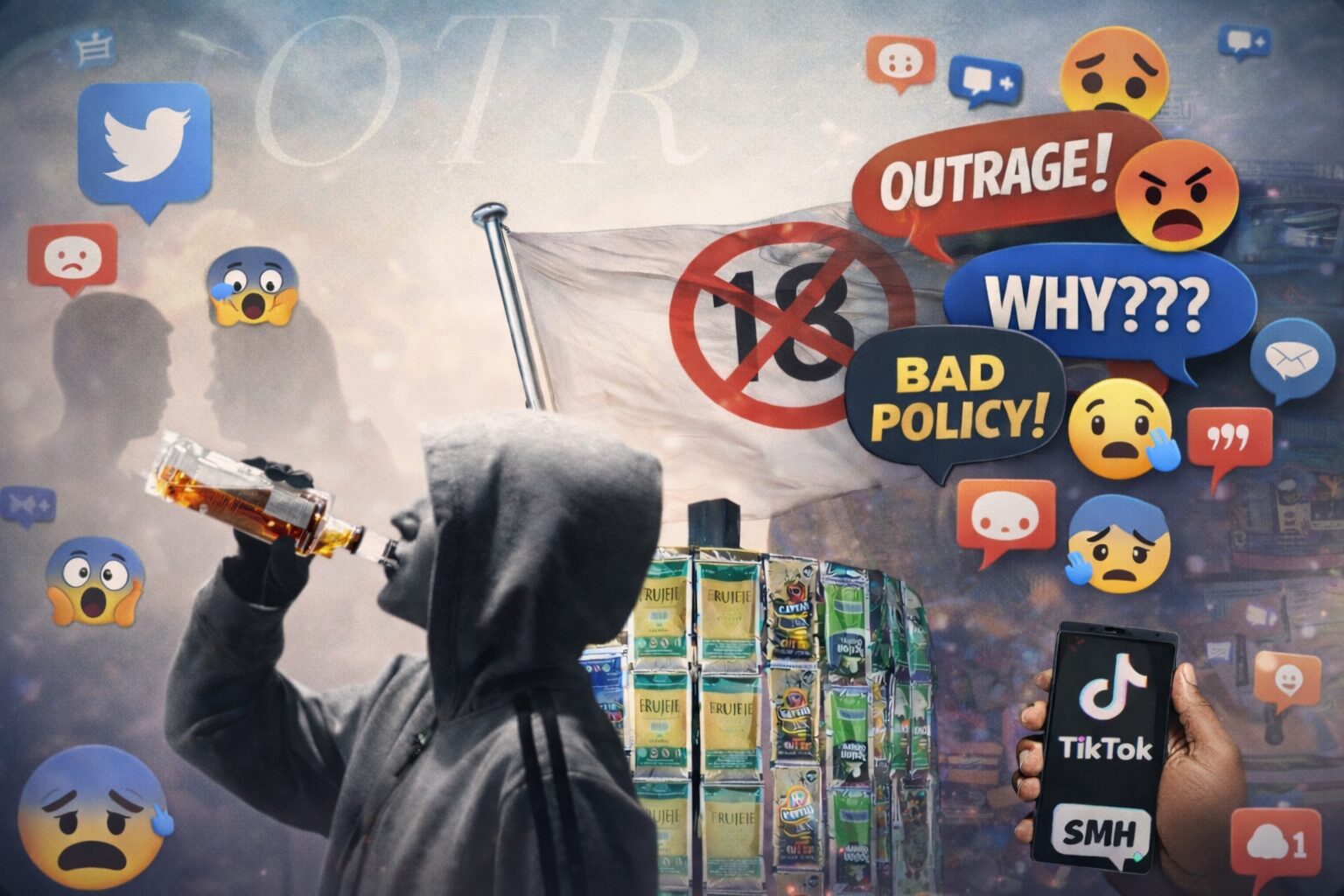
As NAFDAC enforces controversial ban, social media erupts with passionate arguments pitting public health against economic survival. Latest updates: Court injunction claims, business chambers issue warnings, and protests escalate.
By Victor Owencho
When the National Agency for Food and Drug Administration and Control (NAFDAC) announced it would commence full enforcement of Nigeria’s ban on alcoholic beverages sold in sachets and bottles below 200ml on January 21, Nigerian social media exploded into one of the most contentious policy debates the country has witnessed in months.
Ten days later, the controversy has only intensified. As factories shut down production lines, protests multiply across Abuja and Lagos, and conflicting claims about court orders and job losses flood Twitter (now X), the debate has evolved from a health policy discussion into a full-blown confrontation over Nigeria’s economic priorities and governance credibility.
“NAFDAC do the needful, our lives are precious,” read one placard at protests supporting the ban. Across town, opposing demonstrators carried a different message: “NAFDAC stop working for multi-nationals and protect indigenous manufacturers.”
Between these competing visions lies one of Nigeria’s most divisive policy debates—a conversation that reveals deep anxieties about who gets heard in Nigerian policymaking, whose interests are protected, and whether the government can balance competing goods in a country where every policy choice involves painful trade-offs.
* * *
The Latest Escalation: Courts, Chambers, and Chaos
The drama took a new turn on Friday, January 30, when NAFDAC Director-General Prof. Mojisola Adeyeye appeared on ARISE News to address rumors circulating on social media that a court injunction had halted enforcement.
“NAFDAC has not been served. If we have been served, I have not been given that,” she stated firmly, adding that the agency was proceeding based on legislative backing from the Senate.
The denial came as the Abuja Chamber of Commerce and Industry (ACCI) issued its strongest warning yet about the economic fallout. In a statement released Friday, ACCI President Chief Emeka Obegolu warned that the ban threatens over 5 million jobs and puts ₦800 billion in investments at risk.
“The principal said that in his school, a student said that he cannot study for exam without a sachet alcohol. We are making our children addicts. Addicts. Because you are frying your liver slowly with alcohol over time.”
— Prof. Mojisola Adeyeye
NAFDAC Director-General, ARISE News interview, January 30, 2026
Describing the enforcement as “economically disruptive and potentially damaging to investor confidence,” Obegolu called for an extension of the implementation deadline to December 2026 to allow manufacturers to complete transition processes without “unnecessary economic shocks.”
The chamber’s intervention represents a significant escalation, with one of Nigeria’s most influential business organizations now publicly challenging NAFDAC’s timeline and approach.
Meanwhile, advocacy groups supporting the ban have also intensified their efforts. The Renevlyn Development Initiative (RDI), in a statement released Thursday, urged NAFDAC to “remain undeterred by the alcohol and beverage industry’s blackmail tactics.”
“The sustained effort by alcohol lobby in Nigeria to kill and bury the enforcement of the sachet alcohol ban through a potential job loss claim is a clear testament that reinforces a statement in the Big Alcohol Exposed Report that the alcohol industry operates through concrete policy arenas,” said RDI Executive Director Philip Jakpor.
* * *
A Ban Years in the Making
The controversy isn’t new. In December 2018, NAFDAC, the Federal Ministry of Health, and industry stakeholders including the Distillers and Blenders Association of Nigeria signed a Memorandum of Understanding to phase out sachet and small-volume alcohol packaging by January 31, 2024.
The deadline was extended to December 2025. Yet when enforcement began this January, the backlash was immediate and fierce—suggesting that despite years of notice, the industry and millions of Nigerians who depend on these products remained unprepared or unconvinced.
The policy gained renewed momentum last November when Senator Asuquo Ekpenyong of Cross River South raised a motion in the Senate. Senate President Godswill Akpabio declared it “a matter of urgency,” emphasizing the need to protect Nigerians, especially young people, from unregulated alcohol consumption.
But as NAFDAC moved to seal production lines across Lagos and warn manufacturers of prosecution, the social media narrative quickly shifted from compliance to resistance.
* * *
“Protecting Our Children”: The Health Case Intensifies
For health professionals and advocacy groups flooding social media with support for the ban, the statistics remain damning: 55.8% of Nigerian youths now consume alcohol, up from 30% in 2015. A 2020 study found that 33.6% of adolescents used sachet alcohol before sexual intercourse.
“This ban is not punitive; it is protective,” Prof. Adeyeye stated in official communications widely circulated online. “It is designed to safeguard children and young people from easy access to alcohol and the long-term consequences of misuse.”
In her Friday appearance on ARISE News, Adeyeye offered new details about the severity of youth addiction. “The principal said that in his school, a student said that he cannot study for exam without a sachet alcohol,” she revealed, her voice carrying evident concern.
“We are making our children addicts. Addicts,” she emphasized. “Because you are frying your liver slowly with alcohol over time.”
Adeyeye traced the policy back to 2018 when NAFDAC first raised alarms over sachet alcohol with concentrations between 43 and 45 percent. “That can be easily squeezed into the pocket of a primary school, secondary school child,” she explained.
She acknowledged that the agency had made a mistake by continuing to register sachet alcohol products during the moratorium period. “I think we are learning our lessons now that we shouldn’t have even listened or register products, a product at that particular period.”
On Twitter, health advocate Alli Moshood’s thread crystallized the pro-ban position: “The primary argument for sachet alcohol is its affordability. At just ₦150 to ₦200 per sachet, it is within reach for the most vulnerable. But this is a devil’s bargain. This very affordability is what makes it so perilous.”
The Nigerian Association of Resident Doctors (NARD) and the National Association of Nigeria Nurses and Midwives (NANNM) publicly backed the ban. NARD president Dele Abdullahi acknowledged that while job losses are concerning, health risks are ultimately worse.
At protests on Tuesday, January 27, supporting NAFDAC’s decision at its Lagos office, demonstrators carried messages quickly photographed and shared across platforms: “NAFDAC don’t let them kill us with sachet alcohol” and “Alcoholic sachet drinks, killing Nigerians.”
“As concerned Nigerians, we are not against alcohol consumption, all we are against is the production and sales of alcohol in sachets,” Mr. Babatunde Adeshina told reporters in a statement that circulated on Twitter.
* * *
“You’re Killing Our Livelihoods”: The Economic Backlash Grows
If health advocates dominated the moral high ground, opponents of the ban have dominated the conversation volume—and their arguments have grown more dire as enforcement proceeded.
The phrase “anti-people policy” trended repeatedly on Nigerian Twitter as critics argued the ban demonstrated regulatory insensitivity to economic realities in a country with 33% unemployment.
On Tuesday, January 27, multiple protest groups converged on NAFDAC offices in both Abuja and Lagos. The Coalition of Unemployed People in Nigeria described the enforcement as “vexatious, ill-timed and anti-people,” warning it could worsen unemployment and economic hardship.
“We do not oppose regulation,” spokesperson Princess Mimi Peter declared. “What we oppose is emotional policymaking, regulatory arrogance, scientific inconsistency and economic insensitivity.”
The economic impact figures have evolved as more business organizations weigh in. While the Manufacturers Association of Nigeria (MAN) earlier warned of ₦1.9 trillion in threatened investments and 500,000 direct job losses, ACCI’s Friday statement raised the stakes further: 5 million jobs and ₦800 billion in investments now at immediate risk.
“Millions of Nigerians have decided to go on low-key by consuming those products because of the income level. It’s not everybody that is so rich to afford Hennessy and other big drinks. So when you now say we shouldn’t take such a drink, it’s as good as saying don’t take sachet water but only take bottled water.”— Declan Ihekaire Labor Coalition Representative, Lagos protest, January 27, 2026
The Nigeria Employers’ Consultative Association (NECA) released a scathing statement describing the enforcement as “a serious regulatory misstep with far-reaching economic and governance implications.”
NECA Director-General Adewale-Smatt Oyerinde challenged NAFDAC’s consistency: “The alcoholic products now being targeted were tested, registered, and periodically revalidated under NAFDAC’s own scientific and technical procedures. Alcohol strength is measured globally using Alcohol by Volume (ABV), and the products in question fall within internationally recognised ranges for spirits.”
But it was the class argument that continued to resonate most powerfully online.
At Monday’s Lagos protest, labor leader Declan Ihekaire made the comparison that went viral: “Millions of Nigerians have decided to go on low-key by consuming those products because of the income level. It’s not everybody that is so rich to afford Hennessy and other big drinks. So when you now say we shouldn’t take such a drink, it’s as good as saying don’t take sachet water but only take bottled water.”
This analogy—comparing sachet alcohol to sachet water, both products of Nigeria’s “sachetization economy”—struck a chord with millions of Nigerians struggling with inflation and diminished purchasing power.
The Food, Beverages and Tobacco Senior Staff Association (FOBTOB) Lagos Branch Chairman Somefun Olamiye challenged NAFDAC’s technical claims: “No licensed distillery in Nigeria produces sachet alcohol with 50, 70 or 90 per cent alcohol content, as claimed. Standard products such as gin, schnapps, rum and bitters fall within internationally accepted alcohol limits.”
Then he added the human dimension that resonated on social media: “Many widows and small-scale traders rely on these sales to feed their families and pay school fees.”
By week’s end, some coalitions were threatening direct action. Civil society groups vowed to stage permanent sit-ins at NAFDAC offices until the policy is reversed, with threats of disrupting the agency’s operations if demands are not met.
* * *
Government at War with Itself
Adding fuel to the online fire: continued conflicts between different arms of government.
While the Senate directed NAFDAC to enforce the ban, the House of Representatives had earlier, in March 2024, asked for the ban to be suspended pending investigation—a contradiction opponents repeatedly highlighted to question the ban’s legitimacy.
Then in November 2025, the Office of the Secretary to the Government of the Federation declared that any enforcement attempt without clearance from its office was “of no effect and should be disregarded by the public.”
This statement was celebrated by ban opponents on social media as evidence that NAFDAC was acting beyond its authority. Yet NAFDAC proceeded with enforcement in January anyway, citing “fresh formal authorisation from the upper legislative chamber.”
“Operators are now confused as to which directive to follow in the face of multiple directives,” MAN Director-General Segun Ajayi-Kadir stated in comments widely circulated online.
For social media users already skeptical of government coordination, this regulatory confusion became exhibit A in the case against the ban’s implementation.
The situation was further complicated when claims emerged on social media that a court had issued an injunction halting enforcement. NAFDAC’s Friday denial of receiving any such order only fueled more speculation about potential legal challenges yet to be formalized.
* * *
The Arguments Under the Arguments
Beyond the surface clash of health versus economy, the social media debate reveals several deeper fault lines that have become more pronounced as enforcement proceeds.
The Enforcement Paradox
One of the most contentious sub-debates centers on whether sachet packaging itself enables underage drinking or whether the real problem is enforcement failure.
Health advocates argue that sachets’ small size, low price (₦100-200), and ease of concealment make them uniquely accessible to children. Prof. Adeyeye’s revelation about the student who claimed he couldn’t study without sachet alcohol has become a rallying point for ban supporters on social media.
Opponents counter that all sachet products carry warnings: “Not for sale to persons under 18.” If children access them, they argue, the failure lies with retailers who sell to minors and regulators who fail to monitor sales points—not with the packaging.
“If children are still getting hold of them, then the problem lies with shop owners and street vendors, not the manufacturers,” one widely-shared comment stated.
Stand Up Nigeria, which protested on Monday, January 26, argued that the issue “reflects weak enforcement rather than the size of alcohol packaging, noting that all registered alcoholic products carry warnings against sales to minors and pregnant women.”
The Class Divide
The affordability argument presents a moral dilemma that runs through the social media discourse with increasing intensity.
Health advocates see low prices as the problem: cheap alcohol enables addiction among the poor and young. Economic justice advocates see affordability as a right: in a country where millions live in poverty, sachet alcohol represents one of the few luxuries accessible to low-income Nigerians.
NECA’s statement captured this tension: “Sachet and small pack formats were an affordability response within Nigeria’s economic structure, where many adult consumers made low value, daily purchases. Eliminating these formats will not eliminate demand. Instead, it risks pushing consumers toward informal and unregulated alternatives.”
The comment sections revealed the class dimensions: Is banning affordable alcohol elitist? Or must public health take precedence over market convenience?
The Black Market Warning
Critics warn of dangerous unintended consequences: banning regulated sachet alcohol won’t eliminate demand—it will drive consumers toward illicit, unregulated alternatives.
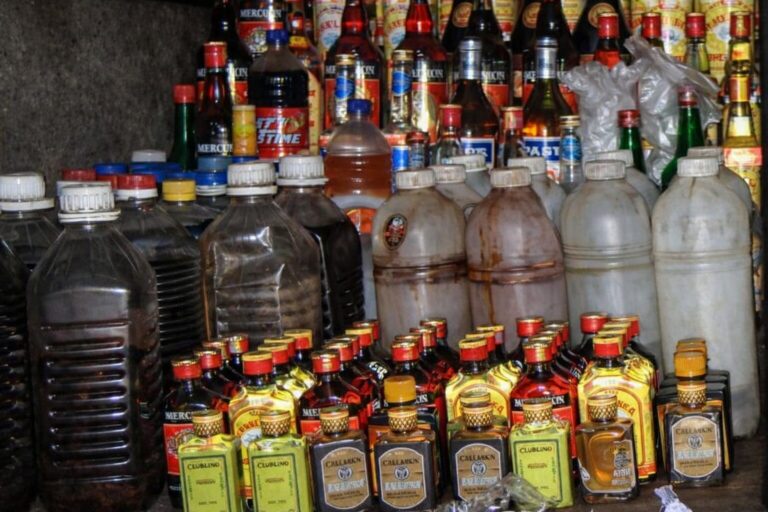
This isn’t hypothetical. NAFDAC itself has posted about discovering illegal production sites where counterfeit drinks were being manufactured—evidence that prohibition may fuel dangerous alternatives.
NECA warned that the ban “risks pushing consumers toward informal and unregulated alternatives, increasing public health risks while shrinking the formal economy.”
The Trust Deficit
Perhaps the most damaging criticism questions NAFDAC’s consistency: if these products are now dangerous, why did NAFDAC test, approve, and register them in the first place?
One viral protest statement asked whether NAFDAC failed in its statutory responsibility or is now “retroactively criminalising items it had previously certified.”
Prof. Adeyeye’s Friday admission that the agency made a mistake by continuing to register sachet products during the moratorium has done little to satisfy critics who see it as confirmation of regulatory failure.
Her response—that earlier products contained dangerously high alcohol concentrations (43-45%) which the agency tried to regulate—has sparked its own debate on social media about whether the issue is truly the packaging or the alcohol content.
* * *
The Missing Middle: Alternative Solutions
Amid the polarization, some social media voices and even business organizations advocate for middle-ground solutions.
ACCI’s call for a “multi-stakeholder implementation committee, comprising regulatory agencies, policymakers, organised private sector groups, and industry representatives” represents the most structured proposal for compromise to date.
Other suggestions that have gained support in online discussions include:
- Stricter retail enforcement – monitoring who sells to whom instead of what is produced
- Age verification systems at point of sale, similar to cigarette controls
- Location restrictions – prohibiting sales near schools and religious institutions
- Public health campaigns about responsible consumption, similar to anti-smoking initiatives
- Phased implementation – extending the deadline to December 2026 as ACCI proposes, allowing for proper transition
- Reduced alcohol content – lowering ABV in small formats rather than banning the format entirely
Stand Up Nigeria and other protest groups have also accused NAFDAC of ignoring more pressing substance abuse issues. “The group accused NAFDAC of ignoring more pressing threats to youth health, including the abuse of substances such as tramadol, codeine mixtures and other psychoactive drugs, while singling out sachet alcohol.”
This argument has resonated with those who see the sachet ban as symbolic rather than evidence-based policymaking.
* * *
What Social Media Reveals About Nigeria
The sachet alcohol debate demonstrates social media’s power to both inform and polarize public discourse in Nigeria. Unlike the 2021 Twitter ban controversy—which generated 2.6 million tweets in a single week—the sachet alcohol debate has been more decentralized, playing out through news shares, comment sections, and individual advocacy rather than coordinated hashtag campaigns.
Yet the patterns are familiar: Official accounts posting policy justifications. Civil society organizations mobilizing supporters. Workers sharing personal stories of threatened livelihoods. Health professionals citing statistics. Business chambers issuing economic warnings.
The debate has been shaped by several dynamics that have intensified over the past ten days:
- Visual Impact – Photographs of dual protests from both sides on January 27 widely shared, with placards becoming memes and talking points. Security presence at NAFDAC offices to prevent clashes added dramatic tension to the imagery.
- Statistics Wars – Escalating numbers deployed by both sides (55.8% youth drinking prevalence vs. 5 million job losses; ₦800 billion in threatened investments) to support positions
- Emotional Appeals – Prof. Adeyeye’s revelation about the student who can’t study without alcohol versus stories of widows and small traders losing livelihoods personalizing abstract policy debates
- Authority Challenges – Court injunction rumors, regulatory confusion, and Prof. Adeyeye’s admission of mistakes fueling cynicism
- Class Consciousness – The sachet water analogy and “sachetization economy” framing exposing economic inequality narratives
- Escalation Tactics – Threats of permanent sit-ins, disruption of NAFDAC operations, and mass protests across all 36 states raising stakes
Notably absent: nuanced discussions of implementation challenges, comparisons with successful alcohol control policies in similar economies, or evidence-based analysis of whether the ban will achieve its stated goals.
The conversation has remained at the level of principle: health versus economy, regulation versus freedom, elite interests versus popular needs.
* * *
A Nation Divided, A Policy in Crisis
As NAFDAC proceeds with enforcement—sealing production lines and warning of prosecution for non-compliance—the social media debate shows no signs of resolution. If anything, the past ten days have seen the controversy deepen and spread.
What remains clear: both sides raise legitimate concerns.
The health risks of easy alcohol access for minors are real and documented. Prof. Adeyeye’s account of the student addicted to sachet alcohol is chilling. The economic devastation threatened by sudden prohibition in a country with 33% unemployment is equally real. ACCI’s warning of 5 million jobs and ₦800 billion in investments at risk cannot be dismissed lightly.
The regulatory confusion created by contradictory government signals undermines policy legitimacy regardless of the ban’s merits. The lack of a multi-stakeholder implementation framework, as ACCI noted, threatens both public health goals and economic stability.
Prof. Adeyeye’s statement that “we cannot continue to sacrifice the wellbeing of Nigerians for economic gain” captures the health advocacy position. Her assertion that “the health of a nation is its true wealth” resonates with many Nigerians concerned about rising youth addiction.
The counter-argument from ACCI, NECA, MAN, and protesters—that “this policy is insensitive to Nigeria’s current economic realities” and threatens to push consumers toward dangerous black market alternatives—equally resonates.
On social media, as in the streets, Nigerians are grappling with an impossible choice: protecting children from alcohol or protecting families from poverty.
The social media conversation ultimately reveals more than opinions on a regulatory policy. It exposes deep anxieties about who gets heard in Nigerian policymaking, whose interests are protected, and whether governance can balance competing goods in a country where every policy choice involves difficult trade-offs.
As threatened permanent sit-ins and mass protests across all 36 states loom, the digital debate is likely to intensify further—perhaps eventually forcing the more nuanced, evidence-based conversation that has so far remained elusive.
Whether the ban will achieve its public health objectives or create the economic and social harms its critics predict remains to be seen. What happens in the courts, should formal challenges materialize, could determine the policy’s fate.
What is certain: social media has ensured this policy cannot be implemented quietly. Nigerian voices—from health professionals to street vendors, from business chambers to student advocates—will continue demanding to be heard in a debate that, at its core, is about the kind of society Nigeria aspires to become.
The next chapter of this controversy may be written not in regulatory offices or legislative chambers, but in the streets, in the courts, and across the digital platforms where ordinary Nigerians refuse to be silenced.
EDITOR’S NOTE: This feature article draws from public statements, media reports, and documented social media discourse surrounding Nigeria’s sachet alcohol ban as of January 30, 2026, 8:00 PM WAT. All quoted statements are from verified public sources and official communications. The situation remains fluid with ongoing protests and potential legal challenges.
Victor Owencho is a Reporter/Writer covering health policy, social issues, and digital activism in Nigeria. He has been following the sachet alcohol ban controversy since its inception in 2018.