Each festive season, as Nigerians gather to celebrate, an invisible threat intensifies across the nation—one that corporate watchdog Corporate Accountability and Public Participation Africa (CAPPA) says is systematically undermining public health while enriching beverage manufacturers.
In a scathing new report released Wednesday, CAPPA revealed how the beverage industry transforms Christmas, New Year, and other celebrations into “high-impact marketing windows” that normalize excessive consumption of sugar-laden drinks, driving Nigeria deeper into a non-communicable disease (NCD) epidemic that already costs the country ₦1.92 trillion ($1.26 billion) annually in healthcare spending.
The findings come at a critical juncture: Nigeria ranks fourth globally in sugary beverage consumption, with citizens consuming approximately 38.6 million litres daily, while diabetes alone claims between 30,000 and 40,000 Nigerian lives each year.
Festive Seasons as “Risk Multipliers”
Titled Unhealthy Food Hijack of Festive Periods in Nigeria, CAPPA’s investigation monitored marketing activities between November 25, 2025, and January 5, 2026, across physical locations—shopping malls, parks, open markets, transport hubs, places of worship—and digital platforms including Facebook, Instagram, TikTok, and YouTube.
What researchers documented was far from seasonal goodwill.
“Festive-period marketing reshapes food norms at a time consumption is already elevated, reinforcing dietary patterns that contribute to Nigeria’s growing burden of non-communicable diseases,”
said Akinbode Oluwafemi, CAPPA’s Executive Director.
The report describes a coordinated industry strategy featuring outdoor branding saturating low-income neighborhoods, sponsored events, market activations targeting children, and school donations that function as indirect advertising—all designed to associate sugary drinks with joy, celebration, and national identity.
“What we observed was not just a seasonal celebration, but deliberate market expansion,” Oluwafemi emphasized. “Companies invested heavily in outdoor branding, sponsored events, market activations, school and community donations, and targeted digital advertising.”
A Pattern, Not an Anomaly
CAPPA stressed that festive marketing practices are “not new” but rather “reflect a pattern repeated year after year, with increasing sophistication and reach.”
The tactics mirror strategies previously deployed by the tobacco industry: embedding products into social and religious spaces through corporate social responsibility initiatives that shield companies from criticism while normalizing consumption among vulnerable populations.
Humphrey Ukeaja, CAPPA’s Industry Monitoring Officer, highlighted the deliberate targeting of children through cartoon characters, free samples at schools, and music concerts designed to exploit “pester power”—children’s ability to pressure parents into purchases.
“Many activities were clearly aimed at children,” Ukeaja noted, describing the use of Santa characters, bright imagery, and NGO “gifts” to bypass parental oversight.
The Health and Economic Toll
The implications extend far beyond marketing ethics. Nigeria is experiencing a silent epidemic of diet-related diseases that CAPPA says the beverage industry’s festive marketing directly exacerbates.
Research indicates that carbonated drinks are consumed by 99.7% of young Nigerians, with frequent consumption linked to higher rates of overweight and obesity. A single 600ml bottle typically contains 64 grams of sugar—exceeding the World Health Organization’s recommended maximum daily intake of 50 grams.
The economic burden is staggering. Households with NCD patients spend an average of ₦608,940 ($398.52) annually on treatment, according to recent government data. Economists project NCD treatment costs will reach $4.97 billion by 2030, up from $2.37 billion in 2019.
“The impact is uneven,” Oluwafemi warned. “Children, young people, and low-income households are the most exposed and the least protected, yet they bear the highest health and financial costs when diet-related illnesses emerge.”
CAPPA’s Comprehensive Reform Agenda
The organization is calling for sweeping regulatory intervention, arguing that industry self-regulation has demonstrably failed. CAPPA’s recommendations include:
1. Comprehensive Marketing Restrictions
Legal prohibition on advertising, promotion, and sponsorship of unhealthy beverages, particularly during festive periods
Ban on influencer marketing, celebrity endorsements, and algorithmically targeted advertising where children and young people are exposed
Restriction of branded corporate social responsibility activities in schools, religious institutions, markets, and public spaces
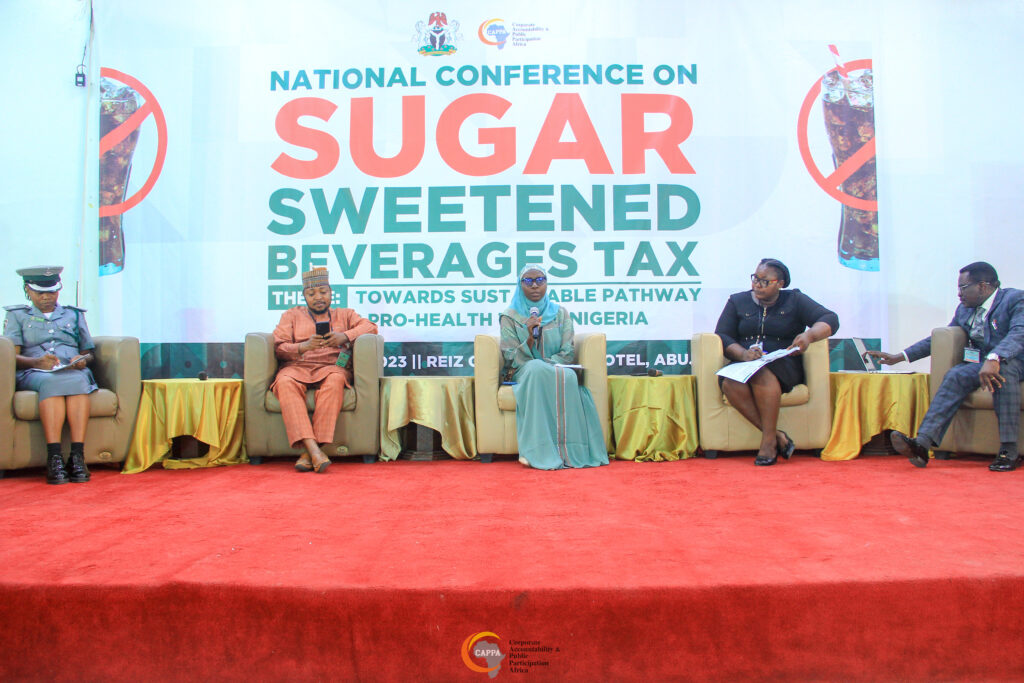
“We align with the World Health Organization in recommending a 50% tax on sugar-sweetened beverages, with revenue earmarked for NCD prevention and health promotion.”
Ukeaja stated
Nigeria currently imposes a ₦10 per liter excise tax on non-alcoholic, carbonated, and sweetened beverages—introduced in June 2022 but widely criticized as inadequate. This translates to less than 5% of most beverages’ retail price, far below the WHO-recommended 20% minimum needed to meaningfully impact consumption.
Recent simulations suggest that increasing the tax to ₦130 per liter could generate approximately ₦729 billion in additional annual revenue while reducing consumption—revenue CAPPA insists must be dedicated to NCD prevention and healthcare infrastructure.
However, beverage manufacturers have challenged the tax in court. On February 3, 2025, the Federal High Court in Abuja suspended tax collection pending compliance with legal requirements, following a suit filed by the Nigeria Employers’ Consultative Association arguing the tax constitutes an undue financial burden.
3. Consumer Information Measures
Mandatory front-of-pack warning labels with simple, interpretive symbols for products high in sugar, salt, and saturated fat
Advertising density limits, particularly in low-income neighborhoods, transport corridors, and informal markets
A Call to Stakeholders
CAPPA challenged journalists to move beyond surface reporting of festive campaigns and “interrogate the health implications behind the marketing and center the lived realities of families bearing the cost of diet-related diseases.”
For ordinary Nigerians, Zikora Ibeh, CAPPA’s Assistant Executive Director, advised: “Question what you consume, read labels, reduce sugary drinks, and return to traditional, local foods that are often healthier and more affordable.”
The Regulatory Imperative
CAPPA’s report frames the festive marketing issue as part of a broader choice facing Nigeria’s policymakers.
“Nigeria must decide whether its food environment will be governed in the public interest or surrendered to commercial priorities that externalize harm,” the report states.
“Festive seasons should not come with hidden health costs,” Oluwafemi concluded. “Nigeria must reclaim its public spaces, regulate its food environment, and place public health above corporate profit.”
As the country moves toward another festive cycle, the question remains: Will policymakers act before another generation grows up associating celebration with products that undermine their health—or will industry opposition continue to delay interventions that could save thousands of Nigerian lives each year?