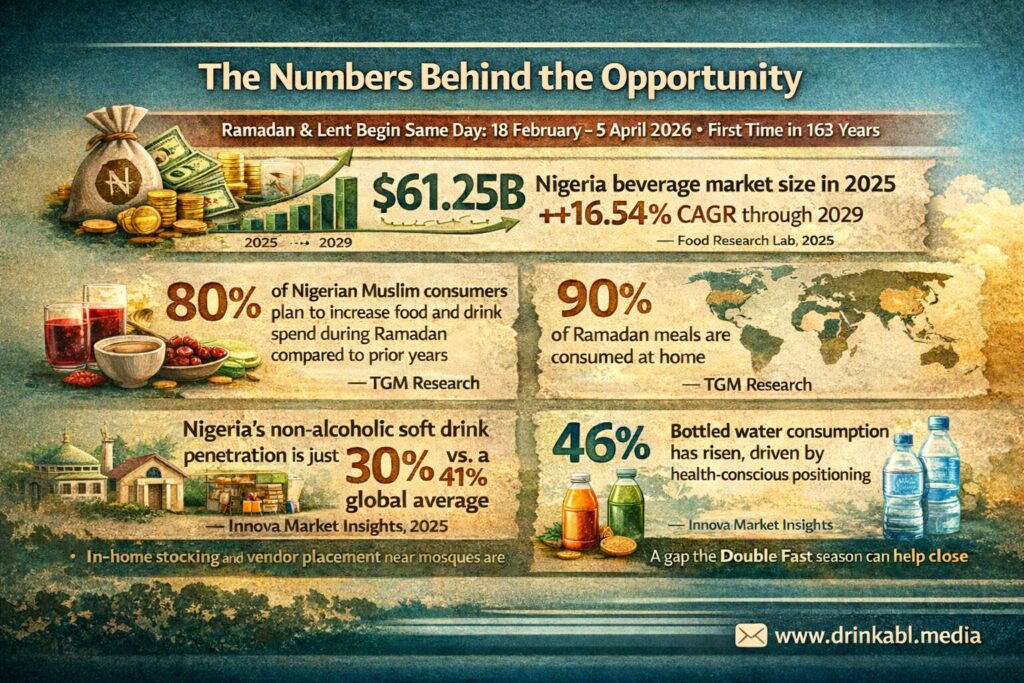
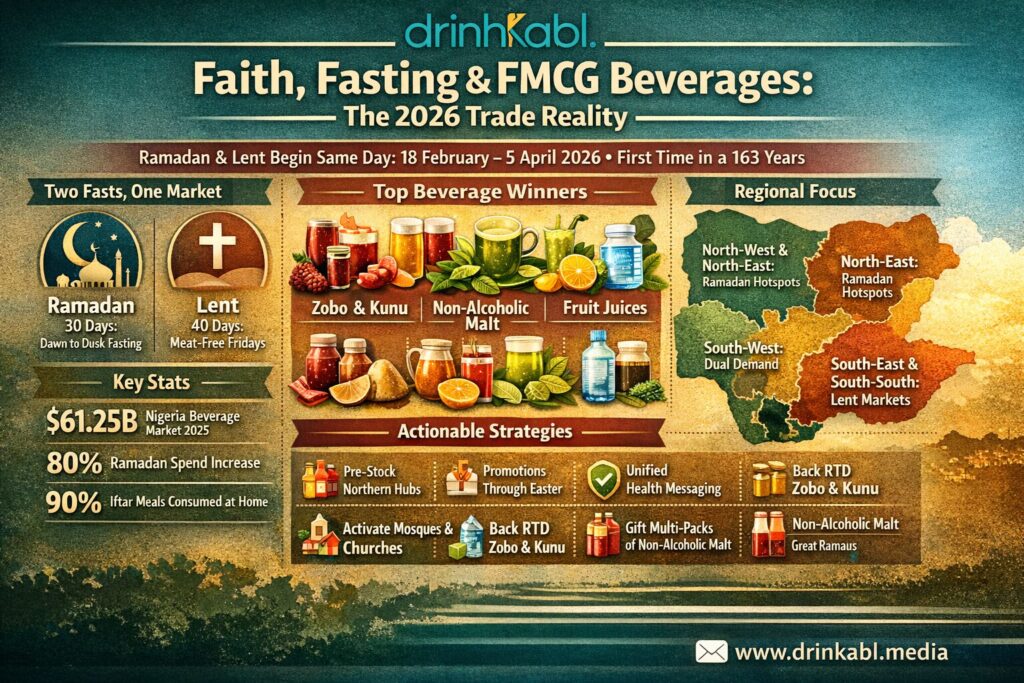
On 18 February 2026, Ramadan and Lent began on the same day , a convergence last seen in 1863, unlikely to recur until 2189. For the first time in living memory, Nigeria’s Muslim and Christian populations are fasting simultaneously, covering virtually the entire country. For the beverage trade, this is not just a cultural moment. It is a six-week dual window, from 18 February through Easter on 5 April, that represents the most concentrated faith-driven demand opportunity in generations.
Two Fasts, One Market
Ramadan runs for 30 days (18 Feb – ~19 Mar), requiring Muslims to abstain from all food and drink from dawn to sunset. Lent spans 40 days (18 Feb – 2 Apr), with Catholics fasting on Ash Wednesday and Fridays, abstaining from meat, while beverages like tea, coffee, juice, and soft drinks remain permitted throughout.
The fasting structures differ, but both seasons drive a shared behavioural shift: more intentional, health-conscious consumption and strong communal drinking rituals. As Peter Obi described it at the convergence’s start, this is Nigeria’s “Double Fast” , millions of citizens, North and South, in a shared season of restraint and reflection. Brands and distributors that recognise both communities stand to make this their most commercially productive quarter.
Consumer Behaviour: Two Communities, One Trend
The Muslim Consumer During Ramadan
Consumer research by TGM Research found that 80% of Nigerian Muslim respondents planned to increase food and drink spend during Ramadan , the highest figure in the surveyed African region. Beverage brands rank as the top recalled brand category during the month. A 12+ hour daily fasting window creates intense re-hydration demand at Iftar, while Suhoor drives a distinct morning demand peak for warming, energy-sustaining drinks.
Economic pressures documented by Daily Trust — naira depreciation, inflation, fuel subsidy removal — have pushed many northern households toward affordable local staples. This does not suppress beverage demand; it redirects it toward value brands, local RTD formats, and high-volume categories like water and kunu.
“As fasting begins, we buy beverages like chocolate drinks in addition to normal food. Some of us don’t know how to eat heavy food in the morning to start our fast, so we take a beverage to begin.”
— Mariam Audu, civil servant, quoted in Leadership Nigeria, March 2025
The Christian Consumer During Lent
Beverages are not restricted during Lent , the season creates a psychological shift toward what feels wholesome, clean, and purposeful. Many Christians voluntarily give up alcohol, creating crossover demand with the same non-alcoholic, health-positioned formats that lead Ramadan sales. Friday abstinence from meat makes warm beverages like herbal tea central to simple Friday meals.
Innova Market Insights’ 2025 report on Nigerian F&B trends confirms that consumers broadly are moving toward functional claims — low sugar, vitamin fortification, natural ingredients. This macro trend is amplified during both fasting seasons, when consumers are most attuned to what they are consuming and why.
Category by Category: Who Wins and Why
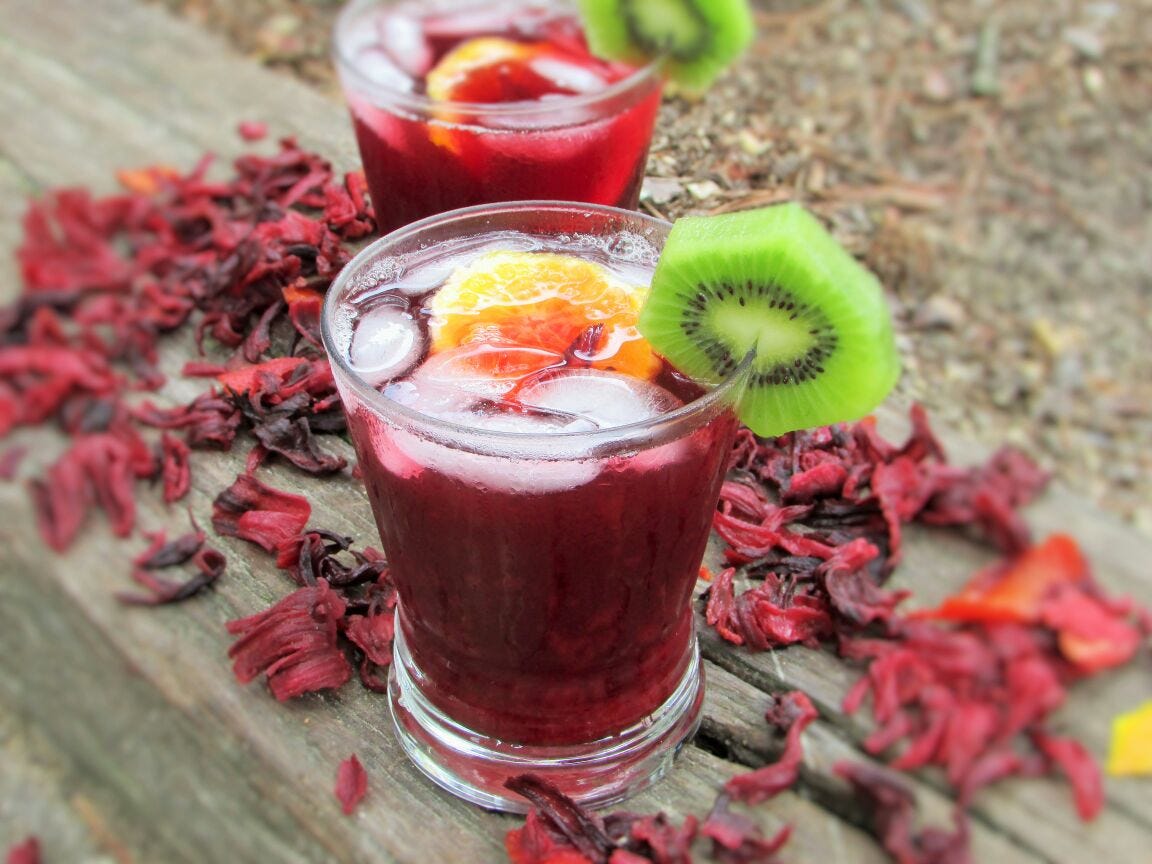
Zobo (Hibiscus Drink) — ↑ Strong
A traditional Iftar staple with antioxidant health appeal and wide affordability. Zobo is rapidly being formalised into branded RTD formats, with high vendor activity near mosques. Clear opportunity for shelf-stable, consistently packaged products that can compete with informal sellers on convenience.
Kunu (Grain Drink) — ↑ Strong
The northern Nigeria Suhoor staple — energy-sustaining, filling, and non-alcoholic. Mostly sold in unbranded bottles, Kunu represents a significant white-space opportunity for packaged brands, particularly across the Kano, Kaduna, and Sokoto corridors.
Non-Alcoholic Malt — ↑ Strong
A celebratory, premium-feeling substitute popular with families. Malta Guinness, Amstel Malta, and Maltina are well positioned. Gifting multipacks perform strongly in the Eid al-Fitr run-up and also serve Christians observing Lent who are voluntarily alcohol-free.
Herbal & Green Tea — ↑ Strong
Aligns naturally with the reflective, health-conscious spirit of Lent and works equally well as a warming Suhoor beverage. Ginger, hibiscus, and green variants are gaining ground. Friday meat abstinence during Lent makes warm drinks a central part of simple meals.
Fruit Juices & Smoothies — ↑ Rising
Breaking the fast with fruit is a common Iftar practice; vitamin C and hydration narratives are strong. Premium juice brands gain share during Ramadan. Juice brands that align messaging to the tradition of opening Iftar with dates consistently outperform those that do not.
Bottled Water — ↑ High
A 12+ hour fasting window creates intense re-hydration demand at Iftar. Primarily a volume play. Note that sachet-water brands face NAFDAC small-pack regulation enforcement from December 2024, which benefits larger-format water sales.
Natural & Low-Sugar Drinks — ↑ Rising
Lenten consumers avoiding indulgence are drawn to cleaner, less-processed options. Health claims — low sugar, vitamin-fortified, natural, locally-sourced — convert across both Muslim and Christian audiences and require no faith-specific positioning to be effective.
Energy Drinks — ◎ Watch
Post-Iftar demand picks up as evening activity resumes, especially among younger urban consumers. Culturally sensitive positioning is needed during Ramadan. Best angle: evening productivity and post-Tarawih hydration.
Carbonated Soft Drinks — ◎ Stable
Reliable everyday volume; familiar brands drive consistent Iftar table placement. Price sensitivity is acute, budget brands tend to outperform premium SKUs in economically constrained fasting seasons, as NielsenIQ data from comparable Muslim markets shows.
Alcoholic Beverages — ↓ Declines
Muslims abstain fully during Ramadan; many Christians voluntarily during Lent. Brands with dual portfolios should redirect Ramadan and Lent marketing spend entirely to non-alcoholic ranges for the full six-week window.
Regional Intelligence: Where to Deploy
North-West: Kano, Sokoto, Kaduna — Highest Intensity
The primary commercial frontier for Ramadan. Zobo and Kunu dominate the informal vendor market. Mosque-proximate vendor channels are the highest-ROI placement. Cold-chain constraints mean ambient and vendor-chilled formats perform best.
North-East: Maiduguri, Gombe — High Intensity
Recovering trade flows following security disruptions. Tea and grain drinks are prominent at Suhoor. Communal, charity-funded Iftar gatherings create significant bulk beverage demand.
North-Central: Abuja, Minna — Moderate-High
Blends northern consumption patterns with urbanite preferences. Malt drinks, premium juices, and branded water perform well. An emerging modern retail footprint opens shelf-space opportunities unavailable in the deep north.
South-West: Lagos, Ibadan — Moderate (Both Fasts)
Yoruba Muslim communities are a significant and often overlooked Ramadan market. Zobo and malt drinks are strong performers. Lenten demand from Christian communities activates simultaneously — particularly in Agege, Ikorodu, Mushin, and Surulere. Supermarket and convenience store channels are relevant here.
South-East & South-South — Lenten Only
A predominantly Christian region representing an untapped Lent-season beverage market. Natural juices, herbal teas, and non-alcoholic alternatives are all opportunity categories with limited competition during this window.
Six Actionable Trade Recommendations
- Pre-stock northern hubs by 5 February. Inventory must be in place two weeks before Ramadan begins to prevent supply gaps in the critical first week. Prioritise Kano, Kaduna, Sokoto, and Maiduguri corridors.
- Extend activation through Easter (5 April). Ramadan ends ~19 March; Lent ends 2 April; Easter is 5 April. Brands sustaining promotional activity through April capture both Eid al-Fitr and Easter gifting peaks — six consecutive weeks of faith-driven consumer attention.
- Lead with unified health messaging. Low sugar, vitamin-fortified, natural, and locally-sourced claims convert across Muslim and Christian consumers simultaneously — eliminating the need for separate campaigns for each community.
- Activate vendor channels near mosques AND churches. Mosque-proximate vendors are the highest-ROI placement in northern cities during Ramadan. Church-vicinity activations — especially on Fridays and Sunday mornings — capture Lenten consumer traffic in the south and urban centres.
- Back Zobo and Kunu in RTD format. The informal beverage market is formalising rapidly. Branded, shelf-stable RTD formats of these traditional drinks command premiums over informal versions and are well positioned for both fasting seasons.
- Shift non-alcoholic malt and mocktail formats into gifting packs. Muslims abstain from alcohol throughout Ramadan; many Christians voluntarily during Lent. Gifting multipacks and premium gift-ready SKUs serve Eid al-Fitr, Easter, and general celebratory occasions across both communities at once.
The convergence of fasting seasons in 2026 creates a high-stakes operating window for beverage players. Strategic preparedness, not opportunism, will determine which brands translate short-term shifts into durable growth.