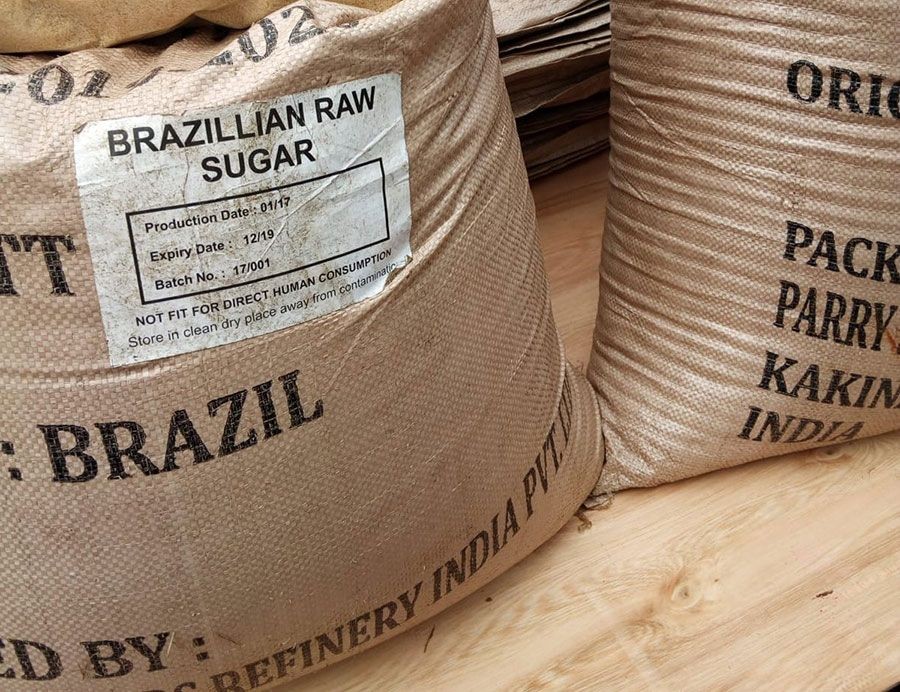
A surge in low-cost Brazilian sugar imports signals both short-term relief and long-term restructuring for Nigeria’s food and beverage sector
Nigerian beverage, food and pharmaceutical manufacturers are securing a major sugar procurement cycle for 2026, with 212,985 tonnes of raw sugar , valued at approximately N107 billion ($77 million) already shipped from Brazil’s Port of Santos to Apapa Port in Lagos within just the first six weeks of the year. The development marks one of the most significant sugar import cycles in recent memory, driven by a sharp fall in global sugar prices that is now feeding directly into the cost structures of Nigeria’s food and drink manufacturers.
“212,985 tonnes of raw sugar valued at N107 billion ($77 million) arrived at Apapa Port in just six weeks — one of the most significant import cycles in recent memory.”
25.6%Drop in raw sugar price since Jan 2026
1.9MTonnes ordered by Nigerian industry for 2026
29%Nigeria’s share of Africa’s $7bn sugar market
A 25% Price Crash , & What It Means for Producers
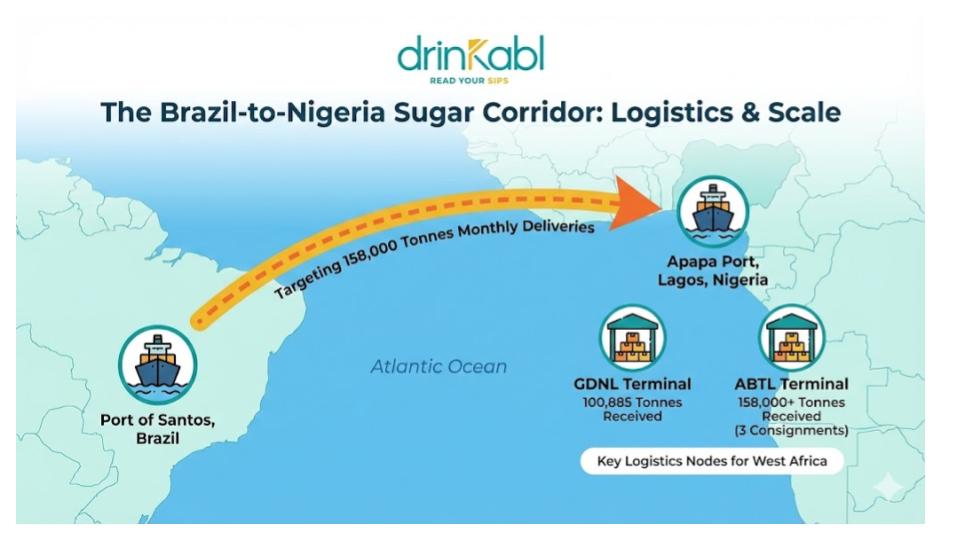
The price of raw sugar has fallen 25.6 per cent since the start of 2026, dropping from $484.8 per tonne to $360.5 per tonne , a margin compression reversal that beverage and food producers will welcome after years of elevated input costs. The consignments have been offloaded at two terminals: the Apapa Bulk Terminal Limited (ABTL) and Greenview Development Nigeria Limited (GDNL), both key logistics nodes for bulk commodity imports into West Africa.
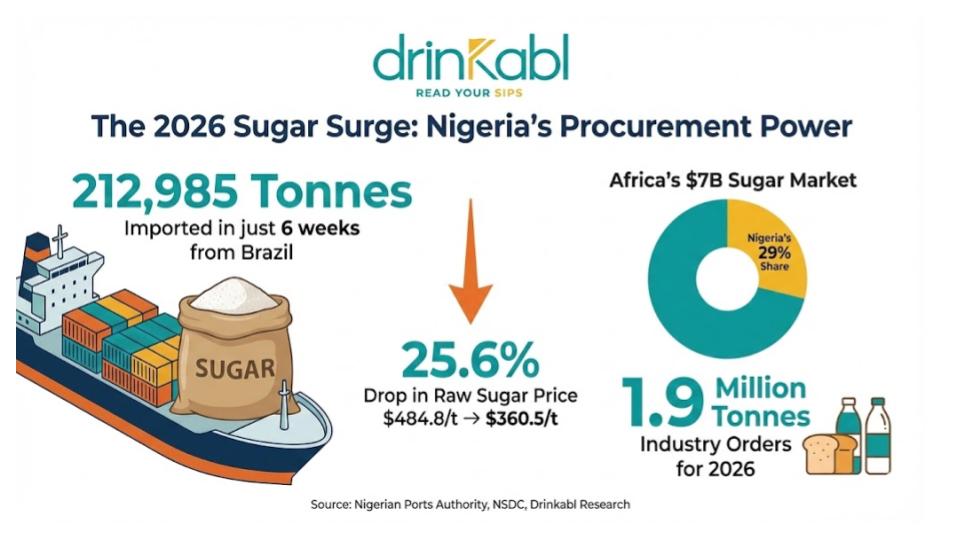
Shipping data from the Nigerian Ports Authority (NPA) reveals the scale of the procurement: 100,885 tonnes arrived at GDNL from San Antonio, while three separate consignments of 50,650 tonnes, 50,235 tonnes, and 57,100 tonnes were discharged at ABTL. An additional 55,000 tonnes are expected at Apapa imminently, maintaining the pace of a trade corridor that is becoming increasingly central to Nigeria’s food manufacturing supply chain.
1.9 Million Tonnes: The Scale of Beverage and Food Industry Demand
The volume of orders placed tells its own story. Bakery, pharmaceutical, confectionery, food and beverage companies have collectively ordered 1.9 million tonnes of sugar for 2026 , a figure that has prompted Brazil to target an average of 158,000 tonnes of monthly sugar delivery to Nigeria. This positions Nigeria’s food and drink manufacturing base as one of Brazil’s most strategically important African markets.
“Beverage, confectionery and food companies have ordered 1.9 million tonnes of sugar for 2026 , prompting Brazil to target 158,000 tonnes in monthly deliveries to Nigeria.”
Nigeria’s outsized role in the regional sugar economy is a significant factor in this dynamic. The country controls approximately 29 per cent of the $7 billion broader African sugar market, making it the continent’s largest single consumer market for the commodity. For multinational and domestic beverage producers alike, Nigeria’s sugar import patterns are a reliable barometer of the industry’s health and production outlook.
The Push for Self-Sufficiency, & What It Means Long-Term
While the short-term picture favours importers, Nigeria’s regulatory and financial architecture is beginning to shift in ways that could reshape how beverage companies source their sugar over the next decade. The National Sugar Development Council (NSDC) has entered into a landmark partnership with the Nigerian Export-Import Bank (NEXIM), aimed at financing large-scale domestic sugar projects under an Engineering, Procurement, Construction plus Financing (EPC+F) model.
NSDC Executive Secretary Mr Kamar Bakrin was unambiguous about what the sector needs: “What the sector requires is patient, long-tenor financing deployed at scale and backed by policy certainty. The domestic sugar market is valued at around $2 billion, while the broader African market stands at $7 billion. By partnering with NEXIM Bank and international export credit partners, we are putting in place a financing architecture that allows serious investors to execute, not speculate.”
“What the sector requires is patient, long-tenor financing deployed at scale and backed by policy certainty.”
— Kamar Bakrin, NSDC Executive Secretary
The NSDC-NEXIM partnership is also expected to reduce Nigeria’s sugar imports by up to 25 per cent within five to ten years, with out-grower schemes designed to integrate smallholder farmers into commercial value chains. For beverage manufacturers, this is a longer arc story , one that could, if realised, reduce input cost volatility and dependence on global commodity price swings.
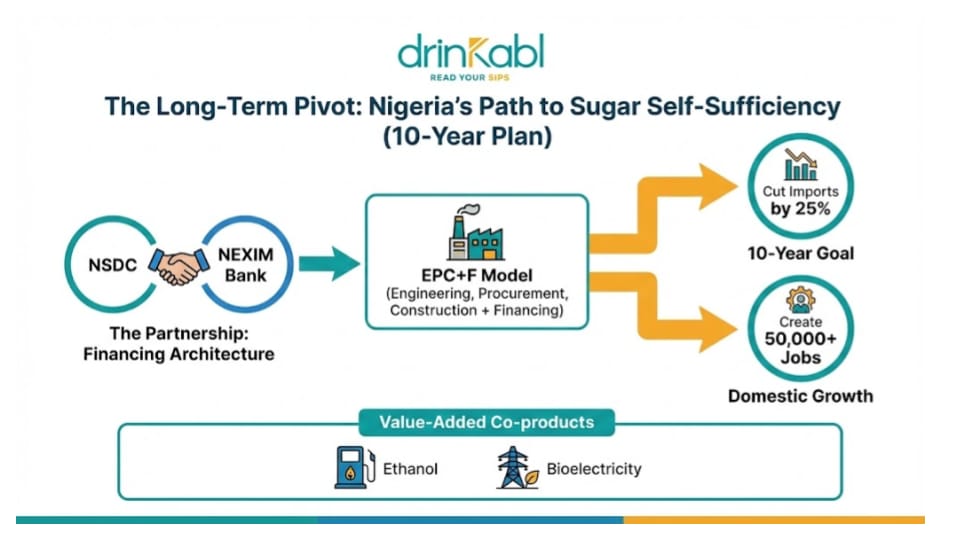
Beyond sugar supply, Bakrin outlined additional upside: large-scale sugar projects would create over 50,000 jobs across farming, processing and logistics, while also supporting value-added renewable co-products such as ethanol and bioelectricity , areas of growing interest to beverage conglomerates pursuing sustainability and energy-transition commitments. The NSDC also recently partnered with the Nigeria Governors’ Forum (NGF) to attract further investment into the sector, signalling federal and state alignment on sugar industrialisation.