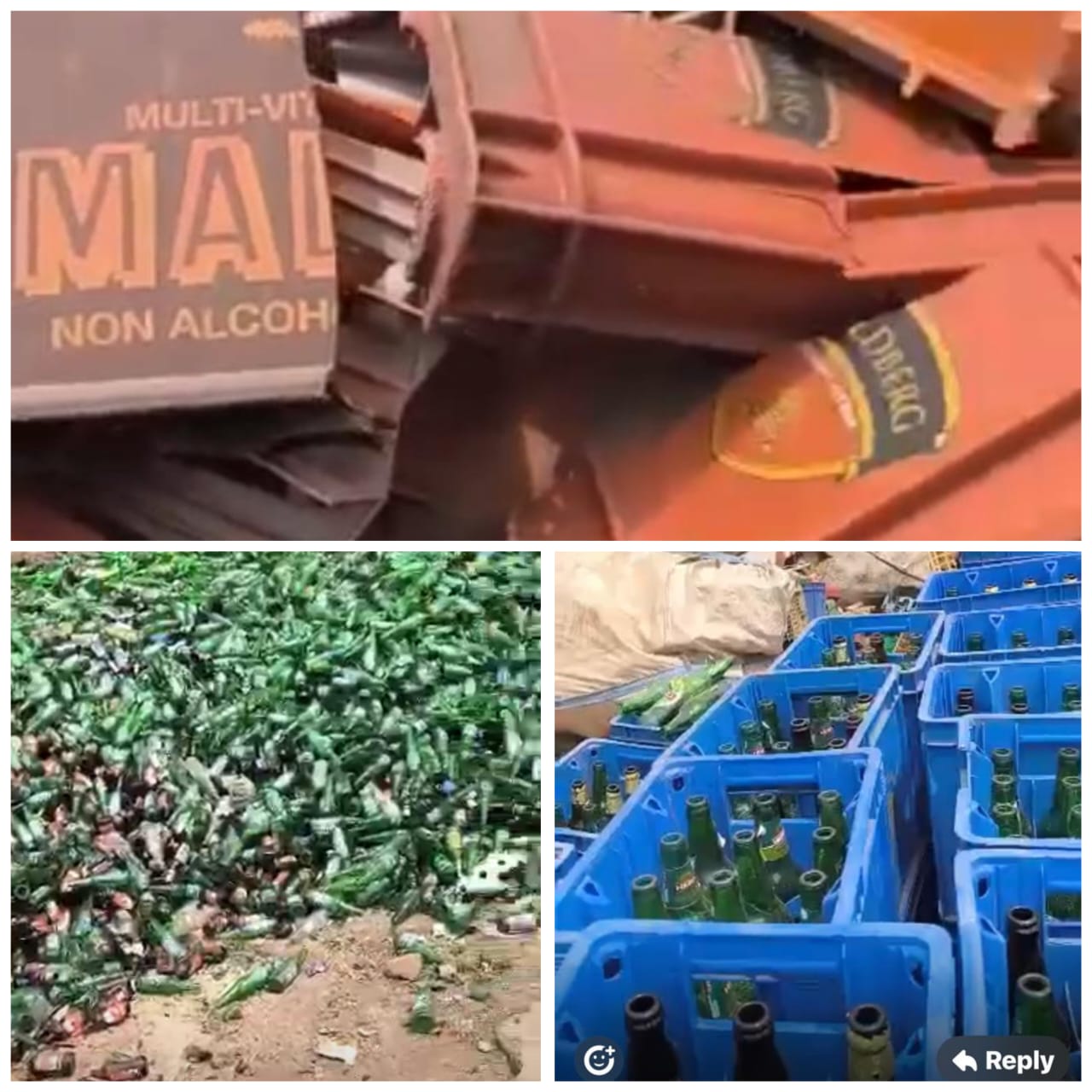
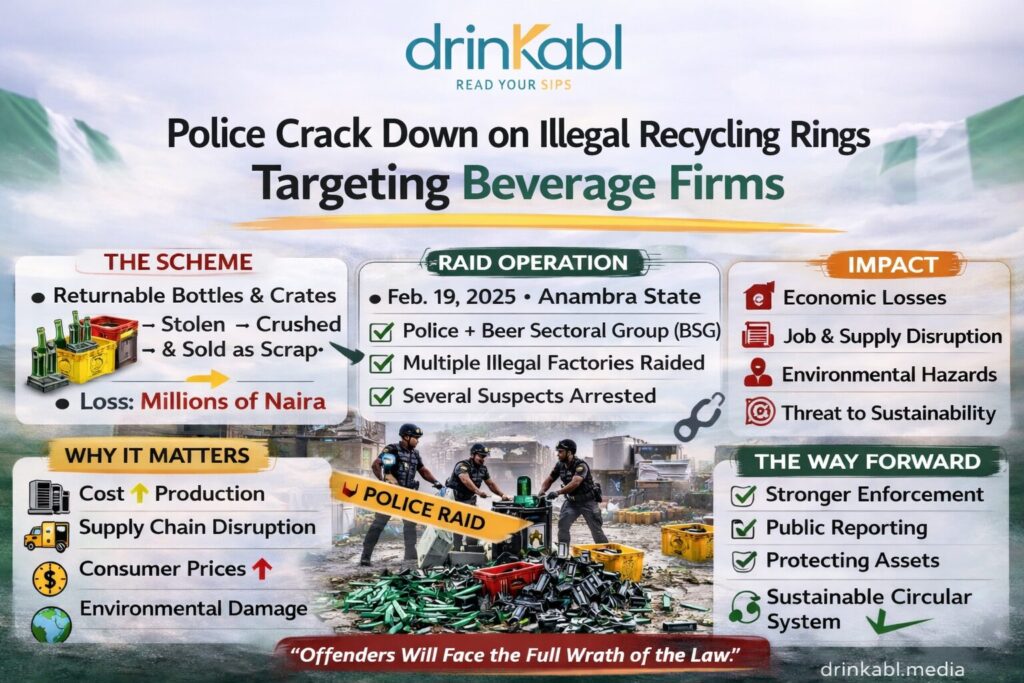
Every bottle has a second life, and in Nigeria’s South-east, criminal networks had figured out exactly how to profit from it. Not by returning them, as the law requires, but by smashing them into raw material and selling the pieces. The scheme has cost beverage manufacturers millions of naira and gone largely unchecked , until a coordinated police raid tore through several Anambra factories and blew the operation wide open.
Nigerian security forces, working alongside the country’s leading beverage industry body, have raided multiple illegal factories in Anambra State, smashing open what authorities describe as a sprawling underground network that has been quietly draining millions of naira from the nation’s beer and drinks manufacturers.
The February 19 operation, coordinated by the Beer Sectoral Group (BSG) , a member of the Manufacturers Association of Nigeria , and the Nigeria Police Force, led to the arrest of several suspects caught in the act of destroying returnable glass bottles and plastic crates belonging to beverage companies across the South-east.
But this was no spontaneous raid. It was the culmination of a painstaking, months-long intelligence-gathering effort, and it has laid bare the true scale of what industry executives are calling deliberate economic sabotage.
“The recent raid is the outcome of sustained engagements and intelligence-led investigations, and represents a decisive step by authorities to protect legitimate business operations, uphold environmental standards, and deter further illegal activity.” — Abiola Laseinde, Executive Secretary, Beer Sectoral Group
A Criminal Ecosystem Hidden in Plain Sight
What investigators uncovered was not opportunistic petty theft but an organised trade. Returnable packaging materials, glass bottles and plastic crates that companies loan out as part of a deposit-based circular system , were being deliberately crushed and shredded, then sold as raw materials to informal recycling networks. Multiple sites across the South-east were identified as active processing points.
Laseinde confirmed that the scale of diversion from legitimate channels had been significant. Rather than being returned to manufacturers for cleaning and reuse, their intended purpose, the packaging was being stripped of value and funnelled into a grey market for raw materials.
“These Returnable Packaging Materials (RPMs) are company-owned assets designed for multiple reuse cycles and form a critical part of their sustainability, cost-efficiency, and product quality systems. It’s a criminal activity to destroy them.”
— Abiola Laseinde
Why It Matters Beyond the Factory Gate
The economic damage runs deeper than the loss of bottles and crates. Returnable packaging systems are the backbone of how beverage companies manage costs and sustainability. Disrupting them cascades into supply chain bottlenecks, higher production costs, and product shortages , burdens that can trickle down to consumers at the shelf.
Beyond the economics, the BSG warned that unauthorised recycling operations pose serious public safety risks, since unregulated crushing and shredding of industrial packaging materials exposes workers and surrounding communities to hazards. For an industry already navigating Nigeria’s naira volatility and rising input costs, the theft compounds an already pressured operating environment.
An Industry Under Sustained Attack
The Anambra raid is not an isolated incident. The BSG has been contending with the illegal disposal and theft of returnable packaging for several years, and it signals a hardening of the industry’s approach, from complaints and petitions to active intelligence-sharing with law enforcement and coordinated physical operations.
“These assets remain the property of beverage companies that have invested heavily in these sustainable packaging materials to protect the environment. Offenders will be held liable and made to face the wrath of the law.” — Abiola Laseinde
Nigeria’s beverage sector, which dominates the country’s packaging market and serves a consumer base of over 230 million people, has invested heavily in sustainable packaging infrastructure. Coca-Cola’s Apapa collection hub, inaugurated in 2025, processes 13,000 tonnes of PET annually , a signal of just how seriously companies are committing to circular packaging models. That commitment is precisely what operations like the Anambra network undermine.
The BSG has now signalled it will continue working with the police to dismantle these operations and is urging the public to report suspicious activity to either law enforcement or the consumer care lines of affected beverage companies.