For the first time in nearly a century, the wine glass at a British royal state banquet yielded its place, and a Nigerian mocktail stepped into the spotlight.
King Charles III welcomed Nigerian President Bola Ahmed Tinubu and First Lady Oluremi Tinubu to St George’s Hall at Windsor Castle for a glittering state banquet on Wednesday, the first such occasion since 1928 when a Muslim head of state observed Ramadan during a British state visit. It was also the first UK state visit by a Nigerian leader since 1989, and for Nigeria’s beverage identity, an unexpectedly grand coming-out party.
The centrepiece of the evening’s drink story was a specially created non-alcoholic mocktail called the Crimson Bloom, one of a series of adaptations made because the banquet fell during the holy month of Ramadan. Inspired by the classic Nigerian Chapman cocktail, which is said to have originated at the Ikoyi Club in Lagos and is widely considered a quintessential Nigerian mocktail, traditionally made with Fanta, Sprite, Angostura, grenadine, and served over ice, the Crimson Bloom combined zobo and English rose with grenadine and a homemade hibiscus and ginger syrup, sharpened with fresh lemon and a hint of spice, and lengthened with English rose soda. Zobo is a popular West African drink made from dried hibiscus petals, typically sweetened and flavoured with ginger, cloves, pineapple, or citrus fruits, and is known by different names across the continent, bissap in Senegal, sobolo in Ghana, and karkadé in Egypt and Sudan.
The Chapman is said to have been invented by a Lagos bartender named Samuel Alamutu at the Ikoyi Club, originally created for a customer who did not drink alcohol. In one glass served at Windsor, a drink born in a Lagos club found itself at one of the longest tables in British royal history.
For followers of Nigeria’s fast-growing non-alcoholic drinks market, the moment lands with particular weight. Zobo is rapidly being formalised into branded ready-to-drink formats, with high vendor activity and growing appeal as a health-positioned beverage during fasting seasons. Wednesday night at Windsor was a reminder that Nigeria’s drink culture carries extraordinary soft power.
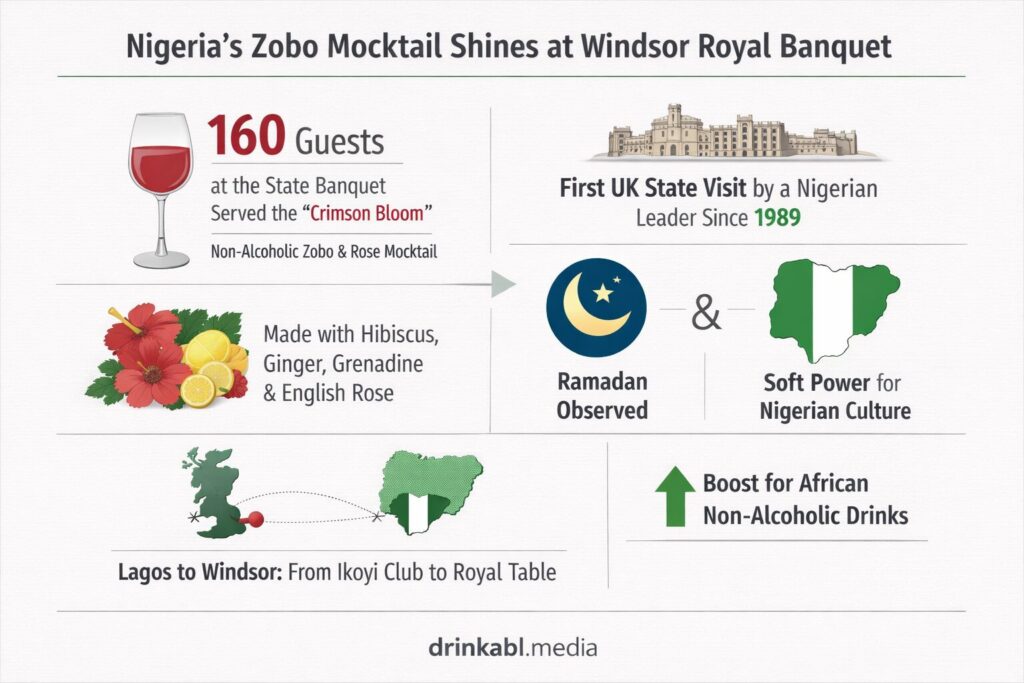
The Royal Household pulled out every diplomatic stop. President Tinubu broke his Ramadan fast privately at sunset before joining the Royal Family for the banquet. For the first time in living memory, canapés were offered ahead of dinner to allow Muslim guests observing the fast to break it, and the traditional formal royal lunch was replaced by a private audience between the King and President Tinubu, out of respect for Ramadan daytime fasting. A prayer room was also set up within the castle. On 18 February 2026, Ramadan and Lent began on the same day for the first time since 1863, meaning that Nigeria’s Muslim and Christian populations were fasting simultaneously, making this one of the most faith-focused beverage moments in generations.
“We are most grateful to you for travelling during this holy month, which, I acknowledge, is no small sacrifice,” King Charles told his guests. “Ramadan Mubarak!”
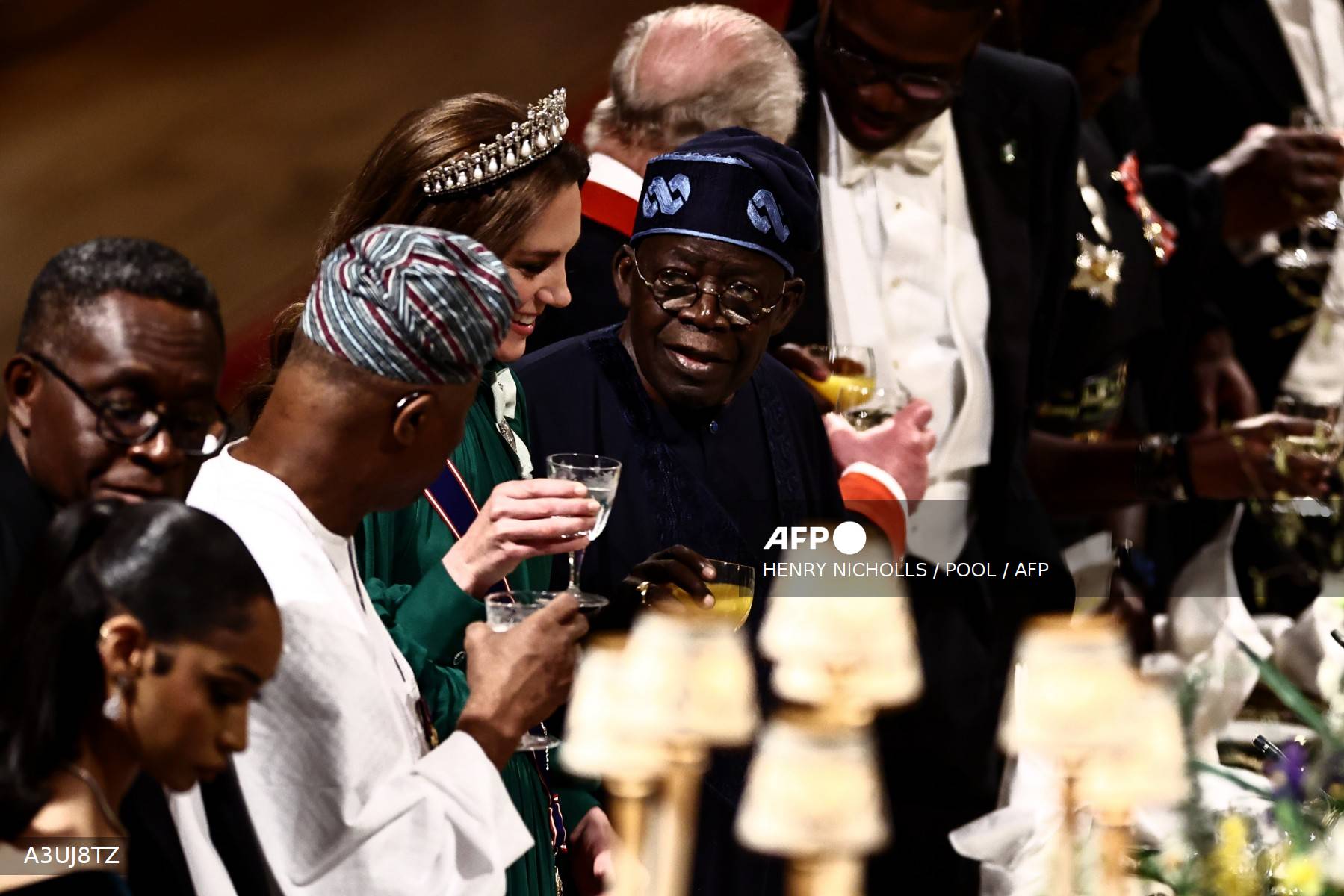
President Tinubu made his toast with orange juice, while the after-dinner Crimson Bloom was offered to all 160 guests, an elegant solution that meant no guest felt excluded, whether observing the fast or not. Alcoholic wine, port and whisky were also available for those who chose to drink.
The dinner itself was meat-free. Guests dined on a soft-boiled quail egg tartlet with watercress, followed by a main course of fillet of turbot with lobster mousse and Jersey Royal potatoes, and an iced blackcurrant soufflé for dessert.
The King’s speech was a masterclass in cultural fluency. He opened by greeting guests in Yoruba, “Ekabo. Se Daaa Daa Ni,” meaning “Greetings, I hope you are well.” He wove in Yoruba wisdom that “rain does not fall on one roof alone,” the Hausa expression “when the music changes, so does the dance,” and the Igbo saying “knowledge is never complete, two heads are better than one.”
“Nigeria is investing in Britain’s future as much as Britain is investing in Nigeria’s,” Charles declared.
The King also acknowledged the “painful marks” of a shared colonial history, saying “I do not seek to offer words that dissolve the past, for no words can,” but looked to a future “worthy of those who bore the pains of the past.”
For beverage watchers, the Crimson Bloom was the toast of the evening, turning Nigeria’s most recognisable street mocktail into a symbol of diplomatic respect and evidence of the momentum building in Africa’s non-alcoholic drinks category. Zobo is now gaining international attention due to growing interest in herbal teas and plant-based health drinks, and its agro-export potential, as dried hibiscus, concentrates, or ready-to-drink bottles, is increasingly recognised. The ginger drinks boom that Drinkabl.media has been tracking across West Africa showed up, quite literally, in the King’s ginger syrup at Windsor.
Read More on Drinkabl.media: