As Coca-Cola, Pepsi, and other drinks giants battle soaring raw material expenses, state governors partner with federal regulators to localize sugar production—potentially saving the industry hundreds of millions in foreign exchange annually
For Nigeria’s beverage manufacturers—from Coca-Cola and Pepsi to local powerhouses like Nigerian Bottling Company and Nigerian Breweries—the economics of making soft drinks have become increasingly punishing. Every bottle of Fanta, every can of malt drink, every pack of fruit juice depends on sugar, and Nigeria imports 96% of what it consumes, draining $656 million from the economy in 2024 alone.
Now, the Nigeria Governors’ Forum (NGF) has thrown a potential lifeline to the struggling industry. In a partnership formalized with the National Sugar Development Council (NSDC) over the weekend, Nigeria’s 36 state governors agreed to prioritize sugar as a flagship investment opportunity—with the explicit goal of halting raw sugar imports, expanding domestic production, and achieving national self-sufficiency.
Why This Matters for Drinks Manufacturers
The Nigerian beverages market consumed 5.18 billion liters in Q3 2024, with soft drinks (carbonated and non-carbonated) dominating at 81% of total consumption. Sugar is the second-most expensive input after water for most soft drink formulations—accounting for 10-15% of total production costs.
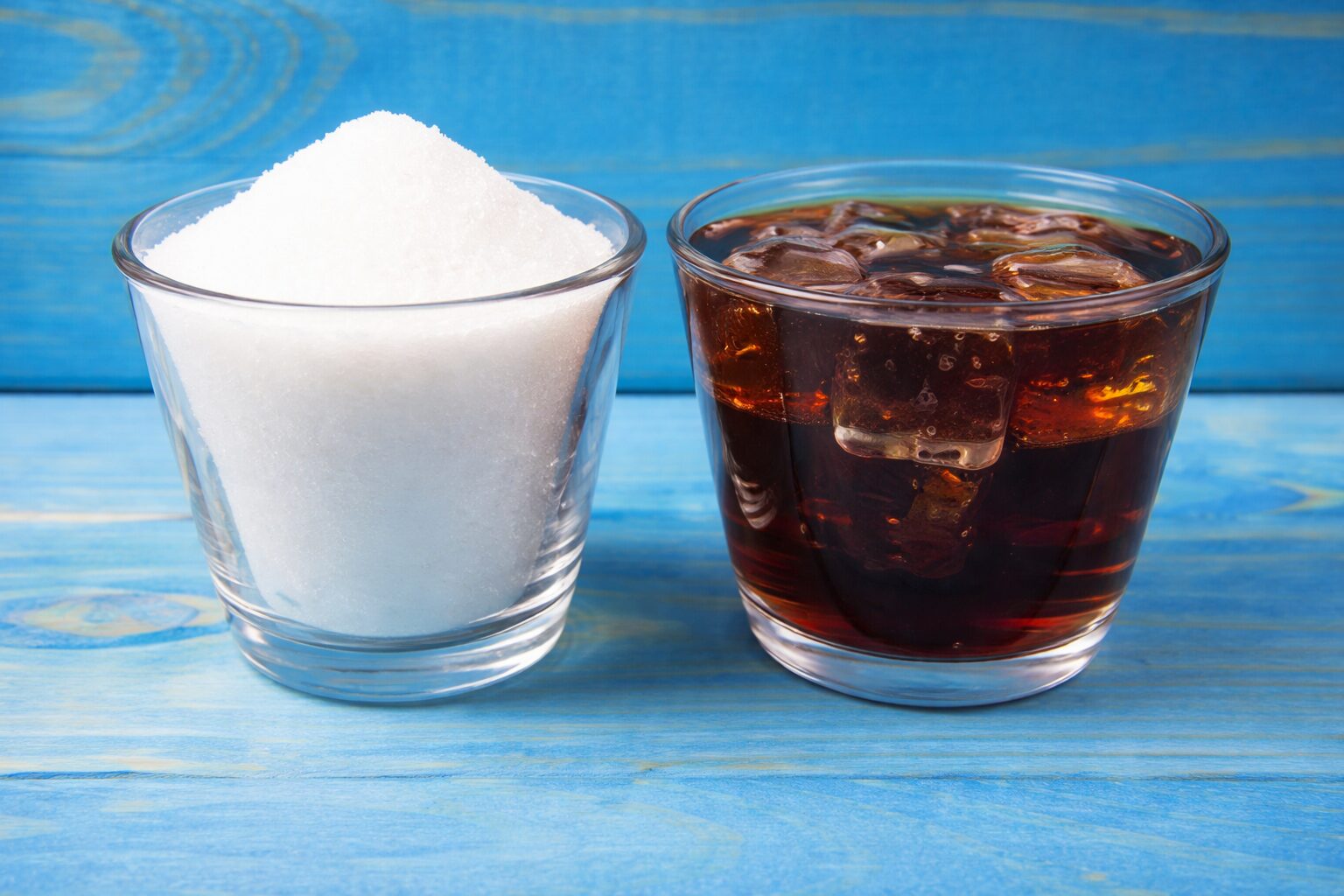
For context, a typical 50cl bottle of Coke or Pepsi contains approximately 27 grams of sugar (roughly 3 teaspoons). With Nigeria’s beverage industry producing billions of liters annually, even modest reductions in sugar import dependency could save manufacturers tens of millions of dollars in foreign exchange costs.
The Perfect Storm: Currency Collapse Meets Input Cost Crisis
Nigeria’s beverage sector has been hemorrhaging money. Between 2022 and 2024, soft drink prices surged by over 200% as manufacturers struggled with naira devaluation, skyrocketing import costs, and inflationary pressures that pushed headline inflation past 22%.
A 50cl PET bottle of Coke that retailed for ₦150 in 2021 now sells for upwards of ₦430—and that’s before the latest round of price increases triggered by continued currency weakness. For Seven-Up Bottling Company, NBC, and others, the cost squeeze has been relentless.
“While global sugar prices have remained relatively stable in dollar terms, exchange rate movements have made imports significantly more expensive, thereby enhancing the commercial viability of domestically produced sugar, whose inputs are largely naira-denominated.”
— Kamar Bakrin, Executive Secretary/CEO, National Sugar Development Council
The NSDC chief executive’s assessment cuts to the heart of the beverage industry’s challenge. While international sugar prices hover around stable levels, the naira’s collapse—from roughly ₦410/$ in early 2021 to over ₦1,500/$ by late 2024—has made every imported ton of raw sugar catastrophically more expensive in local currency terms.
Current Market Snapshot: Nigeria’s Soft Drinks Industry
5.18 billion liters Total beverage consumption Q3 2024
81% Share of soft drinks in beverage market
$33.2 billion Value of soft drink sales through retail channels (2022)
6 bottles/week Average Nigerian soft drink consumption
₦430+ Current retail price for 50cl Coke/Pepsi (up from ₦150 in 2021)
Sugar’s Hidden Cost: The SSB Tax Dilemma
Making matters worse for manufacturers, Nigeria introduced a Sugar-Sweetened Beverage (SSB) tax in June 2022—a ₦10 per liter excise duty on all non-alcoholic, carbonated, and sweetened beverages. While designed primarily as a public health measure to combat rising obesity and diabetes rates (one in three Nigerian adults now has hypertension), the tax added another layer of cost pressure.
Research shows that Nigeria’s soft drink demand is highly price-elastic, with own-price elasticity estimates of -0.76 for carbonated soft drinks and -0.72 for chocolate powder. This means a 10% price increase typically leads to a 7-8% drop in consumption—a nightmare scenario for volume-driven manufacturers already struggling with thin margins.
The Health vs. Industry Debate
Public health advocates argue the SSB tax doesn’t go far enough. At just ₦5 extra per 50cl bottle, the current tax adds minimal deterrent to consumption. Meanwhile, beverage manufacturers counter that they’re caught between rising input costs, regulatory pressures, and consumers’ limited purchasing power.
A shift to domestically-produced sugar could potentially ease this tension by lowering production costs, creating room for reformulation with less sugar (reducing tax burden), and improving overall profitability without further price increases.
The $2 Billion Domestic Opportunity
According to Bakrin’s presentation to governors’ representatives, Nigeria’s sugar sector is currently valued at approximately $2 billion domestically. With the African Continental Free Trade Agreement (AfCFTA) creating continental market access, that potential expands to $7 billion across Africa.
For beverage manufacturers, the implications are profound. Currently, Brazil controls 97% of Nigeria’s raw sugar import market—meaning every naira devaluation instantly makes Brazilian raw sugar more expensive. Localizing even 30-40% of sugar production would:
• Stabilize input costs in naira terms, protecting margins from FX volatility
• Reduce working capital requirements by eliminating long lead times for imported sugar
• Create supply chain flexibility for just-in-time production models
• Generate positive PR through “locally sourced” messaging to health-conscious consumers
“The Nigerian sugar industry does not displace communities; instead, it integrates them into the value chain as partners, workers, and stakeholders through outgrower schemes and employment opportunities.”
— Kamar Bakrin, NSDC
Which States, Which Manufacturers?
The NSDC has identified 11 states with proven suitable land for profitable sugar production: Oyo, Kwara, Niger, Nasarawa, Kaduna, Kano, Bauchi, Gombe, Jigawa, Adamawa, and Taraba.
Several major investments are already underway. In August 2025, the NSDC signed agreements with four Nigerian companies—Brent Sugar in Oyo State, Niger Foods in Niger State, Legacy Sugar in Adamawa State, and UMZA in Bauchi State—to collectively produce 400,000 metric tons annually.
More significantly, Dangote Sugar has committed over $700 million to backward integration, targeting 700,000 metric tons of domestic output within five years. That single investment could theoretically supply roughly 40% of Nigeria’s current annual sugar consumption.
Production Targets vs. Current Reality
Annual Nigerian sugar consumption: ~1.7 million metric tons
Current domestic production: ~70,000 metric tons (4% of demand)
Committed new capacity (by 2030): ~1.1 million metric tons
Land required for self-sufficiency: 200,000 hectares (vs. 1.2M hectares available)
Current land under cultivation: ~130,000 hectares
Can Local Sugar Compete on Quality?
One critical question for beverage manufacturers: will Nigerian-produced sugar meet the exacting specifications required for carbonated soft drinks?
Soft drink formulation demands refined white sugar with precise crystal size, moisture content below 0.04%, and color values typically under 45 ICUMSA (International Commission for Uniform Methods of Sugar Analysis). Any variance can affect taste profiles, shelf stability, and carbonation retention.
Industry insiders note that Dangote Sugar’s existing refining operations already produce sugar that meets international beverage-grade specifications. The question is whether new entrants—the four companies signed in August 2025, plus any state-backed projects emerging from the NGF partnership—can match these standards at scale.
The By-Products Bonus: Ethanol and Bio-Power
For beverage manufacturers, there’s an additional upside beyond sugar itself. Integrated sugarcane-to-sugar operations generate two valuable by-products:
1. Ethanol: Fermented from molasses, ethanol is increasingly required for Nigeria’s petroleum blending mandates. The National Agency for Science and Engineering Infrastructure (NASENI) has pushed for E10 (10% ethanol) blending in petrol—creating a parallel revenue stream for sugar producers.
2. Bio-electricity: Burning bagasse (crushed sugarcane waste) generates significant electrical power. A 100,000-ton sugar operation can produce 15-25 MW of excess power for sale to the national grid—critical given Nigeria’s chronic power shortages that plague manufacturing operations.
For beverage plants located near future sugar estates, the possibility of dedicated power supply agreements could prove as valuable as the sugar itself. Coca-Cola Nigeria, Nigerian Breweries, and others have spent billions on diesel generators and backup power infrastructure—costs that could be significantly reduced with proximate, reliable bio-power.
The Partnership Framework: What Governors Agreed To
Under the new NGF-NSDC framework, state governments will:
• Support development of investor-ready sugar projects with clear financial models and implementation timelines
• Facilitate structured engagement between state governments, investors, and industry operators
• Improve coordination around land access, infrastructure, and incentive frameworks
• Include sugar projects as priority beneficiaries in all NGF engagements with development partners
Dr. Abdulateef Shittu, Director-General of the NGF, acknowledged that many state governments are already engaged in or exploring sugar-related investments, but noted that success requires effective coordination, credible investment frameworks, and strong alignment between federal policy and state-level priorities.
Major Players Watching Closely
Nigeria’s beverage industry is dominated by several key players who will be watching these developments intently:
Nigerian Bottling Company (NBC): Coca-Cola’s Nigerian bottler, the largest soft drink manufacturer in the country, producing Coke, Fanta, Sprite, Schweppes, and other brands across multiple plants.
Seven-Up Bottling Company: Bottler of Pepsi-Cola, 7Up, Mirinda, Mountain Dew, and Aquafina water—the second-largest soft drinks producer.
Nigerian Breweries Plc: Beyond beer, produces Maltina (a malt drink with significant sugar content), Fayrouz, and other beverages.
La Casera Company: Known for carbonated apple drinks and other beverages.
Rite Foods: Producers of Bigi drinks and Fearless energy drinks, which disrupted the market with aggressive pricing.
Chi Limited: Major player in fruit juices and drinks.
Each of these companies currently imports or purchases imported raw sugar for refining. The prospect of reliable, naira-denominated domestic supply represents a potential game-changer for their cost structures.
The Competitive Dynamics
Interestingly, local challenger brands like Bigi Cola and Mamuda Beverages’ Pop range have gained market share by offering larger volumes (60cl) at lower prices than established brands. These upstarts operate on razor-thin margins—making them perhaps even more sensitive to sugar cost fluctuations than the multinationals.
If domestic sugar production takes off, we could see further market disruption as local brands leverage naira-priced inputs to undercut global giants who may still rely partially on imported sugar during the transition period.
The Skeptic’s View: Can Nigeria Actually Execute?
For all the optimism, beverage executives remember that Nigeria’s National Sugar Master Plan was first approved in 2012, targeting 1.79 million tons of domestic production by 2023. The actual result? Just 70,000 tons—a spectacular 96% shortfall.
Several structural challenges remain:
Infrastructure deficits: Sugar estates require reliable irrigation, power, and road networks to transport harvested cane within 24-48 hours of cutting (to prevent sugar degradation). Many of the 11 identified states lack these basics.
Land tenure complexities: While Nigeria has 1.2 million hectares of suitable land, actually securing clear title and community buy-in for 200,000-hectare developments is notoriously difficult.
Capital intensity: A model 100,000-ton sugar operation requires $250 million in upfront investment—significant capital in a country where project financing remains challenging.
Competition with existing crops: Sugarcane competes with rice, cassava, and other crops for prime agricultural land, potentially creating food security tensions.
What Beverage Manufacturers Should Do Now
For Nigeria’s drinks industry, three strategic imperatives emerge:
1. Engage Early: Major manufacturers should establish relationships with state governments in the 11 identified zones, potentially offering offtake agreements that provide revenue certainty for new sugar projects.
2. Pilot Partnerships: Consider co-investment or strategic partnerships with emerging sugar producers—potentially securing preferential pricing or dedicated supply allocations in exchange for capital or technical support.
3. Scenario Planning: Model production costs and supply chain strategies across different scenarios—from continued 96% import dependency to 30%, 50%, or 70% localization—ensuring procurement flexibility as the market evolves.
“The sector is now worth US$2 billion, while with the aid of the African Continental Free Trade Agreement, it is worth US$7 billion on the continent. The market for sugar by-products alone is worth US$10 billion in Nigeria.”
— Kamar Bakrin, NSDC
The Road Ahead
Nigeria’s beverage industry stands at a crossroads. If the NGF-NSDC partnership delivers even half its ambitions—say, 500,000 to 800,000 tons of domestic sugar production by 2030—the impact on soft drink economics would be transformative.
Manufacturers could stabilize their cost bases, reduce foreign exchange exposure, and potentially redirect hundreds of millions in savings toward market expansion, product innovation, or passing savings to price-sensitive consumers.
But if the initiative follows the path of the 2012 Master Plan—all promise, minimal delivery—then Nigeria’s beverages sector faces another decade of painful price increases, market share erosion to cheaper alternatives, and continued vulnerability to every naira devaluation.
For Coca-Cola Nigeria’s bottlers, Pepsi’s franchisees, and the dozens of local manufacturers across the country, the question is simple: will Nigeria’s sugar revolution finally happen, or is this just another false dawn?
The next 24 months will tell. And for an industry that’s watched input costs triple while margins evaporate, the stakes couldn’t be higher.