Court rules Pride Inn cannot profit from bar operations while refusing to pay supplier
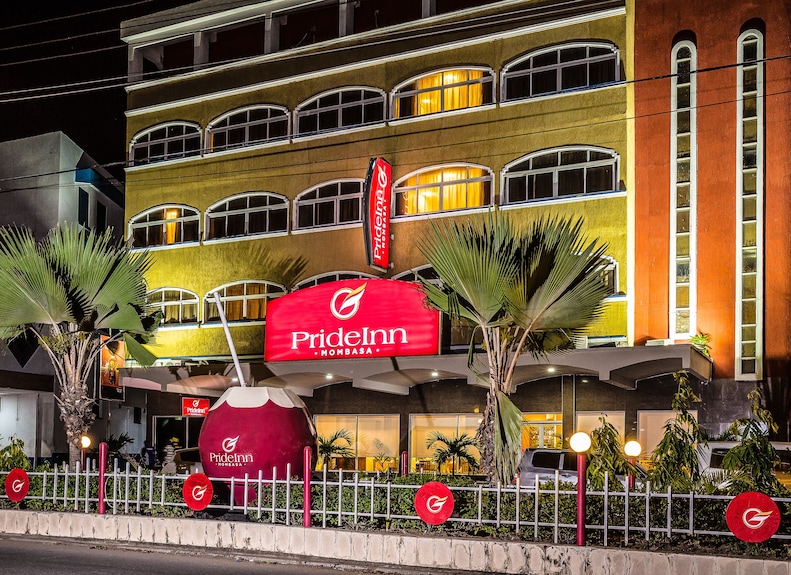
Kenya’s Court of Appeal has delivered a stinging rebuke to Pride Inn Limited, ordering the hotel chain to pay Sh2.1 million to a drinks supplier despite the company’s religious objections to handling alcohol, a principle that didn’t stop it from profiting off liquor sales for seven months.
In a ruling handed down on January 30, 2026, Justices W. Karanja, K. M’Inoti, and L. Achode dismissed Pride Inn’s appeal, exposing what the court characterized as an elaborate corporate arrangement designed to maintain religious distance from alcohol while boosting hotel revenues.
The case has become a cautionary tale about corporate accountability, raising questions about whether companies can design profitable business models around activities their principles forbid, then invoke those same principles to escape payment.
The Convenient Arrangement
In early 2014, Pride Inn faced a revenue crisis. Its strict policy against alcohol, rooted in the proprietors’ religious beliefs, was hemorrhaging money. According to court testimony, then-CEO Anthony Ngunga acknowledged the restriction had “adversely affected its revenue streams.”
The solution, approved by Pride Inn’s board including Chairman Shabir Kassam and Managing Director Hasnain Noorani, was a legal and moral workaround: bring in Thatchmaanz Limited to handle everything related to alcohol, stocking, staffing bars, managing sales, while Pride Inn collected service charges without physically touching bottles or cash.
For seven months starting May 2014, the arrangement flourished. Thatchmaanz established complete bar operations at Pride Inn’s Lantana Road location and other Nairobi hotels, hired qualified staff, and supplied alcoholic beverages whenever needed, even for outside catering events.
Evidence presented in court showed that alcohol deliveries were verified by Pride Inn’s own security officers who issued gate passes, while hotel staff conducted further checks. The bar operations were fully integrated into Pride Inn’s business infrastructure.
“The entire essence of this model was that the Defendant did not wish to handle the alcoholic beverages yet wanted to avail them to its customers and patrons.”
— Trial Judge’s observation
When Principles Became Convenient
By July 2014, just two months into operations, payments stopped flowing despite invoices dating from May. When Thatchmaanz threatened to terminate in November 2014, a December meeting at Pride Inn’s Westlands office, attended by Managing Director Noorani and the Chief Finance Officer, promised settlement of Sh1.5 million in outstanding bills within one week.
Days later, Ngunga left Pride Inn’s employment. The promised payment never came, though the hotel made a single partial payment of Sh322,200 on December 16, 2014, an amount that would later prove crucial in court as acknowledgment of the debt.
When sued, Pride Inn’s defense turned its original arrangement on its head: the company claimed any contract with Thatchmaanz was unauthorized and couldn’t bind it. Even more striking, Pride Inn argued the arrangement was illegal under the Nairobi City County Alcoholic Drinks Control and Licensing Act, 2014 because its premises weren’t licensed to sell alcohol.
The irony was sharp: Pride Inn simultaneously claimed it never authorized alcohol sales while arguing those very sales were illegal, a legal gymnastics routine that failed to impress the judges.
The Damning Evidence
Pride Inn’s defense collapsed under the weight of its own paper trail. The hotel conspicuously failed to call Managing Director Noorani to testify, despite him being identified as a key participant in both the April 2014 meeting that birthed the arrangement and the December meeting that promised payment.
Evidence showed Pride Inn’s General Manager had visited Nairobi City Hall in May 2014 to obtain alcohol licenses, paying inspection fees and proceeding with sales under transitional provisions while awaiting the formation of the Licensing Board.
Most damning: after terminating the arrangement with Thatchmaanz, Pride Inn hired the supplier’s former Bar Manager, Moses Mahavi, to continue running the bar at Lantana Road. Testimony indicated the hotel continues operating alcohol sales today, Pride Inn’s current website advertises bars and lounges at its properties.
A Lesson in Corporate Accountability
The Court of Appeal was unequivocal in its verdict. Finding that an oral contract existed based on conduct and partial payment, the judges ruled:
“We are convinced that there was an orally binding contract between the appellant and the respondent… a hybrid commercial arrangement designed to allow the appellant to offer alcohol to patrons without violating its internal restrictions.” — Court of Appeal ruling
On Pride Inn’s illegality defense, the court noted the duty to obtain licenses lay with the hotel itself: “The appellant cannot rely on the doctrine of ‘ex turpi causa non oritur actio’ where it has been proved that the duty was upon it to ensure that it had obtained the licence.”
The judges characterized the absence of a license as “a regulatory lapse for which the appellant bore responsibility” rather than fundamental illegality that would void the contract.
The Bigger Picture
The ruling sends a clear message beyond this single case: companies cannot structure elaborate arrangements to achieve moral distance from activities their principles prohibit, profit substantially from those activities, and then invoke those same principles to escape financial obligations.
For Pride Inn, now rebranded as a luxury hotel group operating eight properties across five Kenyan counties—the Sh2.1 million judgment plus interest and costs represents not just a financial liability, but a public reckoning with the limits of religious conviction in commercial enterprise.
The company must now pay Thatchmaanz Limited in full, bringing closure to a dispute that began when Pride Inn’s bar taps were flowing freely but its payments had run dry.
The full Court of Appeal judgment can be accessed on Kenya Law.