By Victor Owencho
As Nigeria intensifies efforts to slash its annual $1.5 billion dairy import bill, Promasidor Nigeria’s Ikun Dairy Farm in Ekiti State has emerged as a flagship example of how public-private partnerships can transform the country’s struggling dairy sector.
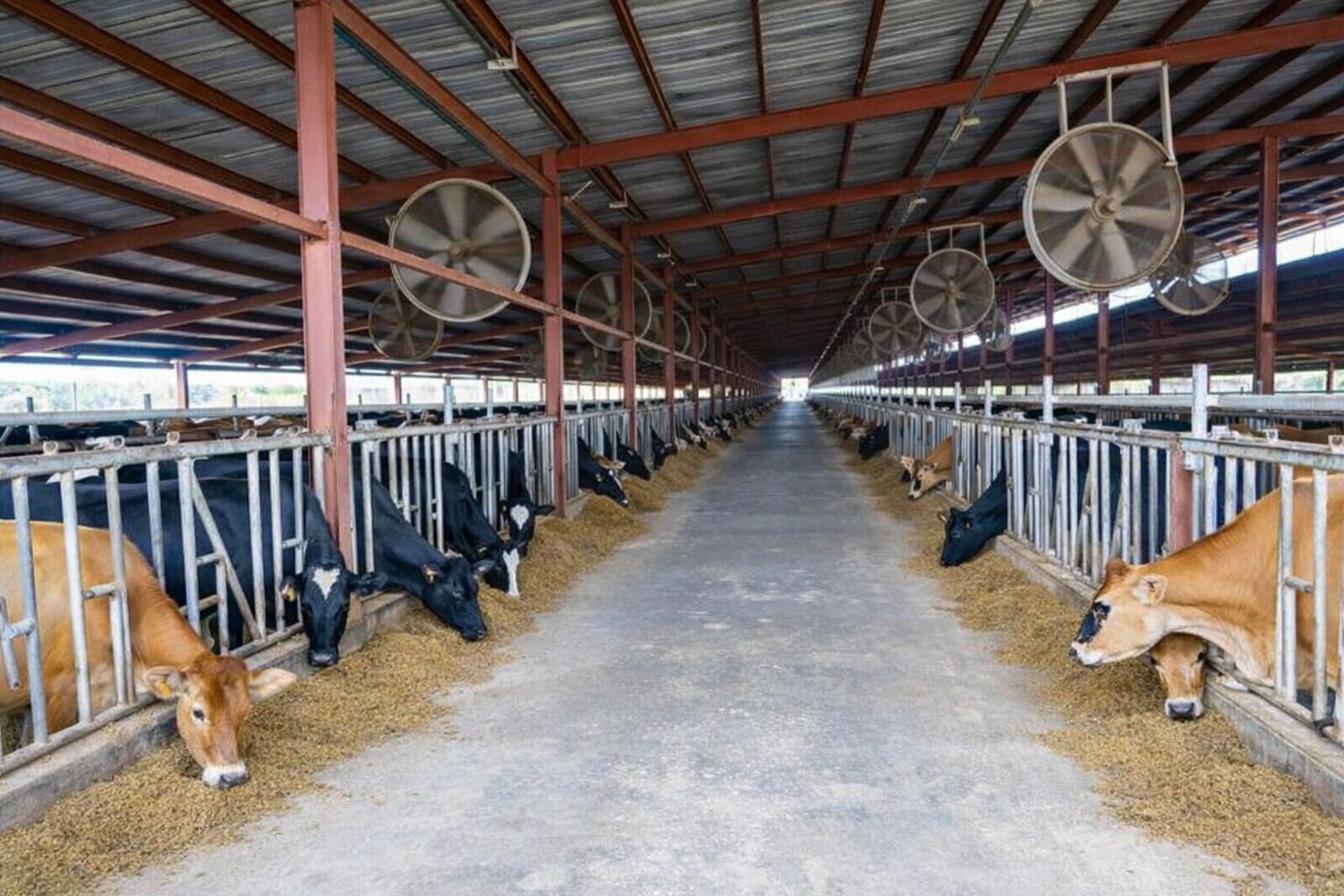
The farm, which began operations in 2019 with an initial $5 million investment, now houses over 750 high-yielding cattle and produces more than 6,000 liters of fresh milk daily—making it Nigeria’s largest commercial dairy operation. This achievement comes amid a national crisis where the country imports approximately 60% of its dairy needs despite having over 20 million cattle.
François Gillet, Promasidor’s Chief Executive Officer, says the company’s sustained investment in the Ekiti facility aligns with the federal government’s National Dairy Policy, which aims to double local milk production from 700,000 tonnes to 1.4 million tonnes annually by 2029.
“The national dairy development programme is critical to our long-term strategy,” Gillet stated. “We’re not just producing milk—we’re building a sustainable ecosystem that demonstrates local dairy farming can be commercially viable in Nigeria.”
The farm’s success contrasts sharply with Nigeria’s overall dairy production challenges. While the country possesses one of Africa’s largest cattle populations, outdated farming practices and poor genetics mean local breeds produce just 1-2 liters daily compared to 35-40 liters from high-yielding international breeds.
Promasidor has addressed this through advanced dairy management systems, including artificial insemination programs designed to maximize heifer births and improve herd genetics. The company has also invested in feed security, cultivating over 500 hectares of maize and soybeans to ensure consistent nutrition for the cattle.
Beyond production metrics, the Ikun facility has become an economic lifeline for its host community, directly employing over 200 locals and creating more than 1,000 indirect jobs in surrounding areas.
Governor Biodun Oyebanji of Ekiti State, who visited Promasidor’s Lagos headquarters in March 2025, described the partnership as “our baby” and pledged continued government support to address operational challenges, particularly rising production costs that threaten the farm’s profitability.
The Ikun Dairy Farm’s model gains relevance as Nigeria validates its National Dairy Policy Implementation Framework—a roadmap stakeholders hope will systematically develop the sector. At a November 2025 workshop in Abuja, Livestock Development Minister Idi Mukhtar Maiha emphasized that the country’s massive import bill represents “not a fixed cost but a potential investment in our future.”
Industry observers note that while initiatives like Promasidor’s demonstrate promise, scaling such efforts remains challenging. Nigeria currently produces only 570 million liters of milk annually against demand estimated at 1.6 billion liters, leaving a yawning supply gap that imports continue to fill.
Promasidor recently launched “Ikun Milk Day,” a corporate social responsibility initiative providing fresh milk weekly to primary school pupils in five local schools, alongside nutrition education sessions—further cementing the farm’s role beyond commercial production.
As multinational companies like Arla Foods, Nestlé, and Danone also deepen their dairy investments in Nigeria through similar backward integration programs, the Ikun Dairy Farm stands as proof that with adequate support, technology transfer, and sustainable practices, Nigeria can begin addressing its dairy deficit.
However, experts warn that without addressing fundamental infrastructure gaps, high production costs, and policy inconsistencies, even successful models like Ikun may struggle to achieve the scale needed to meaningfully reduce Nigeria’s import dependence.