As FMCG giant positions to tackle mounting debt and overhead costs, corporate restructuring signals shift from deal-making to operational efficiency
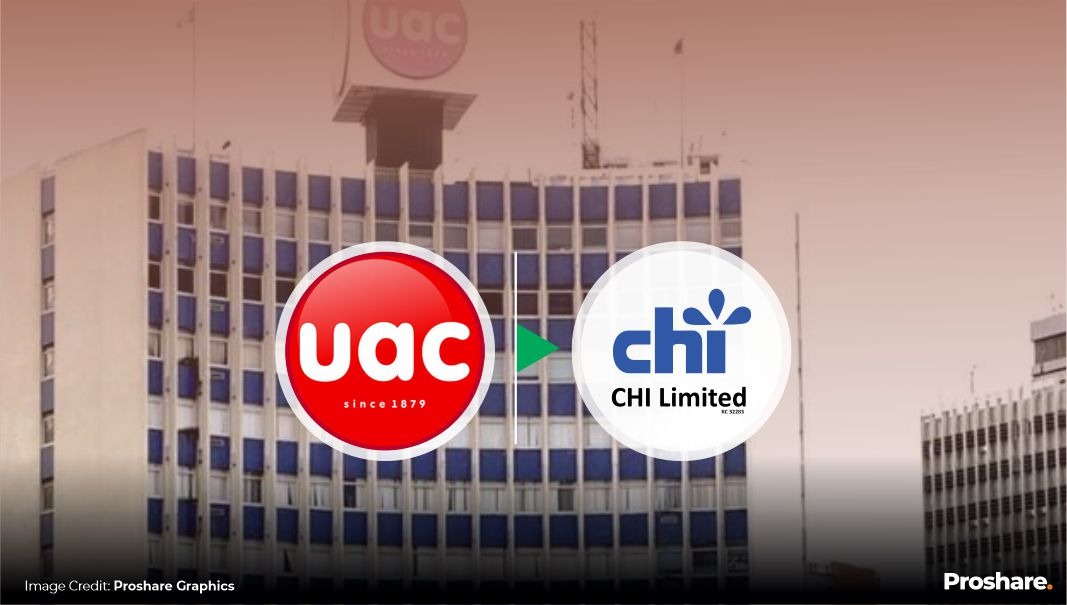
Three months after completing Nigeria’s most significant fast-moving consumer goods transaction of 2025, UAC of Nigeria Plc has taken its first major post-acquisition step by consolidating the special purpose vehicle used to acquire CHI Limited, signaling a strategic pivot from expansion to integration.
The Lagos-based conglomerate announced on February 5, 2026, that it has merged UAC Food and Beverage Company Limited (UFB)—the non-operating acquisition vehicle—into CHI Limited itself, eliminating what industry analysts describe as redundant corporate layers following the landmark transaction.
“The consolidation is intended solely to simplify the group’s organisational structure,” UAC stated in a corporate notice issued from its Lagos headquarters, emphasizing that the move carries no operational impact on CHI Limited’s day-to-day business or other group entities.
From Acquisition to Integration
The consolidation comes as UAC grapples with the financial aftermath of its transformational acquisition. The company’s 2025 financial results revealed the heavy cost of bringing iconic brands Chivita, Hollandia, and Capri-Sun under its umbrella: while revenue surged 74% to N343.4 billion, profit before tax plummeted 71% as N21.2 billion in one-off acquisition costs and mounting interest expenses weighed on the bottom line.
The timing of the corporate simplification appears deliberate. Industry watchers note that UAC’s overhead expenses consumed over 76% of gross profit in 2025, leaving just N6 for every N100 in revenue after covering costs—a challenge the company must address to deliver sustainable returns to shareholders.
“2025 was a pivotal year for UACN. The acquisition of C.H.I. Limited significantly expanded our portfolio, strengthening both our market position and earnings base. Looking ahead to 2026, we are well-positioned to unlock value from this expanded portfolio and deliver long-term value to shareholders,” Group Managing Director Fola Aiyesimoju said in the company’s recent earnings statement.
The Debt Burden Reality
The acquisition’s financing structure has emerged as a critical concern for investors. UAC raised N16.1 billion through commercial papers at a steep 25% interest rate and holds additional short-term loans with rates ranging between 21.5% and 32%. The company’s interest coverage ratio—a key measure of its ability to service debt from operating profit—slipped dramatically from 3x in 2024 to just 1.1x in 2025.
This financial pressure makes operational efficiency paramount. By eliminating the acquisition SPV and integrating it directly into CHI Limited, UAC reduces administrative complexity and positions itself to better manage the enlarged business while navigating its debt obligations.
The consolidation coincides with UAC’s N54.03 billion bond listing on FMDQ Securities Exchange, issued under the company’s N150 billion debt program to refinance existing obligations and support capital expenditure across its diversified operations.
A Strategic Gamble on Nigeria’s Consumer Market
The CHI Limited acquisition, completed in October 2025 following regulatory approval from the Federal Competition and Consumer Protection Commission, represents UAC’s bold bet on Nigeria’s rapidly growing food and beverage sector. The transaction added CHI’s nationwide distribution network and market-leading position in dairy and ready-to-drink beverages to UAC’s existing portfolio of Gala sausage rolls, Grand cereals, and Supreme ice cream.
“The acquisition of C.H.I. Limited has significantly broadened UACN’s operating base, adding leading consumer brands such as Chivita, Hollandia, and Capri-Sun, while SuperBite and Beefie have further strengthened the Group’s snacks portfolio,” .
Aiyesimoju noted, highlighting the strategic rationale behind the deal
The packaged food and beverages segment jumped 252% to N204.54 billion in 2025, contributing 60% of total revenue compared to just 29% in 2024—a dramatic shift in UAC’s business mix that underscores the acquisition’s transformative impact.
The Coca-Cola Exit Context
UAC acquired CHI Limited from The Coca-Cola Company, which took a substantial financial hit on the transaction. Coca-Cola, which initially spent approximately $694.5 million acquiring CHI between 2016 and 2019, exited with a $393 million charge—a cautionary tale about the challenges of Nigeria’s volatile business environment where the naira lost nearly 80% of its value during Coca-Cola’s ownership period.
Despite divesting CHI Limited, Coca-Cola reaffirmed its commitment to the Nigerian market with plans to invest $1 billion over five years, subject to regulatory stability—a striking contrast that highlights both the opportunities and risks in Africa’s largest economy.
What’s Next for UAC
With the corporate structure now streamlined, all eyes turn to UAC’s execution of its value creation plan. Management has prioritized margin recovery and working capital optimization as key focus areas for 2026.
The consolidation signals UAC’s transition from acquisition mode to operational integration—a critical phase that will determine whether the company can justify the substantial debt burden it assumed to complete the CHI Limited transaction.
For investors who have seen UAC’s stock price gain 189% in 2025, closing at N91, the real test begins now: Can UAC deliver on the promise of synergies, scale advantages, and margin improvements that made the acquisition compelling in the first place?
The answer will likely determine whether UAC’s bet on Nigeria’s consumer market proves transformational or becomes another cautionary tale of acquisition ambition outpacing execution capability.