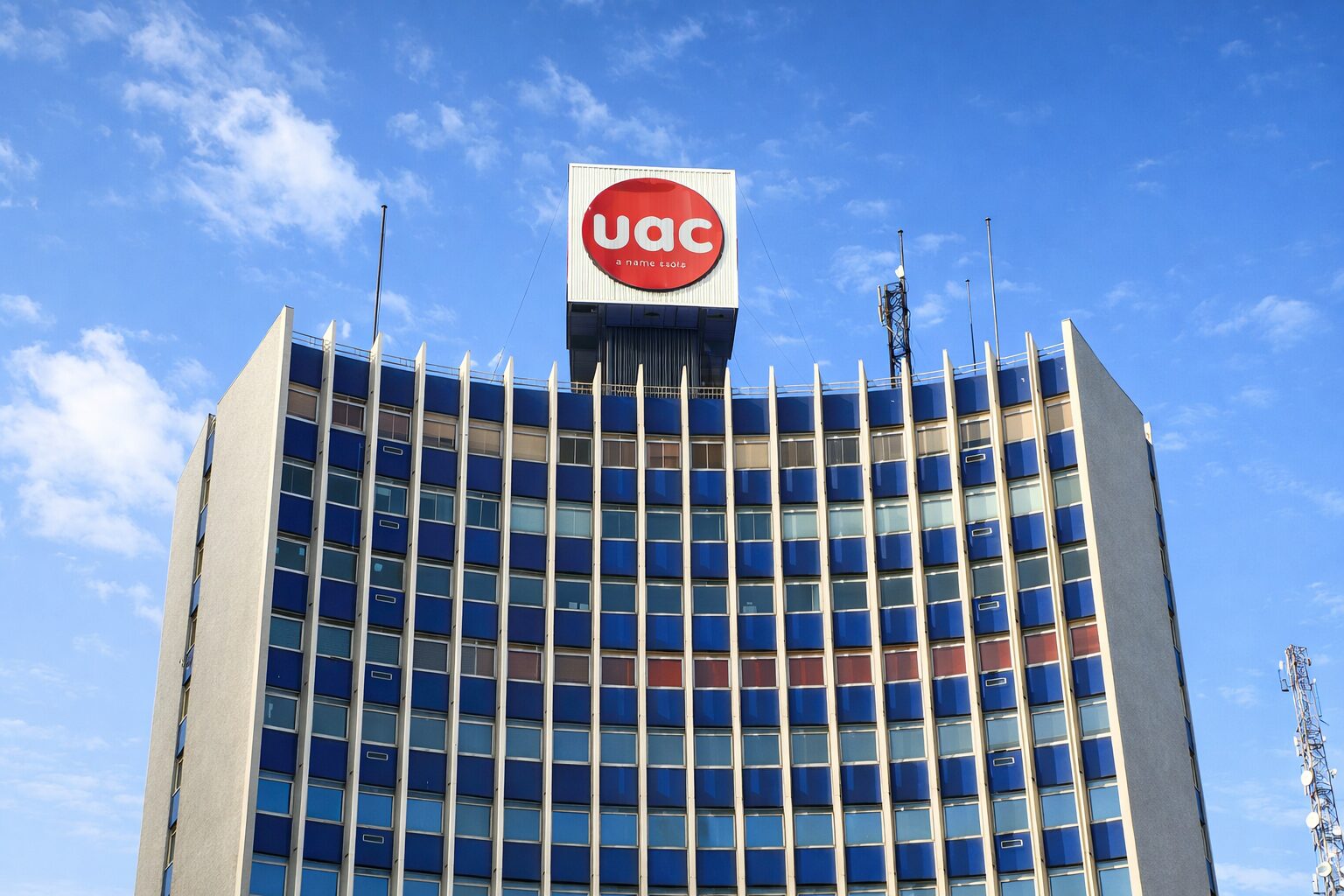
Packaged Food & Beverages division now commands 60% of group revenue, propelling conglomerate into Nigeria’s FMCG elite despite ₦21 billion integration costs
UAC of Nigeria Plc has transformed itself into a beverage and packaged foods powerhouse, with its Packaged Food & Beverages segment jumping 252.45% to ₦204.54 billion and contributing 60% of total revenue in 2025, up from just 29% the previous year—a seismic shift driven by the ₦182.4 billion acquisition of CHI Limited, makers of market-leading dairy and juice brands Chivita and Hollandia.
The October 2025 acquisition, which added iconic brands including Hollandia evaporated milk, Chivita 100% fruit juice, and Capri-Sun to UAC’s existing beverage portfolio of Gala snacks, Supreme Ice Cream, and Swan Water, completed UAC’s transition from a diversified conglomerate to a focused consumer goods player competing directly with Nigeria’s FMCG giants.
Group Managing Director Fola Aiyesimoju described 2025 as “a pivotal year for UAC,” noting the acquisition “significantly increased the scale of our Group, with revenue reaching ₦343 billion, a 74 percent increase compared to 2024.”
The Price of Ambition
While the beverage portfolio delivered explosive growth, the acquisition came with hefty financial costs. UAC reported a pre-tax profit of just ₦7.5 billion in 2025 compared to ₦25.5 billion in 2024, alongside a 97% year-on-year decline in post-tax profit to ₦504 million.
The profit compression was primarily driven by ₦21.2 billion in one-off acquisition-related costs and steep financing charges. According to regulatory filings, UAC raised ₦16.1 billion through commercial papers at 25% interest rates, alongside short-term loans with rates ranging between 21.5% and 32%.
“While Group profitability was impacted by ₦21 billion one-off acquisition costs, our underlying performance was strong, with profit before exceptional items rising by 76 percent to ₦29 billion, from ₦16 billion in 2024.”
— Fola Aiyesimoju, Group Managing Director, UAC Nigeria
This underlying performance tells a different story from the headline numbers. When adjusted for exceptional items, UAC’s profit before tax rose 76% year-on-year to ₦28.7 billion, suggesting the business fundamentals remain solid despite the acquisition-related turbulence.
Building a Beverage Powerhouse
The CHI Limited acquisition represents more than just portfolio expansion—it’s a strategic repositioning that brings UAC into direct competition with beverage market leaders. Hollandia is the market leader in evaporated milk and drinking yoghurt, while Chivita is the market leader in fruit juice, according to The Coca-Cola Company’s announcement of the sale.
CHI Limited’s credentials are formidable: the company operates the largest production site with aseptic beverage packaging in Sub-Saharan Africa and holds ISO 22000 certification. The business employs over 5,000 direct workers and supports an additional 50,000 indirect jobs through its supply chain.
Beyond Beverages: Mixed Performance Across Divisions
While the beverage division dominated headlines, UAC’s other segments delivered varied results. The Edibles & Feed segment generated ₦91.61 billion in revenue, though this represented a decline from previous periods as animal feed prices faced pressure from macroeconomic headwinds.
The Paints segment, anchored by CAP Plc’s Dulux and Sandtex brands, continued steady growth with ₦10.2 billion in Q3 revenue, 27% higher year-on-year, supported by efficiency gains from recent investments in plant & machinery and tinting equipment at colour centres.
However, the Quick Service Restaurants division housing Mr. Bigg’s and Debonairs Pizza brands remained challenged, with H1 2025 showing the segment benefited from the opening of 51 new retail outlets, though inflation continued to impact consumer spending in the fast-food category.
The Integration Challenge Ahead
UAC now faces the critical task of integrating CHI Limited’s operations while managing a balance sheet that more than tripled in size during 2025. The company’s interest coverage ratio slipped from 3x in 2024 to just 1.1x in 2025, indicating tighter financial constraints.
Management has outlined a clear refinancing strategy to ease these pressures, including a 7-year Naira loan and a ₦150 billion bond program designed to reduce the cost of debt and extend maturity profiles.
The integration roadmap focuses on three key priorities: achieving operational synergies between UAC Foods’ existing brands (Gala, Supreme, Swan) and CHI’s portfolio; optimizing working capital across the expanded beverage platform; and recovering margins compressed by acquisition costs and high interest rates.
Aiyesimoju noted that “The acquisition of C.H.I. Limited has significantly broadened UACN’s operating base, adding leading consumer brands such as Chivita, Hollandia, and Capri-Sun, while SuperBite and Beefie have further strengthened the Group’s snacks portfolio.”
Market Reaction and Valuation
Investors have responded positively to the strategic transformation. UAC’s stock price surged 189% in 2025, closing at ₦91, though it has been more subdued in early 2026, moving to ₦92.30, reflecting a 1.43% year-to-date gain as the market awaits evidence of successful integration.
At current levels, the company trades at stretched valuations relative to its reported 2025 earnings, but analysts point to significant cross-selling opportunities, supply chain efficiencies, and brand synergies that could justify premium pricing if management executes effectively.
The critical question for 2026 is whether UAC can convert its expanded beverage platform into sustainable profitability. With overhead expenses consuming over 76% of gross profit in 2025, cost management will be essential to restoring margins and shareholder returns.
Looking Forward
UAC’s 2025 results represent a year of transformation rather than pure performance. The company sacrificed near-term profitability to secure a commanding position in Nigeria’s high-growth beverage market, betting that scale, market leadership, and operational execution will deliver long-term value.
For investors and industry watchers, 2026 will be the acid test. Can UAC successfully integrate CHI Limited’s operations, refinance its expensive debt, recover compressed margins, and deliver the synergies that justify its ₦182.4 billion bet?
The beverage portfolio now accounts for 60% of group revenue—a complete reimagining of UAC’s business mix. Whether this transformation proves prescient or premature will depend on execution in the quarters ahead.
This article is based on UAC of Nigeria’s unaudited financial results for the year ended December 31, 2025, filed with the Nigerian Exchange Limited.