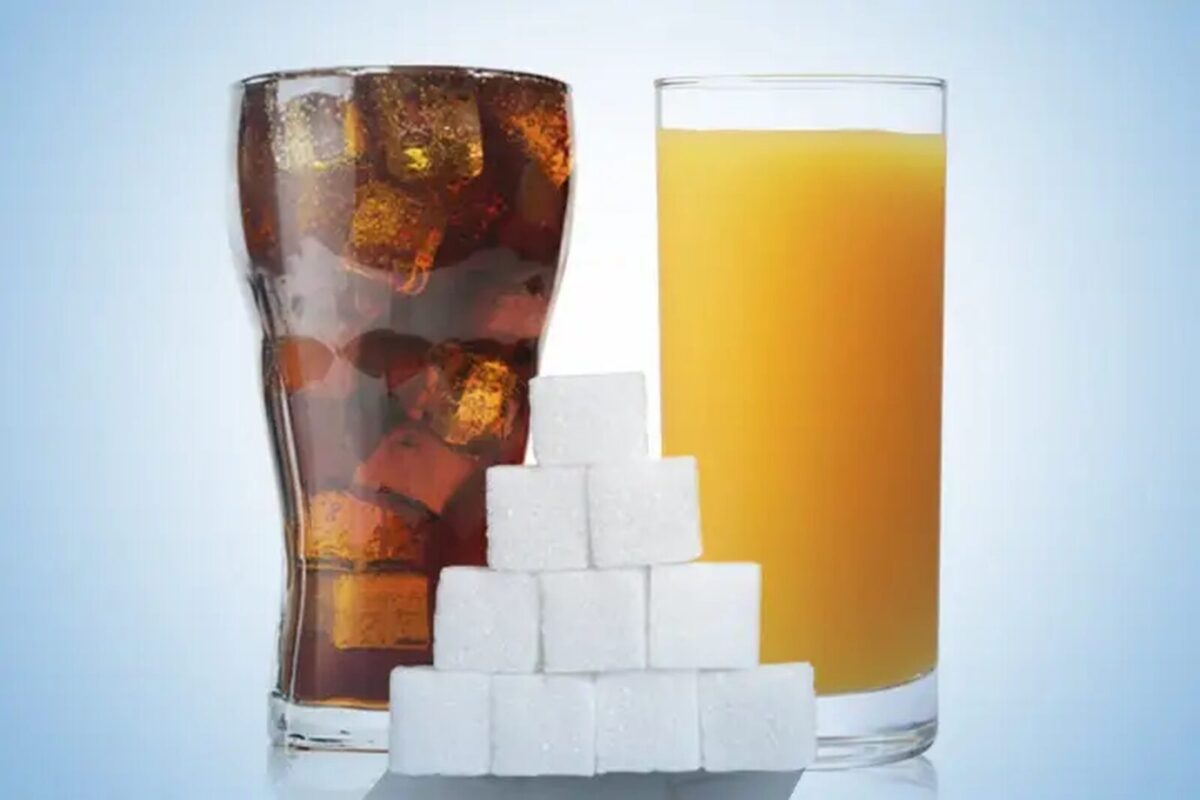
South Africa’s main advertising watchdog has banned a public-health ad warning that sugary drinks contribute to obesity, diabetes and heart disease, a decision critics say exposes how the industry itself can stifle health messaging. The ad, which aired on national radio and urged support for a tougher sugar tax, was pulled after a single complaint led the Advertising Regulatory Board (ARB) to rule it “misleading,” even though public-health groups argue the message reflects established research on sugar’s harms
The Ad That Got Too Loud for Comfort
In October 2024, a public service announcement aired on Radio Sonder Grense, the Afrikaans arm of the SABC, with a blunt message: sugary drinks and fruit juice make children sick, leading to obesity, heart disease and diabetes. Listeners were urged to support a stronger tax on sugary drinks.
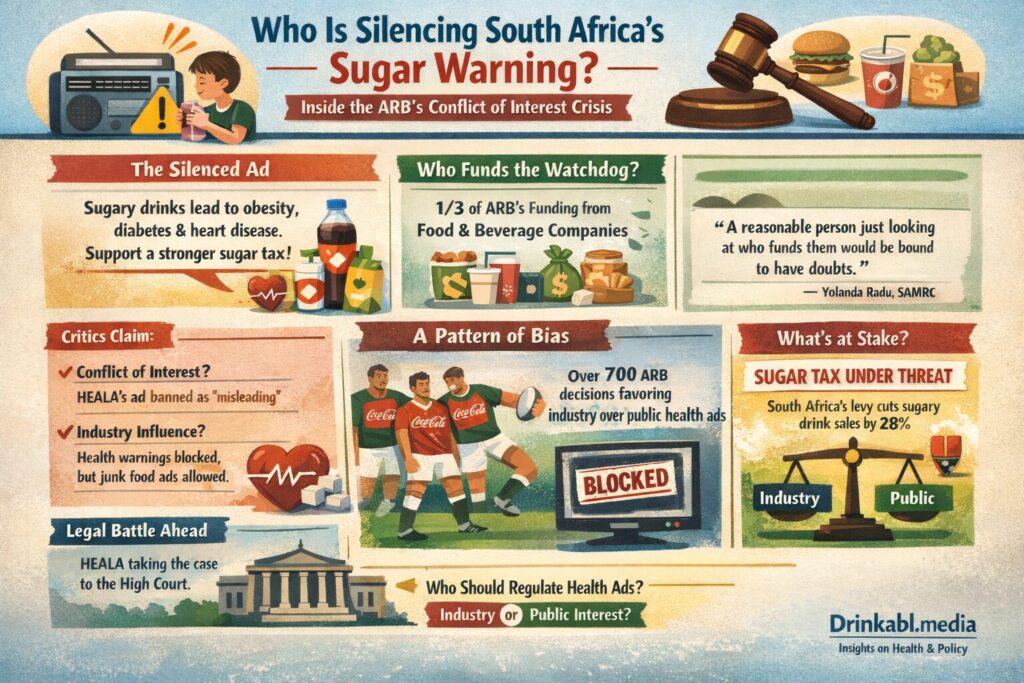
The ad was produced by HEALA (the Healthy Living Alliance), a civil society group campaigning for stronger sugar regulation. It ran for two months before a parent complained to the Advertising Regulatory Board (ARB) that his daughter now believed her school was “trying to poison” students because fruit juice was served at lunch. The ARB ruled the ad misleading, finding it implied that any sugary drink consumption would cause disease.
“We are being blocked from running a public health message by a group funded by the very people whose products are being impugned.” Petronell Kruger, Programme Director, HEALA
An Uncomfortable Funding Question
The ruling might have been unremarkable. What turned it into a national controversy is who the ARB answers to.
Unlike many self-regulatory bodies, the ARB asks major companies , including Coca-Cola, PepsiCo and KFC , to fund its operations directly. About a third of its budget comes from food and beverage companies. South Africa’s Electronic Communications Act amplifies this considerably: broadcasters are legally required to comply with ARB rulings, meaning an ad ban is effectively a nationwide blackout.
“A reasonable person just looking at who funds them would be bound to have doubts,” said Yolanda Radu of the South African Medical Research Council and Wits University’s Priceless SA.
“A reasonable person just looking at who funds them would be bound to have doubts.” Yolanda Radu, South African Medical Research Council / Priceless SA
A Pattern, Not a One-Off
The HEALA case is not isolated. A review of more than 700 ARB decisions by The Examination, in collaboration with the Bhekisisa Centre for Health Journalism, found the board has repeatedly challenged public health messaging while declining to block industry campaigns targeting children, including a Coca-Cola partnership with South African rugby players that critics argued associated sugary drinks with healthy athletes. The board dismissed that complaint. It also blocked a Department of Health television ad warning about excess sugar.
Adding a further twist: the ARB cited former WHO nutrition director Francesco Branca to justify its ruling, but Branca subsequently told The Examination that HEALA’s ad “communicates the presence of a high risk associated with consumption of sugars, which is perfectly appropriate to the situation.”
Heading to the High Court
HEALA has exhausted all internal channels and is now preparing a High Court judicial review in Johannesburg, a case that could reshape how public health advertising is governed across South Africa. In the meantime, it has been airing an edited version of the ad inserting the word “could” before disease claims , a small but symbolically loaded concession to the regulator.
Sugar Tax at Stake
The controversy arrives at a critical moment. South Africa became the first African country to tax sugary drinks in 2018, and research in The Lancet Planetary Health found the levy cut beverage volumes purchased by up to 28%. Yet industry spent an estimated USD 191 million advertising sugary beverages in South African media between 2013 and 2019. The asymmetry, aggressive industry advertising freely permitted, civil society health warnings blocked, sits at the heart of this dispute.
Public health experts argue that government, not industry-funded boards, should oversee health-related advertising. As other African governments consider their own sugar levies and labelling regulations, the question of who adjudicates health advertising is fast becoming continent-wide.
Further Reading on Drinkabl.media
Alcohol Advertising Exposure Increasing Children’s Interaction With Alcohol, New Study Shows February 17, 2026 — Global failure to shield children from beverage marketing, from New Zealand to Nigeria.
Between Health and Hardship: Nigerians Clash Over Sachet Alcohol Ban January 30, 2026 — Public health versus economic survival — a tension mirroring South Africa’s sugar wars.
How Africa, Middle East Are Reshaping the Beverage Map Deep Dive — The regulatory and consumer forces transforming beverage markets across the Global South.
Beverage Workers Challenge NAFDAC: “Show Us the Evidence” January 28, 2026 — Another front in Africa’s widening health-versus-industry battle.