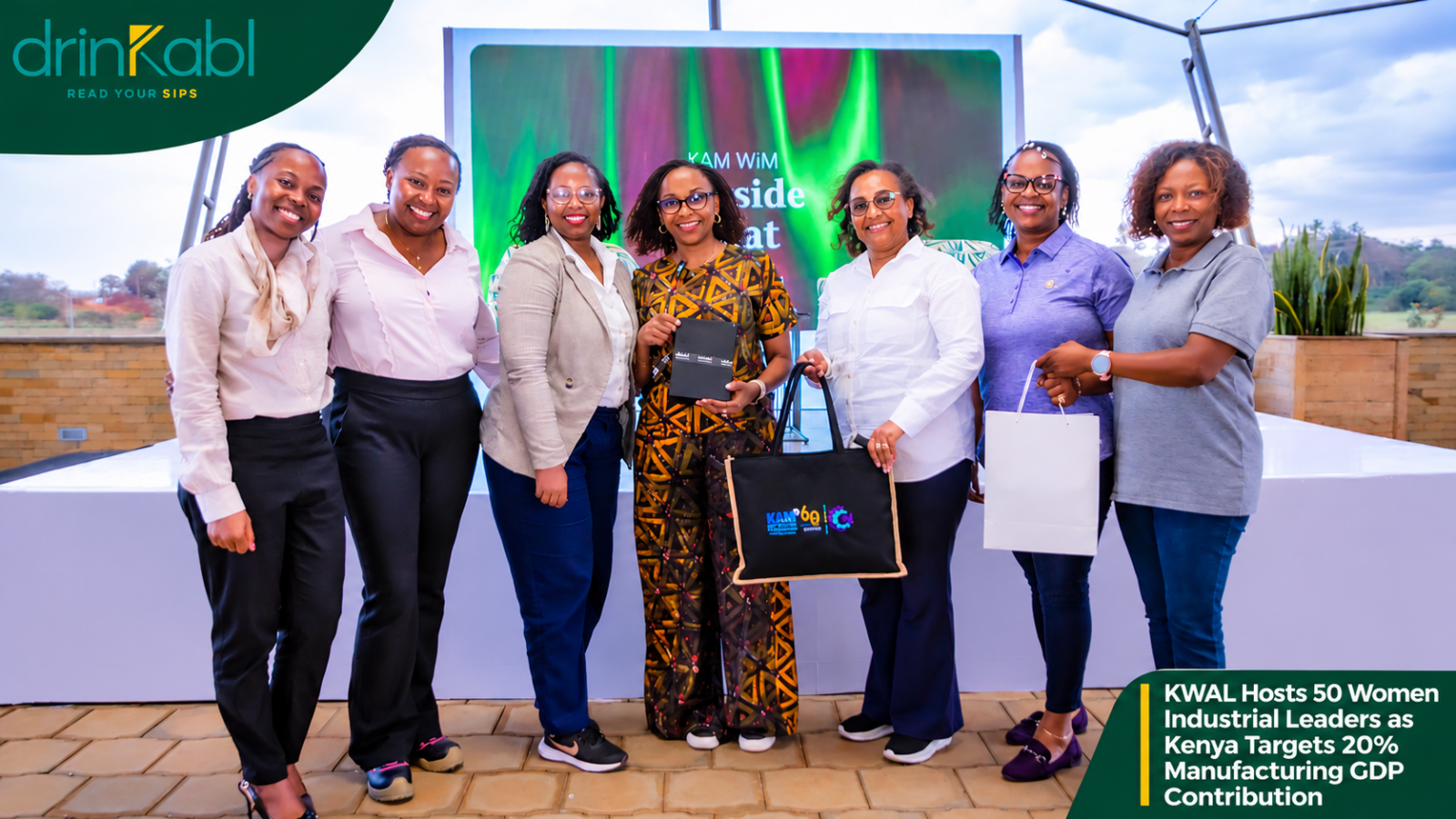

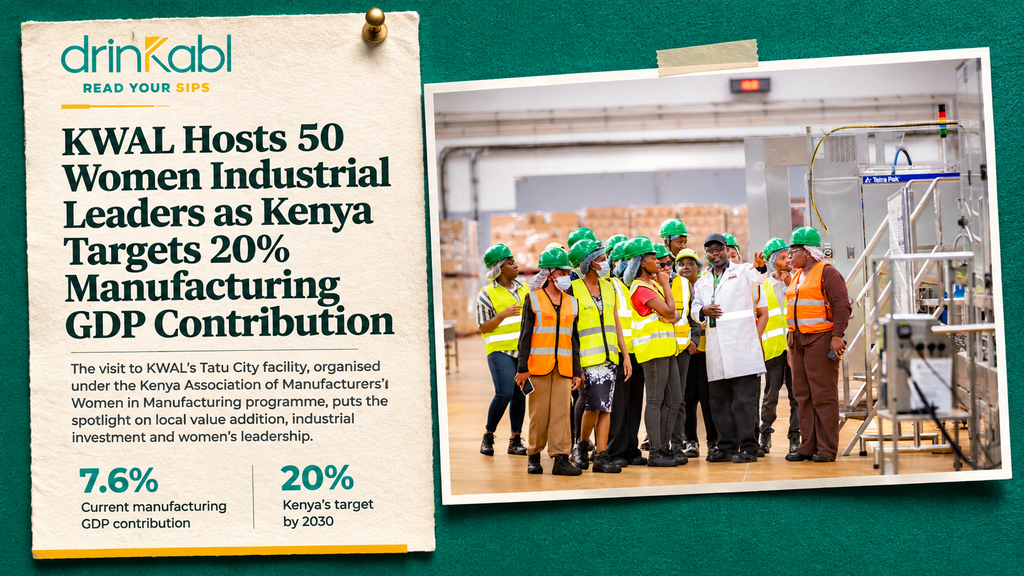
The visit to KWAL’s Tatu City facility, organised under the Kenya Association of Manufacturers’ Women in Manufacturing programme, puts the spotlight on local value addition, industrial investment and women’s leadership.
Kenya Wine Agencies Limited (KWAL) has hosted more than 50 female business executives and industrial leaders at its Tatu City manufacturing facility, using the engagement to highlight the role of local manufacturing, industrial investment and women’s leadership in Kenya’s economic development ambitions.
The visit, held on November 5, marked the 10th edition of the Kenya Association of Manufacturers (KAM) Women in Manufacturing (WiM) Industry Visit Series. It brought together participants for a guided tour of KWAL’s beverage production and packaging operations, followed by an executive discussion on leadership resilience, local value addition and brand expansion.
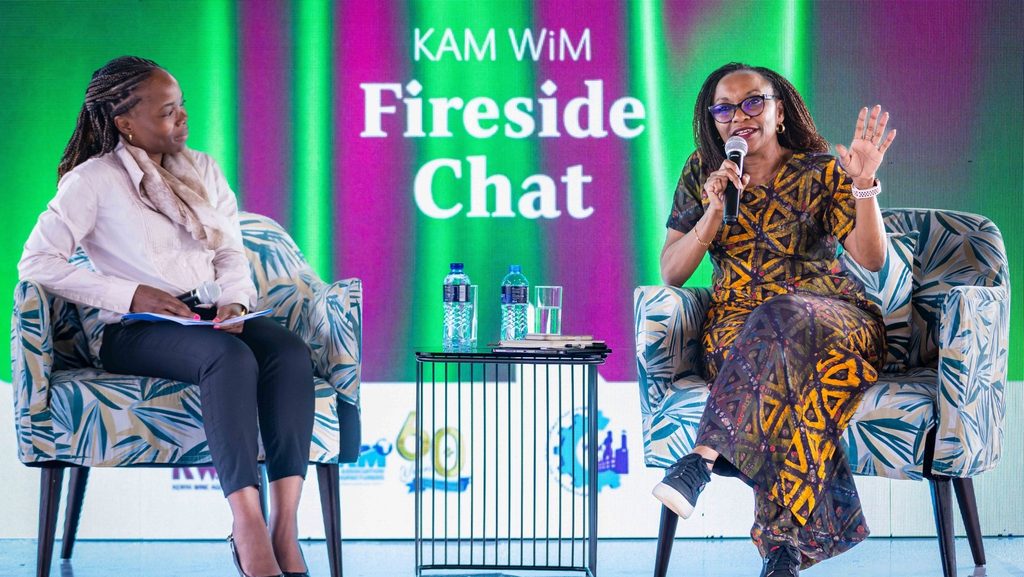
Lynda Oluoch, Regulatory and Policy Manager at the Kenya Association of Manufacturers (KAM), and Lina Githuka, Managing Director of Kenya Wine Agencies Limited (KWAL), participate in a fireside chat during the KAM Women in Manufacturing Chapter’s visit to KWAL’s Tatu City plant on Friday, 31 October. The discussion focused on leadership and industrial development, supporting KAM’s efforts to empower members through greater exposure to the operations of partner organisations.
The engagement comes as Kenya pursues an ambitious plan to increase manufacturing’s contribution to gross domestic product from approximately 7.6% to 20% by 2030 under its industrialisation agenda. The sector currently supports more than 330,000 formal jobs, alongside millions of livelihoods linked to agriculture, distribution and other manufacturing supply chains, according to figures cited by KWAL.
Speaking during the visit, KWAL Managing Director Lina Githuka said investment in modern manufacturing infrastructure and inclusive leadership would be important to achieving the country’s industrialisation objectives.
“Local manufacturing is not just about output; it is the cornerstone of sustainable economic transformation, job creation, and foreign exchange preservation,” Githuka said.
She added that achieving Kenya’s industrialisation targets would require investment in internationally competitive production standards and greater opportunities for women to occupy leadership positions across manufacturing operations.
The discussions also examined the challenges facing manufacturers as they respond to regulatory changes, sustainability requirements and the increasing adoption of automation.
Lynda Oluoch, Regulatory and Policy Manager at KAM, highlighted the gap between women’s participation in business ownership and their representation in industrial leadership. “Women-led enterprises account for roughly a third of micro, small, and medium-sized industries in Kenya, yet they remain underrepresented in core industrial leadership,” Oluoch said.
Her remarks placed the visit within a broader conversation about how women’s participation in manufacturing can extend beyond entrepreneurship into technical management, production, corporate leadership and industrial policymaking.
KWAL’s manufacturing investment
At the centre of the engagement was KWAL’s Tatu City facility, a major investment in Kenya’s beverage manufacturing infrastructure.
The plant operates automated production and packaging lines alongside environmental management and quality-control systems. KWAL said the facility had recently become the only EDGE Advanced-certified manufacturing facility in Kenya, positioning it as an example of investment in resource-efficient industrial operations.
For the beverage industry, investments of this nature have implications beyond production capacity. Modern manufacturing infrastructure can strengthen local processing capabilities, improve operational efficiency and support the development of domestic supply chains.
The visit also offered the participating industrialists an opportunity to examine how a beverage manufacturer is integrating automation, regulatory compliance and sustainability into its operations.
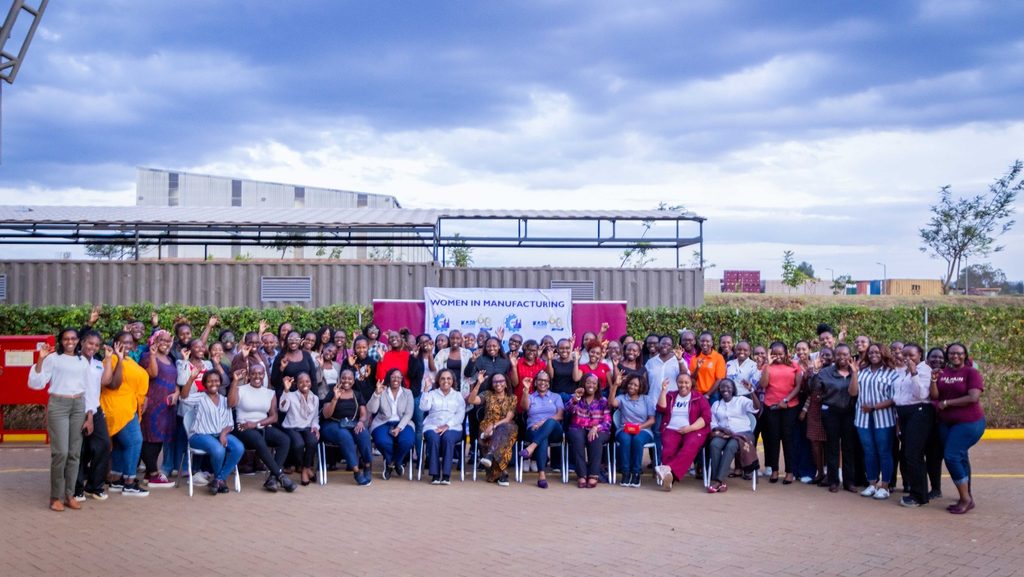
Members of the Kenya Association of Manufacturers (KAM) Women in Manufacturing Chapter and KWAL employees during a courtesy visit to KWAL’s Tatu City production facility on Friday, 31 October. The engagement featured a guided plant tour and an interactive leadership session attended by more than 50 female industry leaders.
As Kenya works towards increasing manufacturing’s share of national output, the challenge will be translating investment in individual facilities into broader industrial capacity, stronger local value chains and sustainable employment.
KWAL’s engagement with KAM’s Women in Manufacturing programme adds a leadership dimension to that conversation, highlighting the need for women to participate more prominently in the decisions shaping the country’s industrial future.