
Africa Illicit Beverage Watch scans the continent weekly to track illicit beverage activities, protecting operators and brand distributors against counterfeit risks and regulatory shifts. For comments, corrections, or interviews, reach out to hello@drinkabl.media.
Nigeria’s ₦2bn Fake Drinks Raid Meets South Africa’s Illicit Liquor Crackdown
NAFDAC uncovered suspected counterfeit beverage operations in Lagos and Aba, while South African police arrested four people at an alleged illegal liquor plant. In Kenya, fresh scrutiny turned to regional differences in illicit alcohol production and the question of who protects the trade.
From Monday, 12 October, to Sunday, 18 October 2026, enforcement operations in Nigeria and South Africa exposed different points in the illicit alcohol supply chain. Nigeria’s cases involved suspected counterfeit drinks, expired products and packaging bearing established brands. South African authorities reported arrests linked to illegal liquor production, while developments in Kenya kept attention on the relationship between local enforcement and the networks supplying illicit alcohol.
These cases require different classifications. Counterfeit packaging does not prove that finished drinks were manufactured or sold. An illegal production site does not establish the chemical composition of its products. The evidence recovered, the laboratory results and the legal outcomes matter as much as the value of a seizure.
Nigeria’s Lagos Raid Uncovers Suspected Counterfeit Operation
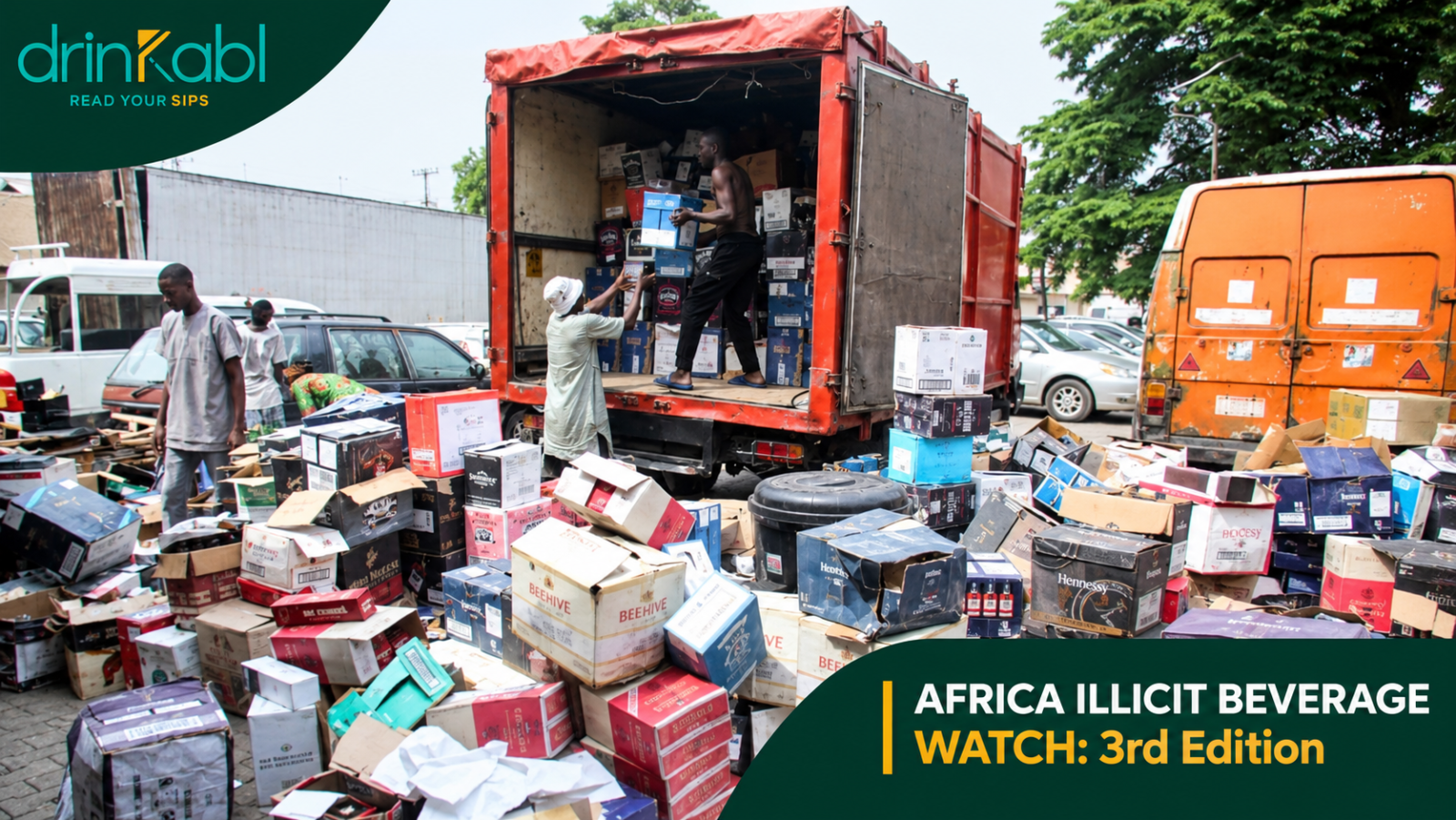
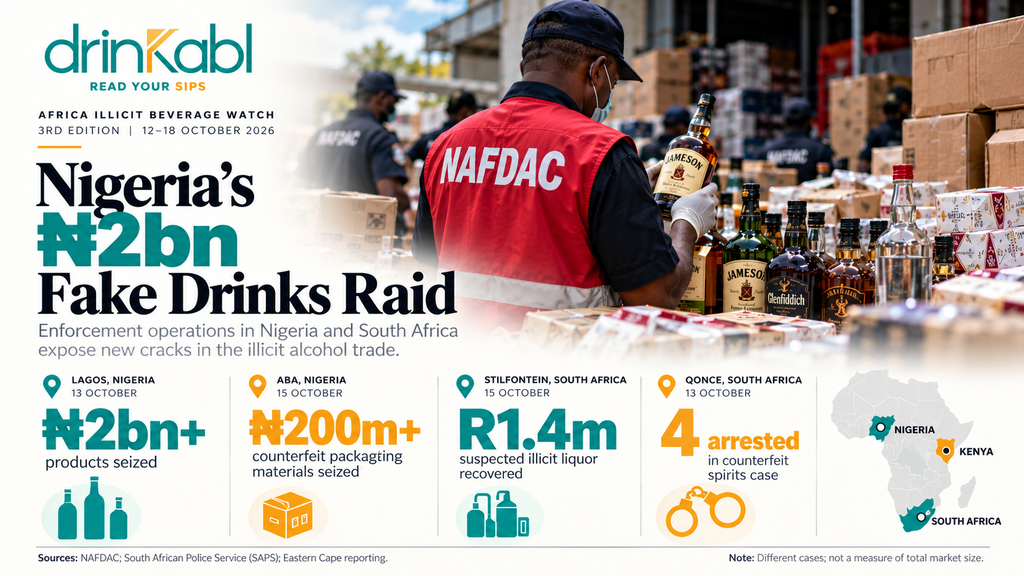
On 13 October, the National Agency for Food and Drug Administration and Control (NAFDAC) raided Zamfara Plaza at the BBA Trade Fair Complex in Ojo, Lagos, uncovering more than 20 illegal stores and seizing products valued at over ₦2 billion. The agency said two suspects were arrested. Investigators alleged that the premises were being used to counterfeit alcoholic beverage brands, revalidate expired or unsafe drinks for resale and store prohibited imported products. Details of the operation were published the following day.
The case raises questions about how expired products and counterfeit drinks enter distribution channels. NAFDAC’s findings describe alleged activities at the site, but publicly available information has not established how much of the recovered stock reached consumers or whether laboratory testing confirmed contamination. The next important developments are the identification of suppliers, the evidence supporting any charges and the disposal of seized products.
Aba Seizure Targets Counterfeit Alcohol Packaging
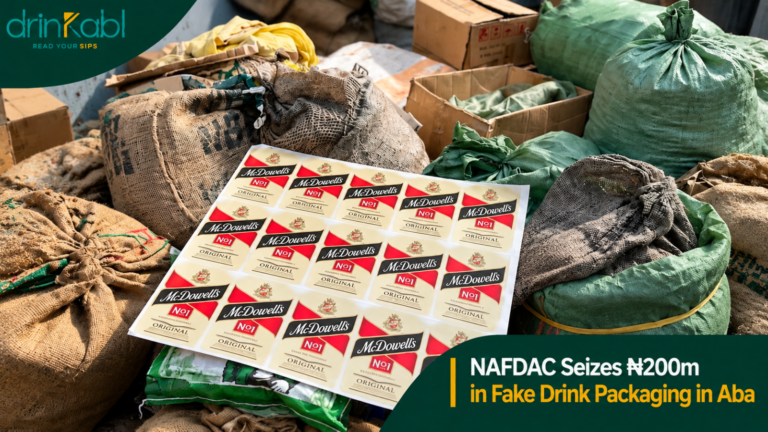
On 15 October, NAFDAC raided five shops at Old Court Road Market in Aba, Abia State, recovering counterfeit packaging materials valued at more than ₦200 million. The seized labels, corks and packs carried names including Jameson, Glenfiddich, Four Cousins and Lord’s Dry Gin. The agency said the materials were allegedly intended for counterfeit production. Traders reportedly resisted the operation, while the shop owners were absent and the premises were sealed. The Aba operation had not resulted in publicly confirmed arrests by 18 October.
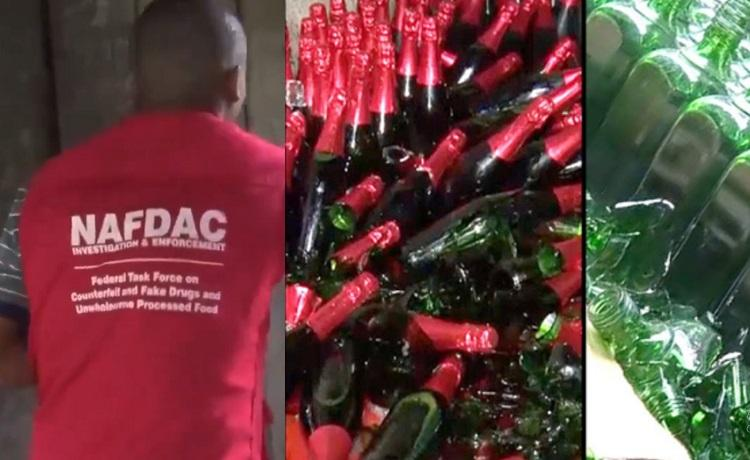
The distinction is important for brand owners. Packaging bearing a recognised name can help counterfeiters make unauthorised products appear genuine, but the seizure does not establish which finished drinks were produced or sold. Investigators still need to identify the suppliers, establish the intended use of the materials and determine whether the operation connects to other illicit production networks. NAFDAC has not publicly established a link between the Aba seizure and the separate Lagos raid.
South African Police Raid Alleged Illegal Liquor Plant
On the evening of 15 October, police raided a farm in the Rietfontein area of Stilfontein, North West province, following information about suspected illegal liquor production. Four people aged between 28 and 54 were arrested. Police recovered what they described as a suspected illegal manufacturing plant and materials including flavourants, colourants, pots and flow bins. The estimated value of the illicit liquor was R1.4 million. The police announcement was published on 16 October.
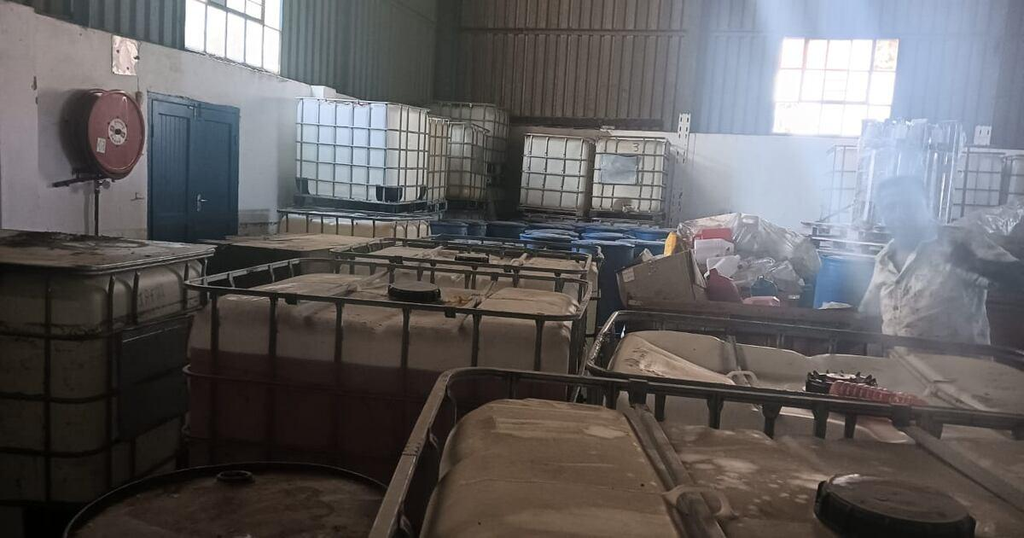
The operation provides evidence of suspected production activity, but the available statement does not establish the chemical composition of the recovered liquor, the brands involved or the extent of its distribution. Those details will matter in determining the nature of the alleged offences and the risks to consumers. The case also raises questions about the sourcing of production materials and whether investigators can identify the buyers and distribution routes behind the operation.
Qonce Arrest Confirms Counterfeit Spirits
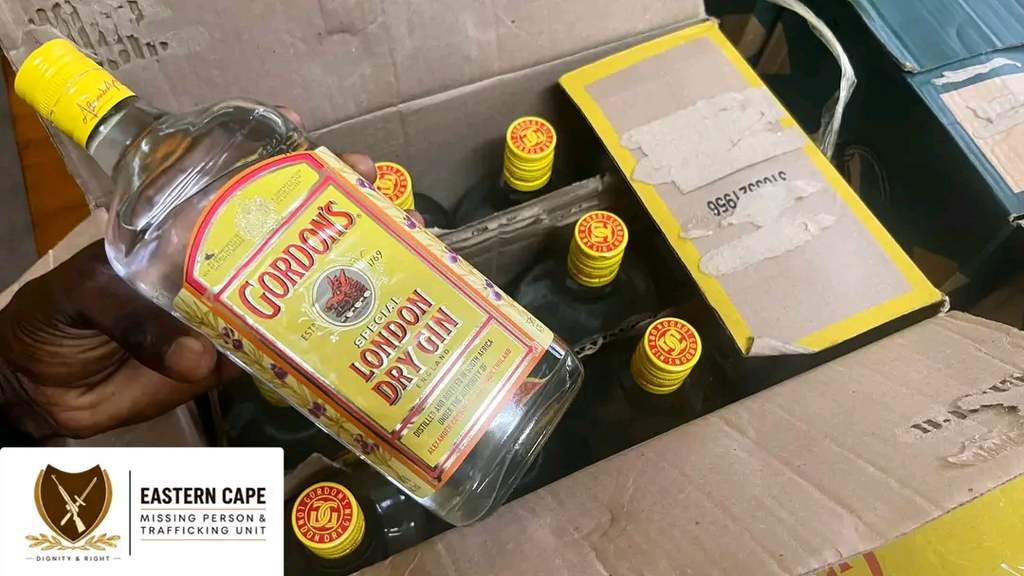
In Qonce, Eastern Cape, police arrested a 30-year-old man on 13 October after finding six cases each of Gordon’s Gin and Old Buck spirits in a vehicle. The suspect reportedly led officers to a tavern in Tshatshu, where further investigation followed. The Eastern Cape Liquor Board warned that counterfeit and unregulated alcohol posed risks to consumers and legitimate businesses. Police said local health and counterfeit units confirmed that the recovered goods were counterfeit. The suspect faces a charge under the Customs and Excise Act, with a court appearance date not confirmed in the available reporting. The Qonce case illustrates how suspected counterfeit products can move through retail and hospitality channels.
Kenya’s Regional Differences Come Under Scrutiny
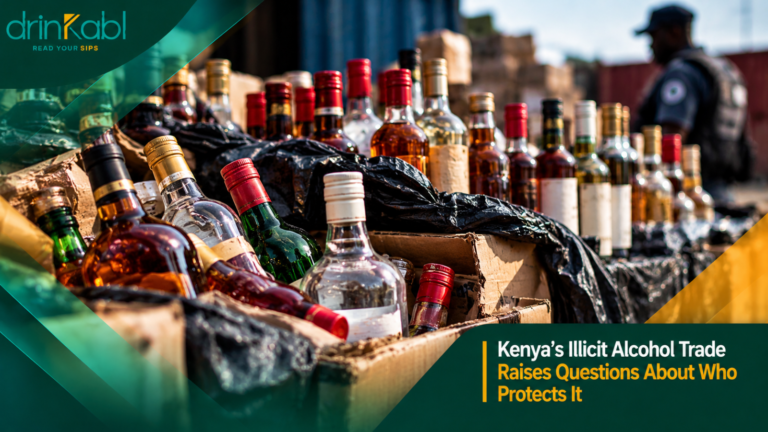
On 12 October, Anthony Omerikwa, chief executive of Kenya’s National Authority for the Campaign Against Alcohol and Drug Abuse (NACADA), described differences between illicit alcohol risks in western Kenya and the Mount Kenya region. His assessment, published by Drinkabl on 17 October, distinguished traditional illicit brews from adulterated spirits associated with deadly incidents. The article also examined allegations of political protection for illicit alcohol networks, while making clear that the claims circulating on social media were not independently established.
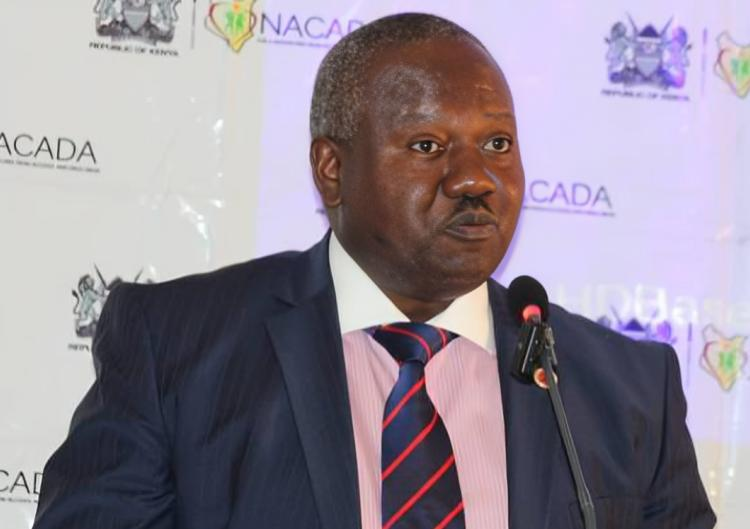
The distinction matters because traditional brewing, adulteration and counterfeit branded spirits require different investigative approaches. Authorities need to establish what a product contains, where it was made and how it reached consumers. Allegations of official involvement require separate evidence, including documented transactions, licensing decisions or communications. Kenya’s illicit alcohol trade remains an enforcement and accountability question, not proof that any particular official protected an illicit operator.
The Week at a Glance
| Location | Date | Classification | Evidence status |
| Lagos, Nigeria | 13 October | Suspected counterfeit drinks and expired products | NAFDAC raid; over ₦2bn seized |
| Qonce, South Africa | 13 October | Counterfeit spirits | Police confirmed counterfeit goods; court outcome pending |
| Aba, Nigeria | 15 October | Counterfeit packaging | Over ₦200m in materials seized; finished-product links unconfirmed |
| Stilfontein, South Africa | 15 October | Suspected illegal liquor production | Four arrests; product composition not established |
| Kenya | 12 October, reported 17 October | Regional illicit alcohol risks | NACADA chief executive’s assessment; political allegations unverified |
Open Questions
In Lagos, investigators need to establish the origin of the seized products, the extent of any expired-drink revalidation and the charges supported by the evidence. In Aba, the identity of the packaging suppliers and the intended production volumes remain unclear. In Stilfontein, further information is needed on laboratory findings, distribution routes and the legal status of the four suspects. In Qonce, the next milestone is the court process.
The week’s cases show enforcement reaching different stages of the illicit alcohol chain, from packaging and suspected production to retail distribution. Seizure values alone cannot measure the scale of the market, and the quantities recovered in different countries cannot be combined into a meaningful regional total. The strongest evidence of progress will be laboratory results, prosecutions, convictions and proof that the supply networks behind the products have been disrupted.
From the archives: Read previous editions of AFRICA ILLICIT BEVERAGE WATCH