

China is using cultural diplomacy to build a commercial tea pipeline into Nigeria, and the Nigerian government is actively helping it along.
At an event held last Wednesday at the China Cultural Centre in Abuja, officials from both governments framed tea as a bridge between civilisations. That is the diplomatic reading. The commercial reading is more direct: China’s third-largest-supplier position in Nigeria’s tea import market is getting a political upgrade, backed by ceremony, soft power, and a freshly announced zero-tariff policy.
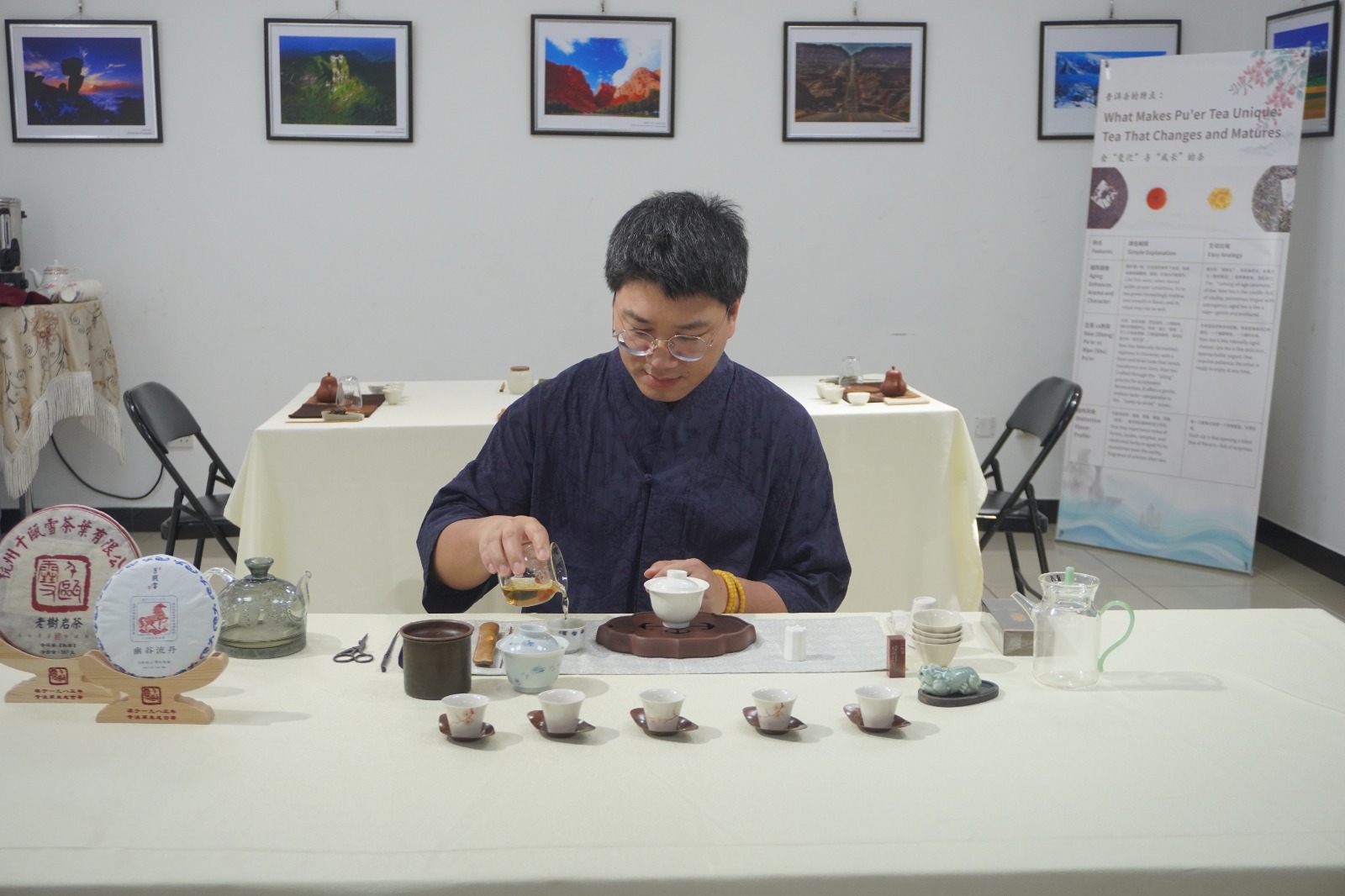
The event, titled “Maritime Silk Road Impressions: Immersive Salon of Intangible Cultural Heritage from Ancient Zayton Port,” featured Gongfu tea brewing, Pu’er tasting sessions, ceramics displays and a live guqin performance. Zhou Hongyou, Minister of the Chinese Embassy in Nigeria, described tea as “a bridge for dialogue and mutual learning between Chinese civilisation and other civilisations around the world.” He noted that Chinese tea culture, which originated roughly 5,000 years ago, spread globally through the Silk Road and Tea Road before becoming part of daily life across the world.
That history now has a commercial update. Hainan Baisha tea entered the Nigerian market in 2024, marking China’s first named premium tea brand with a documented foothold in the country. And earlier this year, Beijing announced a zero-tariff policy covering 53 African countries with diplomatic ties to China, with Nigerian agricultural exports, including cocoa, sesame, cassava and peanuts, named as potential beneficiaries. The cultural salon followed shortly after. The sequencing is not accidental.
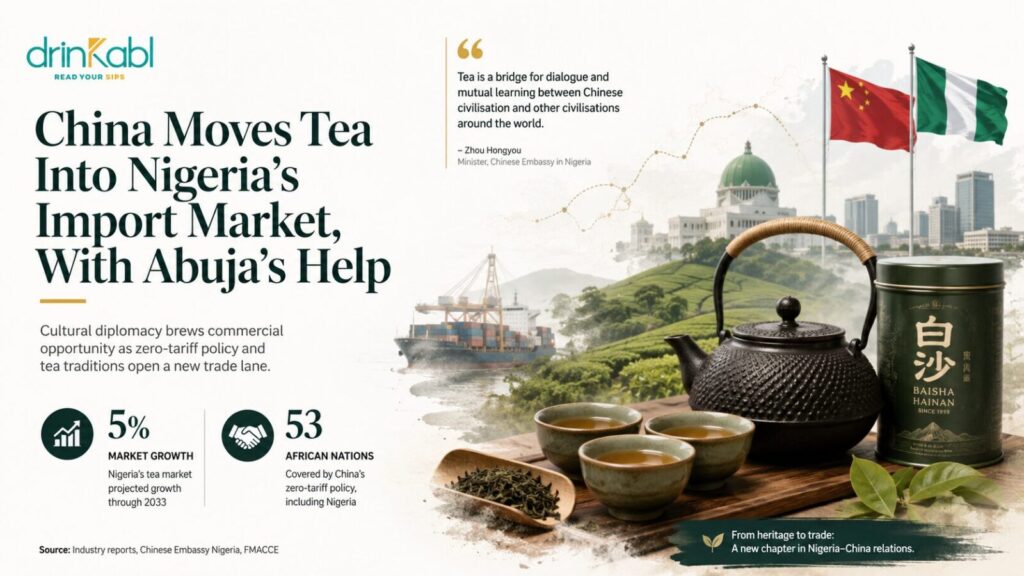
Nigeria’s tea market runs almost entirely on imports. Kenya holds the largest supplier position, followed by the United Kingdom, with China ranked third. Industry projections put the market’s growth at roughly 5% annually through 2033, driven by rising middle-class consumption, expanding retail coverage in urban centres, and growing awareness of tea’s health credentials. That is the market China is positioning into: moderately sized today, structurally growing, and not yet locked up by any single origin.
“Tea has become a bridge for dialogue and mutual learning between Chinese civilisation and other civilisations around the world.”
— Zhou Hongyou, Minister, Chinese Embassy in Nigeria
Abdulkarim Ibrahim, Permanent Secretary of the Federal Ministry of Arts, Culture, Tourism and Creative Economy, described tea as “far more than a beverage, it is a vessel of history, a symbol of harmony and a medium of cultural exchange.” His ministry confirmed that Nigeria and China are now exploring joint development of tea-based creative enterprises, including local adaptations of Chinese tea culture and collaborative programmes aimed at building Nigeria’s position in the creative economy. The Chinese tea processing tradition received UNESCO intangible cultural heritage recognition in 2022, a credential that travels well in premium and lifestyle marketing.
The pattern here is familiar in beverage trade. Cultural visibility precedes commercial penetration. Moroccan mint tea built a North African identity decades before export volumes followed. Chinese brands in Southeast Asia leveraged diaspora and cultural programming long before supermarket shelf space came. Nigeria, with its large urban population and an import-dependent tea category still dominated by commodity black tea, is the kind of market where that strategy has room to work.
What remains unresolved is whether Nigeria converts any of this into domestic production capacity. The Federal Ministry signalled interest in agro-processing and local tea cultivation. The terrain exists: Nigeria’s highlands in Taraba and Plateau states have historically supported tea cultivation at small scale. Whether government follow-through matches the diplomatic language is the question the next budget cycle will begin to answer.
READ MORE: