

As Europe’s Soft Drink Industry Battles Growing Sugar Tax Pressure
Natalia Filipposyants, PepsiCo’s SVP and General Manager for international beverages in Europe, has been named president of UNESDA, the Brussels-based trade association representing the non-alcoholic beverages industry, with immediate effect. She succeeds Andrew McMillin, who stepped down after advancing the sector’s agenda through the early months of the European Union’s current political mandate.
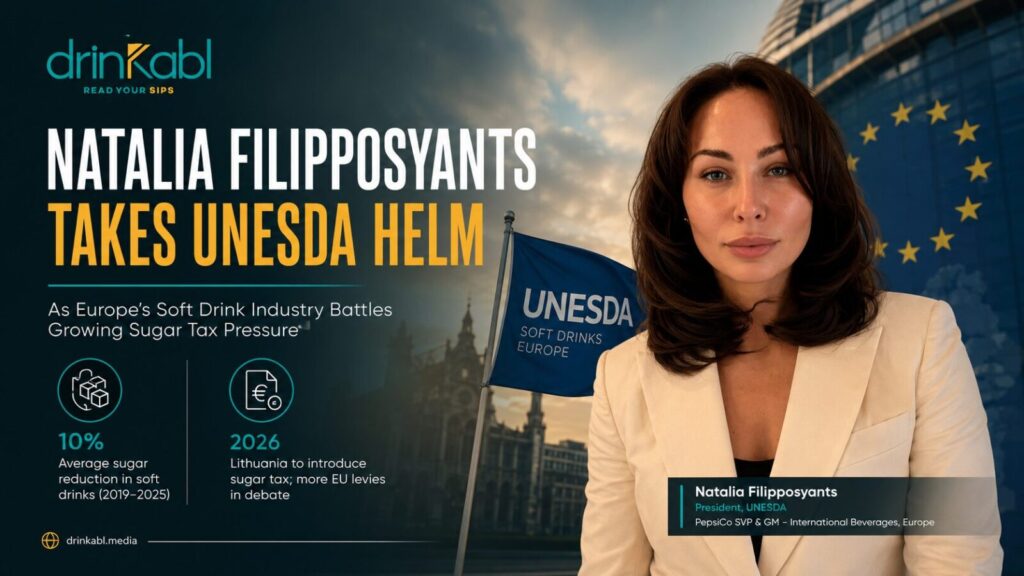
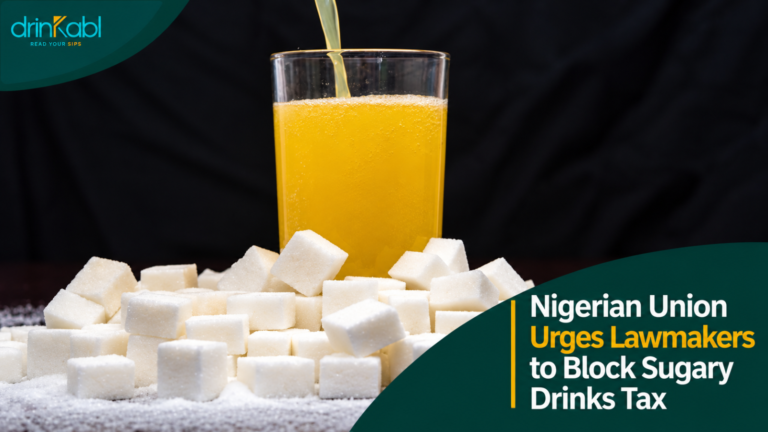
The appointment places PepsiCo’s lead beverages executive in Europe at the head of a lobby group managing active policy fights. UNESDA members are pushing back against the spread of sugar-excise taxes across the EU, with Lithuania adding its own levy in 2026 and broader EU-level HFSS taxation proposals still moving through Brussels. UNESDA has maintained that voluntary reformulation delivers results that taxation does not, pointing to a 10% average sugar reduction across soft drinks between 2019 and 2025 as evidence.
Filipposyants, who begins a two-year term, pointed to the sector’s role across agriculture, manufacturing, logistics, retail and hospitality, noting that consumer expectations are shifting alongside growing economic and regulatory pressures. She emphasised the industry’s expanding portfolios of low- and no-sugar beverages as the appropriate response to public health concerns.
UNESDA has consistently contested claims that sugar taxes improve health outcomes, citing evidence that obesity rates have continued to rise in countries where soft drink levies are already in place. Filipposyants will steer that position through a Commission that has shown increasing sympathy for health-based taxation arguments, with active dossiers on packaging waste regulation, front-of-pack labelling, and the EU Competitiveness Compass also on the table.
For PepsiCo, the timing carries strategic logic. The EU’s regulatory trajectory on sugar, packaging, and consumer labelling consistently sets templates that other regulators follow. Having its senior franchise executive leading the association that shapes those positions is not accidental. Drinkabl.media’s reporting on how soft drink regulation is reshaping portfolio investment across Africa showed similar pressures building, several governments have signalled interest in sugar levies modelled on EU frameworks. PepsiCo competes in those markets through franchised bottling operations, many of which track Brussels decisions more closely than Lagos or Nairobi might assume.
The association’s position on soft drink competition in emerging markets becomes a secondary but relevant thread. Global soft drink investment is continuing to move into Africa regardless of what Brussels decides. Whether Filipposyants can hold voluntary reformulation as the EU’s preferred policy instrument, rather than legislated taxes, will determine the commercial conditions PepsiCo’s bottling partners face across multiple regions as the two-year term runs out.
READ MORE