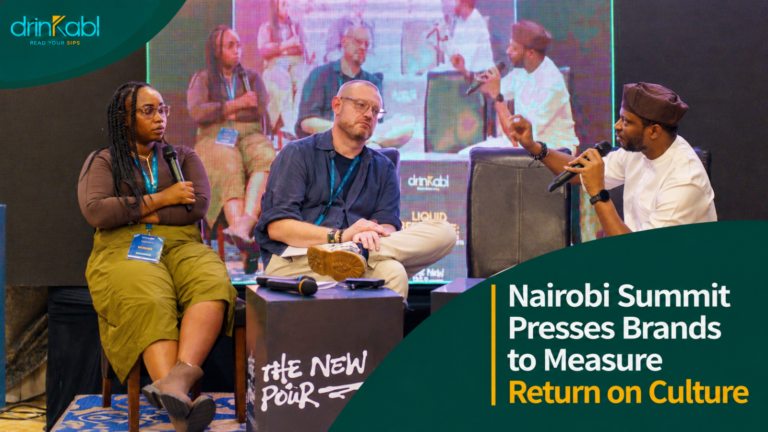
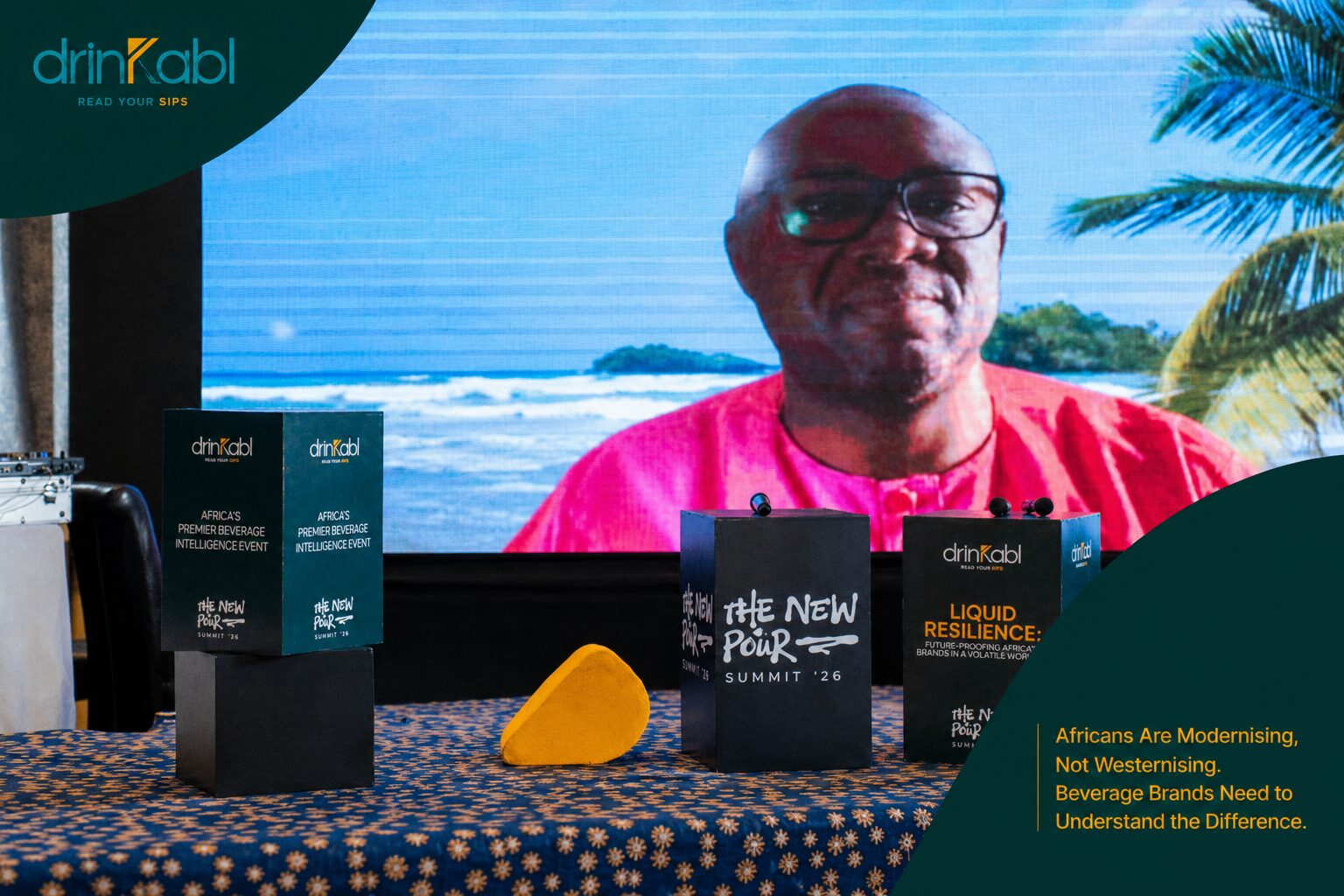

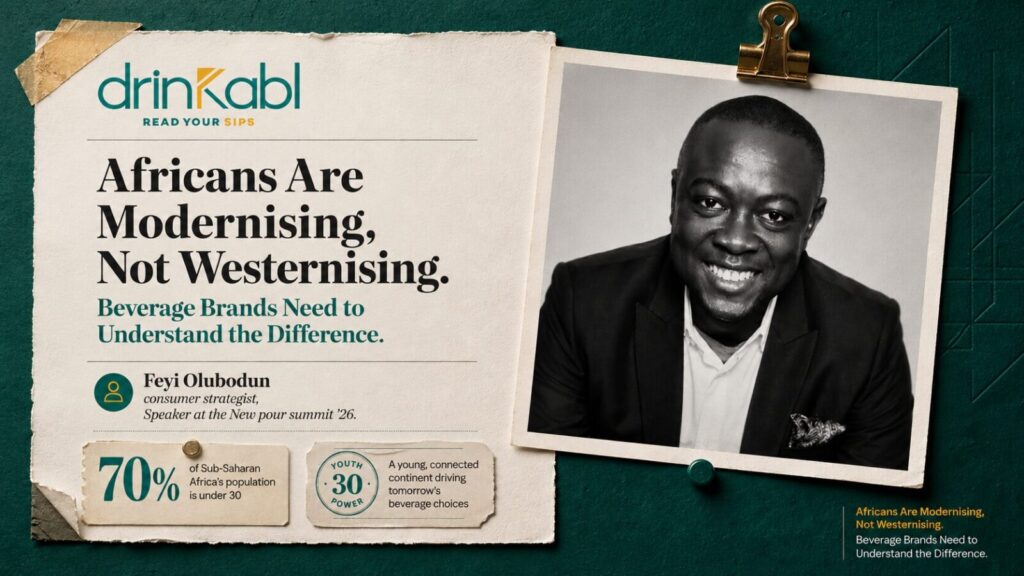
At The New Pour Summit ’26 in Nairobi, consumer strategist Feyi Olubodun offered beverage brands a deceptively simple warning: African consumers are changing, but that does not mean they are becoming Western consumers.
The distinction matters commercially. Africa is undergoing one of the world’s most significant demographic shifts, with about 70% of sub-Saharan Africa’s population under 30. But population growth alone does not explain what this means for beverage companies.
The more important change is cultural. African consumers move comfortably between global technology, international fashion, local food, digital entertainment and deeply rooted cultural identities, so modernisation can change how people consume without changing why they consume. That, Olubodun argued, is the opportunity many beverage brands risk missing.
The consumer is not one market
Olubodun challenged brands’ reliance on imported consumer frameworks to explain African behaviour. His “Villager” framework places greater weight on community, identity, faith, social progression and the need to signal achievement than conventional demographic segmentation does.
Current beverage research points in a similar direction. IWSR’s 2026 analysis finds younger legal-drinking-age consumers becoming more selective about alcohol, balancing moderation with discovery, while affordability reshapes premiumisation rather than eliminating it.
That creates a more complicated consumer than the old mass-versus-premium model suggests. The same shopper can be price-conscious at home, aspirational in a social setting and experimental when discovering a new product, often within the same week.
Culture is not decoration
Local culture should not simply appear as colours, patterns, names or ingredients on a label. It needs to inform the reason a product exists and the role it plays in people’s lives, a distinction visible in growing demand for African ingredients, heritage flavours and locally rooted product stories, and in the continued strength of ready-to-drink formats that let consumers move between occasions with less friction.
For international brands, the lesson is direct: localisation cannot mean translating a global campaign and swapping the celebrity endorsement. It requires understanding the social codes around consumption in each market, an execution challenge many multinationals are still working through.
Africa is not one consumer
There is a second trap: treating “the African consumer” as a single, coherent category. A Nigerian consumer is not automatically representative of a Kenyan one, a Lagos nightlife consumer cannot be equated with someone buying from a neighbourhood retailer, and North African markets carry their own distinct cultural and commercial dynamics.
Even within a single country, income, location, age, occasion and social environment can change beverage choice radically. The consequence for brands is straightforward: African strategy needs greater local precision, not less.
The commercial takeaway
The strongest idea to emerge from the session was not that Africa is culturally different from the rest of the world; that much is obvious. It is that modern African consumption can combine global aspiration with local identity without contradiction, meaning the winning proposition may not be “African versus global” but global quality, made locally meaningful.
Brands that grasp that distinction stand to gain an edge as Africa’s young consumers accumulate purchasing power and demand products that reflect both where they come from and where they intend to go. That is the challenge The New Pour Summit put on the table, and one the beverage industry can no longer afford to simplify.
Read More on Drinkabl.media