

Africa Illicit Beverage Watch scans the continent weekly to track illicit beverage activities, protecting operators and brand distributors against counterfeit risks and regulatory shifts. For comments, corrections, or interviews, reach out to hello@drinkabl.media.
Rwanda Seizes 1,000 Litres of Illicit Gin as Nigeria Tracks Fake Spirits
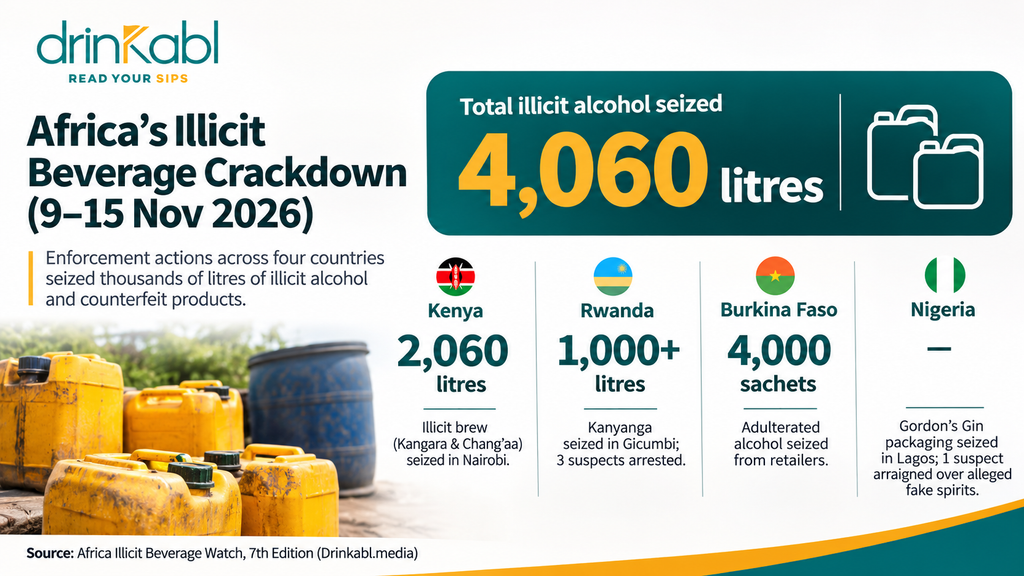
Police in Rwanda arrested three suspects after recovering more than 1,000 litres of illicit Kanyanga, while Burkina Faso inspectors seized 4,000 sachets of adulterated alcohol. In Kenya, another 2,060 litres of illicit brew were recovered in Nairobi, as Nigeria’s regulators pursued suspected counterfeit spirits through a court case and a fresh packaging investigation in Lagos.
The week of 9 to 15 November exposed different stages of the illicit beverage trade across Africa. Rwanda’s enforcement operation targeted the transportation of locally distilled alcohol, Burkina Faso’s inspections reached retailers selling adulterated sachet drinks, and Kenyan police dismantled another suspected brewing operation. In Nigeria, attention shifted towards the packaging materials that help counterfeiters imitate established brands and the prosecution of a suspect accused of dealing in fake spirits.
The cases are different, but they reveal a recurring problem for legitimate beverage operators. Illicit products can enter the market through informal production, questionable packaging, unregistered distribution and retail outlets. Seizures disrupt those activities, but the evidence required to establish contamination, counterfeiting and criminal responsibility must still be secured.
Rwanda Arrests Three as Police Seize More Than 1,000 Litres of Kanyanga
On 10 November, Rwanda National Police, working with other security agencies and local residents, seized more than 1,000 litres of Kanyanga, an illicit locally distilled alcoholic drink, in Rukurura Cell, Kaniga Sector, Gicumbi District. Three people suspected of transporting the alcohol were arrested with 70 litres in their possession. Other individuals reportedly abandoned their supplies and fled as officers moved into the area. The arrested suspects were held at Kaniga Police Station pending transfer to the Rwanda Investigation Bureau for further investigation. The Gicumbi operation was conducted at night as authorities sought to stop the consignment from reaching local consumers.
The seizure indicates that enforcement is targeting transportation as well as production. However, the available police account does not establish the total number of people involved, the origin of the remaining alcohol or the chemical composition of the recovered Kanyanga. The investigation will need to establish who produced the drink and whether the arrested transporters were connected to a wider distribution network.
Burkina Faso Finds 4,000 Sachets of Adulterated Alcohol
On 10 November, commercial inspectors in Burkina Faso seized more than two tonnes of expired or prohibited goods during inspections in Nanoro and Soaw, in Boulkiemdé Province. The operation also uncovered 4,000 sachets of 50ml adulterated alcoholic drinks, while several shops were closed. Officials from the Nando Regional Directorate of Industry, Trade and Crafts also identified violations of price regulations during the inspections. The findings show that the problem extended beyond the sale of unregistered or expired products to drinks already described by inspectors as adulterated.
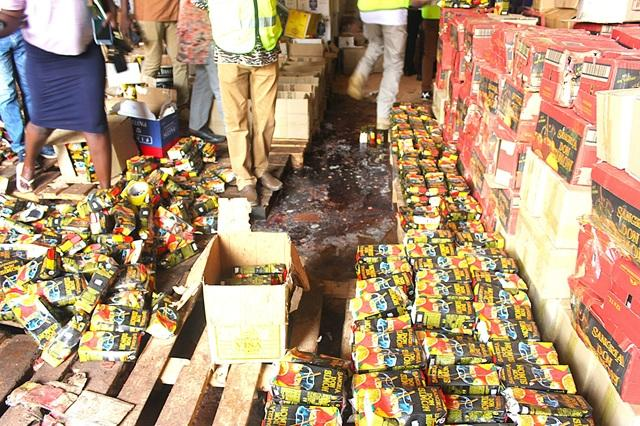
The seizure is particularly relevant to the small-format alcohol trade because sachets can move easily through informal retail channels. The available report does not identify the manufacturers, brands or chemical substances involved, nor does it provide details of laboratory testing. The closure of affected shops removes the recovered stock from circulation, but tracing the suppliers will be necessary to establish how the products entered the retail network.
Kenya Police Seize 2,060 Litres of Illicit Alcohol in Nairobi
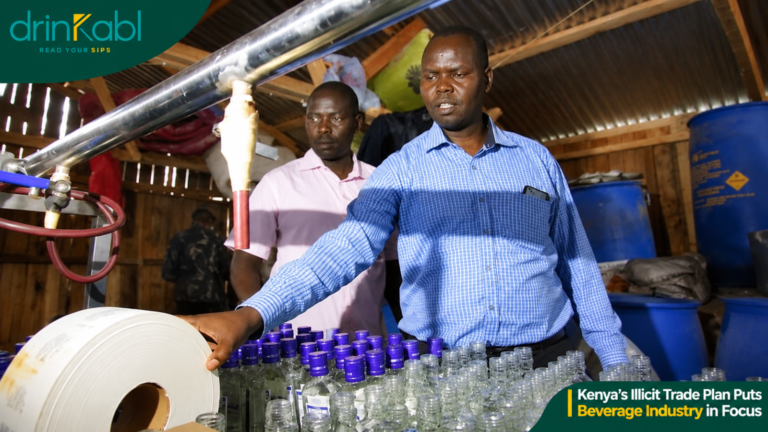
On 12 November, officers from Kahawa West Police Station seized 2,060 litres of illicit alcohol during an operation in Soweto, Kahawa West, Nairobi. The recovered products comprised 2,000 litres of Kangara and 60 litres of Chang’aa. Police also dismantled and destroyed brewing equipment believed to have been used in producing the drinks. The National Police Service said the operation targeted illegal alcohol production and distribution and formed part of its continuing campaign against illicit brews and narcotics. The Nairobi seizure was announced on 13 November.
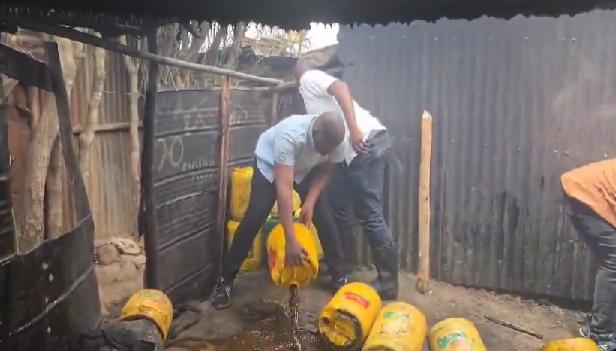
The operation adds to a series of raids in Soweto, where police have repeatedly recovered large quantities of illicit alcohol. More than 7,000 litres were reportedly destroyed during a separate operation on 5 November, while five people were arrested in another raid on 3 November. The repeated seizures raise questions about how quickly illegal brewing operations can resume after enforcement teams dismantle their equipment. The latest police statement did not disclose any arrests arising from the 12 November operation.
NAFDAC Finds Gordon’s Gin Packaging in Lagos Warehouse
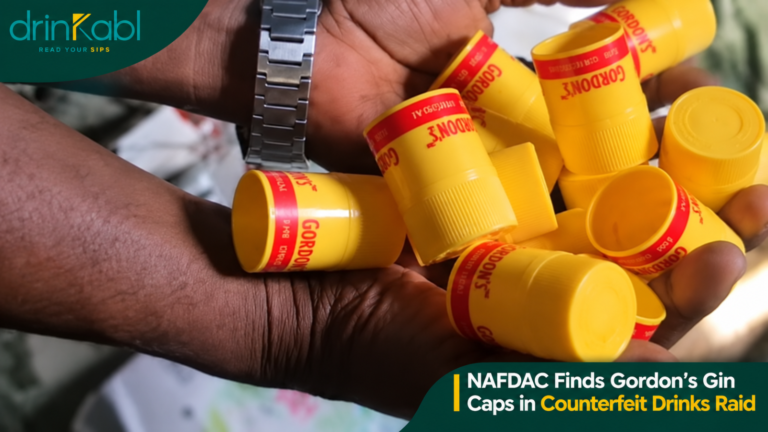
On 14 November, Nigeria’s National Agency for Food and Drug Administration and Control (NAFDAC) uncovered a warehouse containing packaging materials for suspected falsified medicines and Gordon’s Gin at the Tools and Hardware Complex of the Lagos Trade Fair Complex. The recovered materials included bottle caps carrying the Gordon’s Gin brand, alongside packaging associated with Augmentin 625mg tablets and AmpliClose capsules. NAFDAC said the materials were not supplied by the original manufacturers. The discovery followed intelligence gathered by the agency.
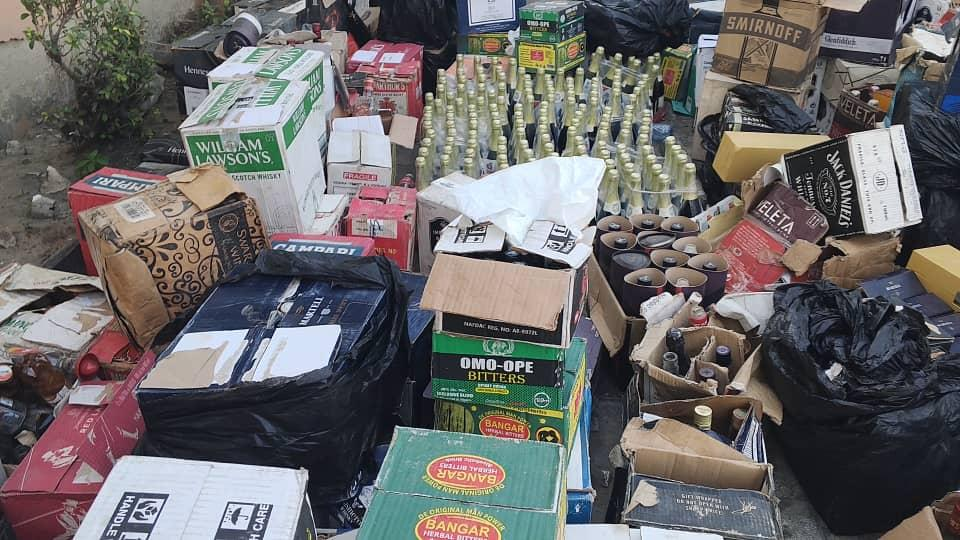
The presence of Gordon’s Gin-branded caps raises concerns about the possible use of established beverage identities in counterfeit packaging operations. However, the discovery does not establish that finished counterfeit Gordon’s Gin was produced at the warehouse or distributed to consumers. Investigators still need to establish the intended use of the caps, identify their suppliers and determine whether the materials connect to other suspected production facilities. The raid also brings renewed attention to the Trade Fair Complex following NAFDAC’s October discovery of more than 20 illegal stores allegedly involved in counterfeit drinks and the revalidation of expired products.
Nigeria Arraigns Suspect Over Alleged Fake Casamigos and Red Label
On 10 November, NAFDAC arraigned 46-year-old Okafor Isioma before a Federal High Court in Lagos over alleged production, distribution and sale of unregistered alcoholic beverages, including Casamigos Tequila and Johnnie Walker Red Label. The four-count charge also accused him of obstructing regulatory investigations and assisting two other individuals allegedly involved in the production of the drinks. The prosecution told the court that the alleged offences occurred on 11 September at Ipodo Street, Ikeja. Isioma pleaded not guilty and was remanded pending determination of his bail application. The court adjourned the matter to 18 November for trial. The court proceedings mark a development in an earlier investigation rather than a new seizure during this week’s period.
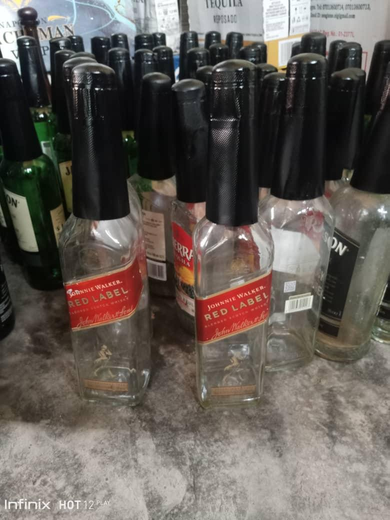
The case is relevant to brand owners because it brings alleged counterfeit production into the judicial process. However, the defendant has denied the allegations and has not been convicted. The prosecution will need to establish the alleged involvement of the accused and produce evidence connecting the products to the suspected production and distribution activities.
The Week at a Glance
| Location | Date | Classification | Evidence status |
|---|---|---|---|
| Gicumbi, Rwanda | 10 November | Illicit locally distilled alcohol | Over 1,000 litres seized; three suspects arrested |
| Nanoro and Soaw, Burkina Faso | 10 November | Adulterated sachet alcohol and expired goods | 4,000 sachets seized; shops closed |
| Kahawa West, Kenya | 12 November | Illicit traditional brew | 2,060 litres seized; brewing equipment destroyed |
| Lagos, Nigeria | 14 November | Suspected counterfeit beverage packaging | Gordon’s Gin caps recovered; finished-product connection unconfirmed |
| Lagos, Nigeria | 10 November | Alleged counterfeit spirits | Defendant arraigned; pleaded not guilty; trial pending |
Open Questions
In Rwanda, investigators must establish the source of the Kanyanga and identify those who abandoned their consignments. In Burkina Faso, the manufacturers and chemical composition of the seized sachet drinks remain unknown. In Kenya, the repeated recovery of illicit brews in Kahawa West raises questions about the suppliers and distribution networks sustaining production. In Lagos, NAFDAC must determine whether the Gordon’s Gin packaging was intended for counterfeit production, while prosecutors must establish their case against the defendant arraigned over the alleged fake spirits.
The week’s enforcement activity shows that illicit alcohol remains a supply-chain problem involving production, transportation, packaging and retail distribution. The recovery of finished drinks is only one part of the investigation. For legitimate beverage manufacturers, the more consequential outcome will be whether authorities can identify the people supplying counterfeit packaging, finance illegal production and move unregulated products into consumer markets.
From the archives: Read previous editions of AFRICA ILLICIT BEVERAGE WATCH.