

Africa’s Beverage Businesses Balance Growth, Regulation and Market Identity
From Nigeria’s changing rules for traditional drinks to corporate earnings growth and East Africa’s brewing ambitions, this week showed how regulation, consumer identity and commercial execution are shaping the next phase of Africa’s beverage industry.
Africa’s beverage industry had a week of important developments across regulation, corporate performance and brand strategy. In Nigeria, NAFDAC clarified registration requirements for unpackaged Zobo, while UAC of Nigeria reported a sharp increase in revenue following the consolidation of C.H.I. Limited. The country’s medical community also renewed calls for stronger action against unsafe alcoholic drinks following the Ondo poisoning tragedy. In Uganda, a senior marketing appointment at Uganda Breweries signalled renewed attention to portfolio innovation, while Kenya’s tea exporters received temporary relief after a court suspended a disputed levy. Internationally, Coca-Cola strengthened its earnings outlook as PepsiCo continued to face pressure from weaker consumer demand.
The developments reveal an industry increasingly required to do more than sell beverages. Companies must understand local consumption patterns, navigate changing regulations, protect product integrity and build businesses capable of turning market opportunities into sustainable earnings.
Nigeria draws a regulatory line around traditional beverages
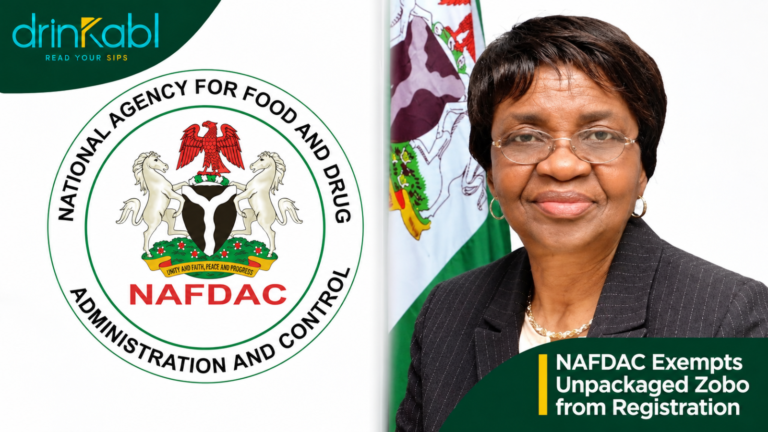
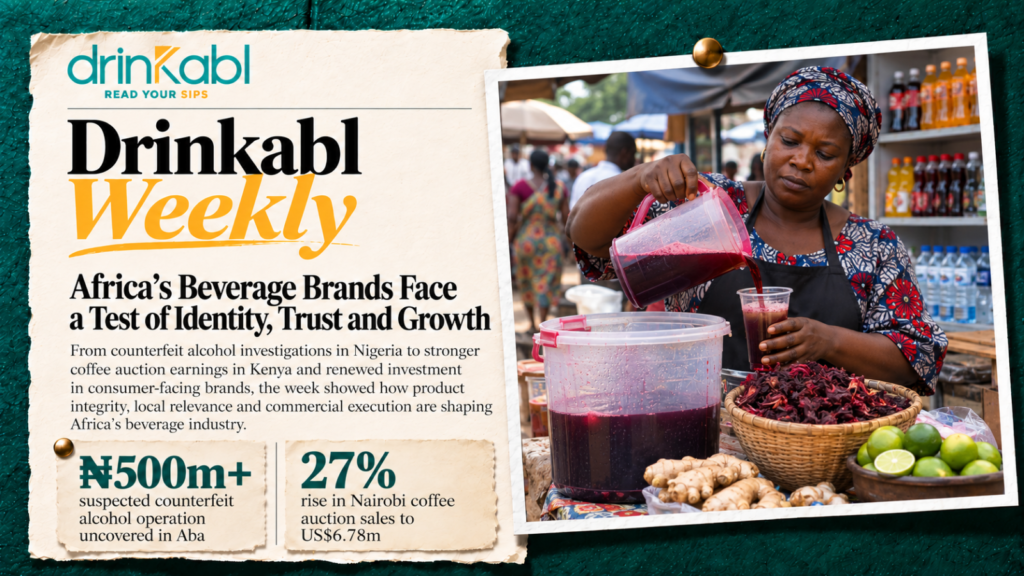
Nigeria’s National Agency for Food and Drug Administration and Control (NAFDAC) clarified on 28 October that locally prepared Zobo sold in ordinary, unsealed and unlabelled containers does not require product registration.
The clarification followed a confrontation in Delta State involving police officers and a woman selling Zobo. A video of the encounter circulated online after officers questioned the seller over the absence of a NAFDAC registration number on her products.
NAFDAC spokesperson Christiana Obiazikwor explained that the agency distinguishes between freshly prepared drinks sold in ordinary containers and commercially packaged beverages distributed in sealed, labelled containers. The latter category falls within the agency’s registration requirements.
The distinction matters for Nigeria’s informal beverage economy. Zobo is produced by thousands of small-scale entrepreneurs, many of whom depend on roadside stalls, neighbourhood markets and direct consumer sales. Applying the same regulatory expectations to informal vendors and commercial manufacturers could create unnecessary barriers for small businesses.
However, the clarification also exposes the need for more consistent public guidance. NAFDAC’s micro-scale enterprise framework already recognises locally produced beverages, including Zobo, within its regulatory provisions.
For entrepreneurs seeking to move from informal vending into packaged retail distribution, registration, appropriate labelling and production standards become increasingly important. The challenge is to protect consumers without making formalisation unnecessarily difficult for small producers.
Read more: NAFDAC Exempts Unpackaged Zobo from Registration
UAC’s revenue surge puts beverages at the centre of its business
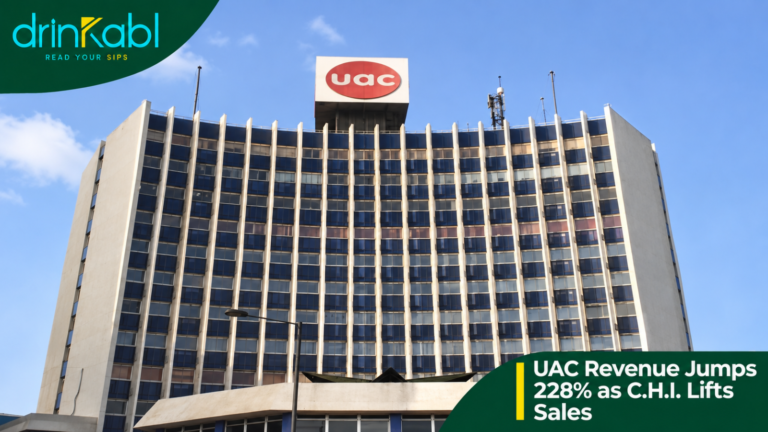
UAC of Nigeria Plc reported a 227.7% increase in revenue to ₦523 billion for the nine months ended September 30, 2026, following the consolidation of C.H.I. Limited, the manufacturer of Chivita and Hollandia.
The unaudited results, released on October 30, showed profit before tax increasing 262.5% to ₦37.69 billion, while profit after tax rose 307.1% to ₦21.91 billion.
The packaged food and beverages division generated ₦436.20 billion in revenue, compared with ₦56.94 billion in the corresponding period of 2025. It accounted for approximately 83.4% of group revenue.
The acquisition has substantially changed UAC’s commercial profile, bringing Chivita, Hollandia and Capri-Sun into a larger portfolio alongside existing businesses such as SWAN Spring Water and UAC Foods.
However, the revenue increase should not be interpreted as organic growth alone. C.H.I. was not consolidated as a subsidiary in the corresponding nine-month period of 2025, making the comparison reflect a significantly enlarged business.
The acquisition also carries financing implications. Net finance costs increased to ₦23.94 billion, while net debt stood at approximately ₦231 billion.
UAC is pursuing portfolio adjustments, including proposed disposals of its interests in Livestock Feeds and DP World Logistics, as it seeks to streamline operations and reduce debt.
For Nigeria’s beverage industry, the development illustrates how acquisitions are reshaping competition. The next test is whether UAC can translate its expanded beverage portfolio into sustained earnings while managing acquisition-related borrowing.
Read more: UAC Revenue Jumps 228% as C.H.I. Lifts Sales
Ondo poisoning renews scrutiny of Nigeria’s informal alcohol market
Nigeria’s alcohol safety debate returned to the foreground after the Nigerian Medical Association in Ondo State called for stronger regulatory inspections and prosecutions against operators involved in counterfeit and unsafe alcoholic beverages.
The renewed call follows the mass poisoning incident in Ondo State, where NAFDAC reported 182 cases and 48 deaths associated with the consumption of locally prepared alcoholic and herbal concoctions.
Preliminary laboratory investigations identified high concentrations of methanol in samples of the suspected drinks. The agency also reported that 11 of 15 samples tested positive for Cannabis indica. Fifteen arrests had been reported in connection with the investigation.
The figures illustrate the potential consequences of weak oversight in parts of the informal alcohol market, where consumers may have limited information about ingredients, production methods and product safety.
The problem is not confined to unregistered production. Counterfeit packaging, unauthorised distribution and the repackaging of questionable products can also undermine confidence in established beverage brands.
For legitimate manufacturers, the consequences include reputational exposure and increased pressure to demonstrate product authenticity. For regulators, the challenge is to distinguish traditional beverage production from dangerous adulteration while ensuring that enforcement reaches the networks responsible.
The Ondo incident makes clear that product safety is not simply a regulatory issue. It is a commercial foundation for consumer trust.
Read more: Ondo Doctors Seek Crackdown on Fake Drinks After 48 Deaths
Uganda Breweries brings regional marketing experience back home
Uganda Breweries Limited appointed Rhona Namanya as its Marketing and Innovation Director, effective January 1, 2027. Namanya returns to the Ugandan business after regional marketing assignments across Kenya and Tanzania within Diageo’s East African operations.
Her experience includes work on Uganda Waragi’s flavour innovation and repositioning, senior innovation responsibilities at Kenya Breweries Limited and beer marketing at Serengeti Breweries.
At Serengeti, she worked on brand development and flavoured beverage innovation, including the Serengeti Premium Apple proposition.
Her return places experience across spirits, beer and ready-to-drink beverages within Uganda Breweries’ marketing and innovation leadership.
The appointment comes at a time when beverage companies are competing through differentiated products, premium offerings and marketing that connects more closely with local consumer identities.
For Uganda Breweries, the opportunity lies in applying regional experience to its existing portfolio while identifying new consumption occasions and product opportunities.
The appointment does not, by itself, establish a new product-launch programme. Its commercial value will ultimately depend on the ability to convert innovation and brand strategy into measurable consumer demand.
Read more: Rhona Namanya Returns to Uganda Breweries as Marketing Director
Kenya’s tea levy suspension offers exporters temporary relief
Kenya’s Tea Board suspended collection of the tea levy on tea imports and exports following an interim High Court order issued in October.
The board announced the suspension in a notice dated October 27, stating that it would stop demanding and collecting the levy pending the hearing and determination of the application before the court.
The disputed levy was introduced under the Tea (Levy) Regulations, 2026, and applies to tea exports and imports. The board also requested that the Kenya Revenue Authority suspend collection of the charge.
The development matters because tea is one of Kenya’s most important agricultural exports, connecting growers, factories, exporters, brokers and international buyers.
Additional charges can affect the economics of trading, particularly where exporters operate with tight margins and compete against producers from other origins.
The suspension provides temporary relief, but it does not remove the industry’s other licensing, quality and customs requirements. The legal dispute also remains unresolved.
For Kenya’s beverage value chain, the wider question is how to fund industry development and regulatory oversight without weakening the competitiveness of its tea exports. The court’s next consideration of the dispute is scheduled for November 19.
Source: Food Business Middle East & Africa
Coca-Cola widens its performance gap with PepsiCo
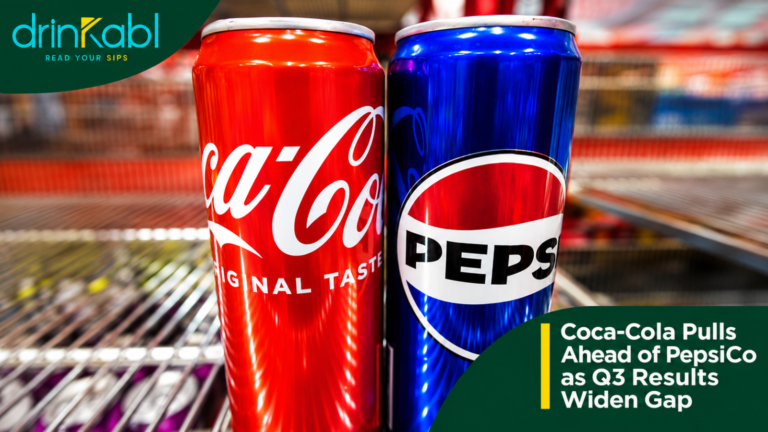
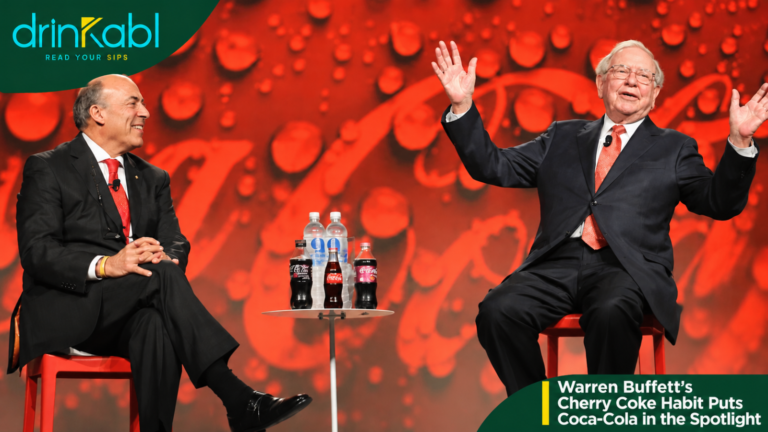
Coca-Cola strengthened its position against PepsiCo after reporting 7.4% revenue growth in the third quarter of 2026 and raising its full-year earnings outlook.
Quarterly revenue reached US$13.38 billion, while global unit case volumes increased approximately 5%. The company raised its 2026 comparable currency-neutral earnings-per-share growth forecast to at least 9%, from its earlier projection of 7–8%.
Growth in markets including India, China, Mexico and Brazil supported the performance, with affordable packaging formats and locally relevant flavours contributing to consumer demand.
The results contrast with PepsiCo’s more difficult recovery in North America. The company previously lowered its 2026 core earnings growth forecast to 1–2%, compared with its earlier expectation of 4–6%, and announced additional cost reductions.
For African beverage operators, the comparison offers a useful lesson. Growth is increasingly dependent on balancing affordability, product relevance and distribution rather than relying exclusively on price increases.
Coca-Cola’s performance also highlights the commercial importance of emerging markets. International volume growth is becoming an increasingly important contributor to the company’s overall performance.
However, rising packaging, aluminium, PET and freight costs remain a concern, meaning volume growth does not eliminate the need for operational discipline.
Source: Reuters – Coca-Cola lifts profit forecast on international soda demand
What comes next
The coming weeks will test whether Nigeria can translate its regulatory clarifications into more consistent treatment of small beverage producers while strengthening enforcement against unsafe alcoholic drinks. UAC’s enlarged beverage portfolio will also face the challenge of sustaining earnings growth without allowing acquisition-related financing costs to undermine its performance.
In East Africa, Uganda Breweries will prepare for a new marketing leadership phase, while Kenya’s tea industry awaits further court directions on the disputed levy.
Internationally, Coca-Cola’s stronger performance will continue to put pressure on competitors to demonstrate that their pricing, product and distribution strategies can deliver profitable growth.
The common thread this week was the importance of understanding the market before making commercial decisions. Regulation determines how businesses operate, acquisitions change the scale of competition, and consumer affordability influences which products succeed.
For Africa’s beverage industry, the next phase of growth will belong to companies that can combine local market knowledge, trusted products, operational discipline and the ability to convert consumer relevance into lasting commercial value.