
From Sprunk and eCola to Pißwasser and Patriot, Rockstar Games has built a fictional beverage industry that borrows from familiar consumer brands. With some of its imaginary drinks now appearing as real products, GTA VI offers an unusual case study in branding, entertainment and commercial opportunity.
In the second GTA VI trailer, Jason walks out of a convenience store carrying a six-pack of Patriot beer. Elsewhere, bottles of Pißwasser sit on a bar counter, while cans of FizzAzz and packs of Zesta occupy the shelves of Leonida’s retail outlets. The products are fictional, but their packaging, positioning and advertising draw on a commercial language that beverage consumers already recognise. Rockstar has given its imaginary drinks market the kind of brand competition that would not look out of place in a real supermarket.
The beverage industry in GTA VI deserves a closer look because its brands perform several commercial roles within the game. Some are established Rockstar creations, others appear to parody recognisable soft drinks and beers, and at least three fictional identities have now been reproduced as physical beverages by a Florida brewery. Separating the fictional products from their real-world counterparts reveals how entertainment companies build commercial environments and how those environments can create opportunities outside gaming.
The familiar brands behind Leonida’s drinks
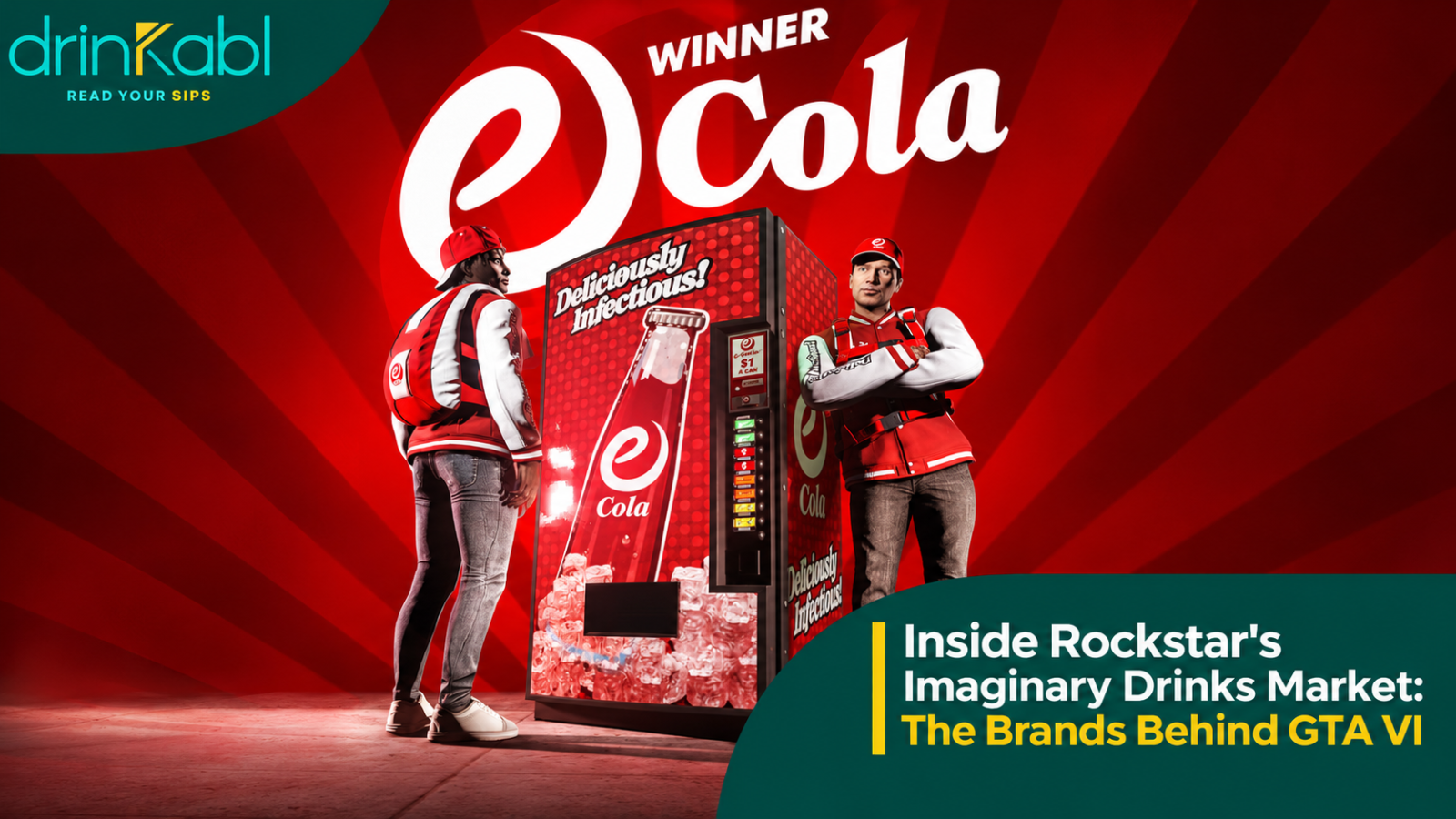
Rockstar’s approach begins with products that players can recognise without needing an explanation. Sprunk, the franchise’s green lemon-lime soft drink, occupies a category dominated in the real world by Sprite and 7UP. eCola performs a similar role in the cola category, with its name and visual identity inviting comparison with Coca-Cola. FizzAzz, meanwhile, is an orange soft drink whose presentation recalls Fanta. These comparisons are based on branding and product identity, not confirmed relationships with the companies behind those established drinks.
The similarities are part of a longer tradition within Grand Theft Auto. Rockstar has regularly created fictional businesses that parody familiar consumer products, advertising campaigns and corporate identities. The approach allows the developer to reproduce the competitive atmosphere of a modern consumer market while retaining control over the brands, their messaging and how they appear in the game. For a player walking into a convenience store, the difference between a familiar product and its fictional counterpart is immediately understandable.
The soft-drink portfolio extends beyond the two most recognisable names. FizzAzz appears in promotional imagery, while Zesta is identifiable on packaged soda products in the second trailer. A further product, BrownStein’s Root Beer, appears in a television advertisement within the extended gameplay presentation. These products occupy different parts of the fictional retail and advertising environment, although their individual market positions and any gameplay effects should not be assumed from their appearances alone.
Beer gives the fictional market its strongest identity
Alcoholic beverages have an especially visible place in Rockstar’s fictional economy. Pißwasser is one of the franchise’s longest-running beer brands, while Patriot appears prominently in GTA VI’s promotional material, including the scene in which Jason leaves a convenience store with a six-pack. Logger is another beer identified in the game’s visual material, appearing in a green bottle and in refrigerator imagery. Together, these brands give the fictional market a recognisable range of beer identities rather than a single generic alcoholic product.
Two other names add to the selection. Pindayho appears alongside Pißwasser on the counter of a harbour bar, while Pißwasser NEIN is identified as an alcohol-free version of the established fictional beer. The latter is particularly interesting because it introduces a non-alcoholic extension to a brand whose identity has historically been built around beer. It reflects a product strategy familiar to real manufacturers, where an established alcoholic brand can support a lower- or no-alcohol alternative without abandoning its existing identity.
The available visual evidence does not establish that every brand has a complete product range, commercial strategy or gameplay function. Some names are clearly readable in Rockstar’s official promotional material, while others have been identified by players examining individual frames. That distinction matters when compiling a reliable inventory. A bottle visible on a bar counter is evidence of a brand’s appearance, but it does not automatically establish that the product can be purchased, consumed or used in a particular way during gameplay.
When fictional beer moves into the real market
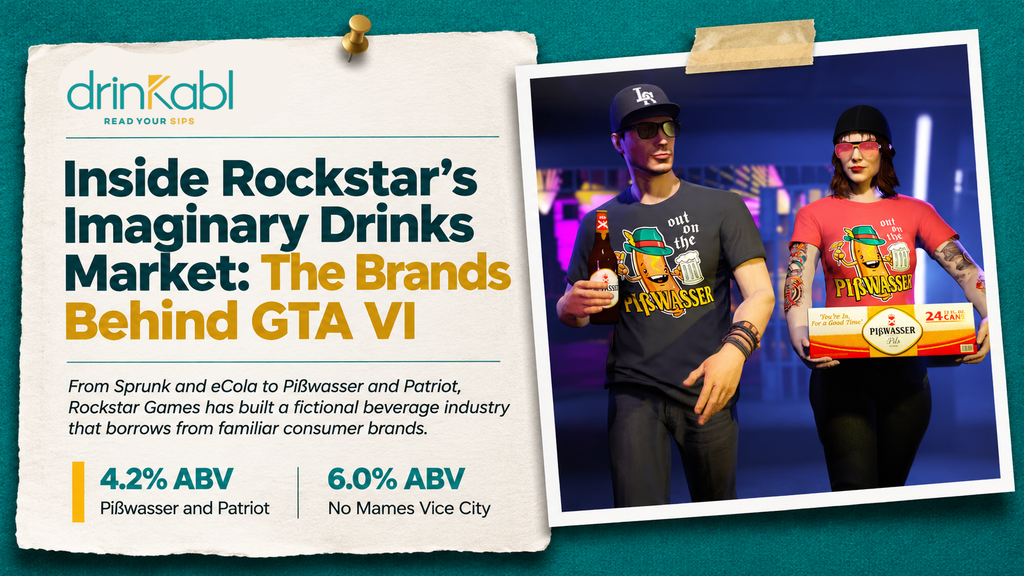
The most unusual development is the appearance of physical products carrying names associated with Rockstar’s fictional beer portfolio. Tripping Animals Brewing, a brewery based in Doral, Florida, has released cans bearing the names Pißwasser and Patriot, alongside a Vice City-themed lager called No Mames Vice City. The products are listed at 4.2 per cent alcohol by volume for Pißwasser and Patriot, while No Mames Vice City carries an alcohol content of 6 per cent.
The connection became visible through US alcohol-label approvals and subsequent product availability. The Alcohol and Tobacco Tax and Trade Bureau approved relevant label applications during September and October 2026, with Tripping Animals Brewing identified in the filings. The brewery subsequently announced that the cans were available at its Doral taproom and selected locations around Miami. The No Mames product is particularly notable because it adapts an existing brewery lager with a Vice City-themed identity and packaging.
There is, however, an important distinction between a real product inspired by a fictional game brand and a formally licensed Rockstar partnership. The existence of approved labels, GTA VI imagery and products sold by the brewery establishes a commercial connection to the game’s identity, but the available public documentation does not establish the terms of a licensing agreement or confirm that Rockstar Games manufactured or officially endorsed the beers. The distinction is important for understanding who owns the product, who benefits commercially and what permissions govern the use of the game’s intellectual property.
For the brewery, the appeal is easy to understand. Pißwasser and Patriot already have recognition among Grand Theft Auto players, built over several instalments of the franchise. Reproducing those names on physical cans gives a local brewer access to an existing entertainment audience, while the Vice City presentation provides a theme that can be carried into packaging, taproom displays and social media promotion. It is an example of how a fictional consumer identity can acquire value outside the environment in which it was created.
The business of selling a fictional identity
Rockstar’s fictional beverage brands also raise a broader question about product placement in entertainment. Traditional product placement gives an actual manufacturer visibility within a film, television programme or game. A company may pay for that exposure, provide products for filming or negotiate a wider promotional arrangement. Rockstar’s fictional brands work differently because the developer creates and controls the products itself. Their presence can make a virtual supermarket, bar or restaurant feel commercially familiar without requiring every visible beverage to belong to an external company.
That control gives the developer room to parody real-world marketing while building a consistent identity across different products and settings. A soft drink can have its own slogan, a beer can carry a recognisable label, and a convenience store can stock several competing brands. The player encounters these products as part of an environment rather than as a separate advertisement. For beverage marketers, this is an interesting example of how brand recognition can be built through repeated exposure, visual consistency and association with a larger entertainment property.
The real-world Pißwasser and Patriot products add another layer to the arrangement. They demonstrate that fictional brands can become commercially useful when their names already have an audience and a recognisable visual identity. However, the scale of that opportunity should not be overstated. The reported availability of the beers is concentrated around Miami, and there is no confirmed evidence of a nationwide distribution arrangement. Their commercial performance beyond the initial audience of game enthusiasts remains an open question.
What GTA VI reveals about beverage branding
The drinks in GTA VI offer a useful way to examine how consumers recognise products and how brands become embedded in everyday environments. Sprunk and eCola occupy familiar soft-drink categories, while Pißwasser, Patriot and Logger give the fictional beer market its own identities. FizzAzz and Zesta add further packaged products, and BrownStein’s Root Beer extends the range into television advertising. The variety makes Leonida’s beverage environment feel like a functioning consumer market, even though the brands themselves are largely invented.
For real beverage companies, the lesson is not that gaming exposure automatically translates into sales. Rather, the franchise demonstrates the value of a distinctive brand identity that can be recognised, remembered and carried across different settings. Rockstar has built fictional products that players can identify from a can, bottle, slogan or shop display. The brewery products inspired by Pißwasser and Patriot show how that recognition can become a starting point for physical merchandise and commercial experimentation.
Jason’s six-pack of Patriot is a small detail in a much larger game, but it points to a carefully constructed marketplace. The beer has a name, packaging and a place in the fictional retail environment. Now, under a real brewery’s label and available in Miami, that same fictional identity has found a place in the physical drinks market. The distance between the two is smaller than Rockstar’s imaginary supermarket shelves might suggest.