
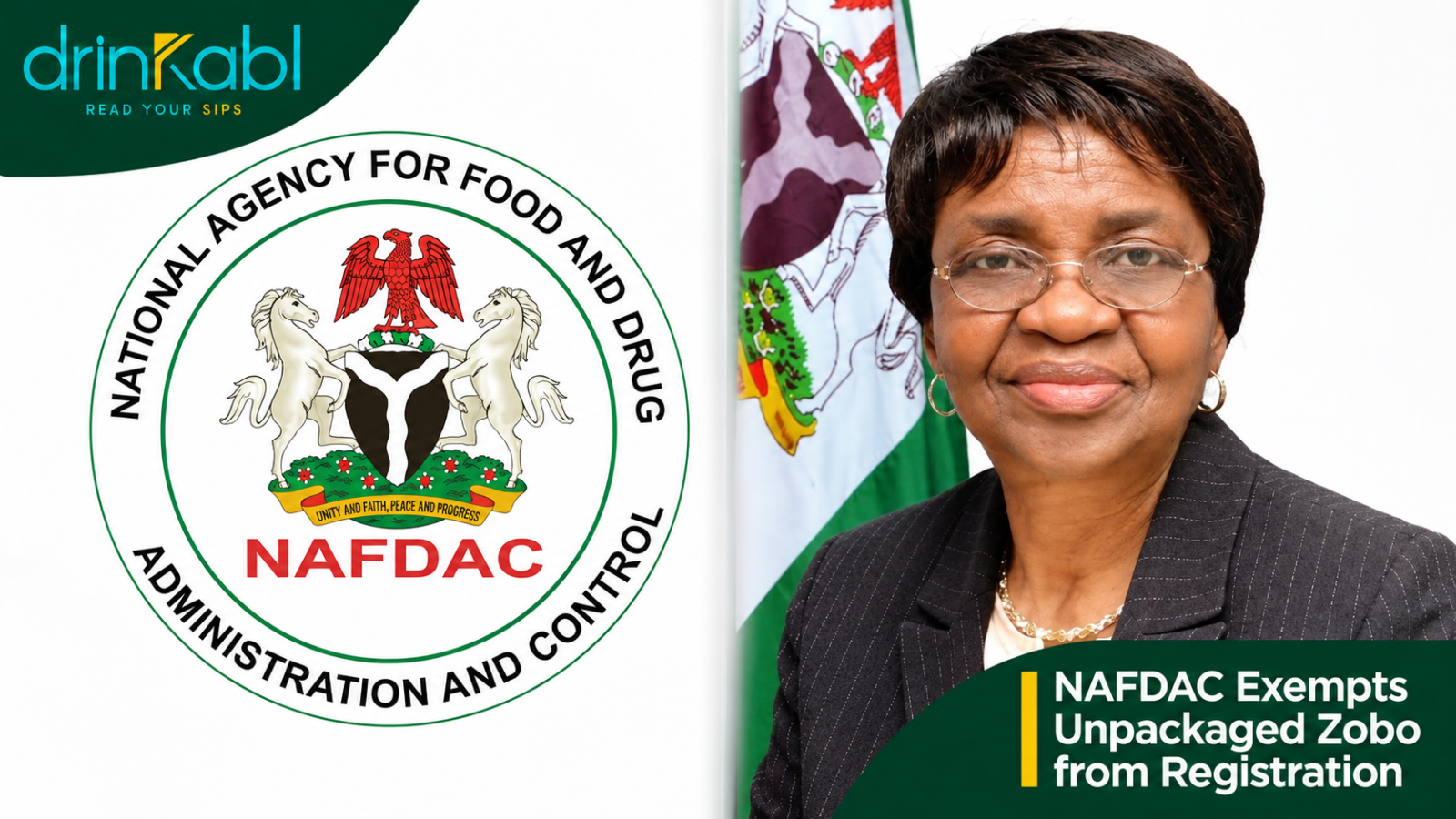

Nigeria’s National Agency for Food and Drug Administration and Control (NAFDAC) has clarified that locally prepared Zobo sold in ordinary, unsealed and unlabelled containers does not require product registration, following a confrontation between police officers and a female beverage seller in Delta State. The clarification, issued on 28 October 2026, has reopened questions about regulatory enforcement and the treatment of small-scale beverage traders.
The dispute began after a video circulated online showing police officers questioning the woman over the absence of a NAFDAC registration number on her Zobo drinks. One officer insisted that consumable products required registration, while a man recording the encounter challenged the demand. The exchange attracted public attention after the footage spread across social media.
Packaging determines regulation
Christiana Obiazikwor, NAFDAC’s spokesperson, explained that the agency distinguishes between Zobo sold in ordinary containers and products prepared for commercial distribution with packaging, seals and labels. She said the latter category falls under NAFDAC’s regulatory requirements and should carry the appropriate registration number.
The distinction matters because Zobo is widely produced by small-scale entrepreneurs who sell directly to consumers through roadside stalls, neighbourhood markets and informal retail channels. Under NAFDAC’s stated position, selling freshly prepared Zobo in an ordinary container does not automatically place the vendor within the same registration framework as a commercially packaged beverage manufacturer.
However, the agency’s published MSME guidelines introduce another regulatory consideration. Its website identifies Zobo among locally produced beverages and lists beverages among products exempted under its micro-scale enterprise provisions. The relationship between this exemption and the spokesperson’s packaging-based distinction requires clearer public guidance.
Police enforcement questioned
Delta State Police spokesperson Bright Edafe defended the officers, arguing that they were carrying out their responsibilities by questioning the regulatory status of a consumable product. He also criticised the intervention of the content creator who challenged the officers during the encounter.
However, NAFDAC’s statutory enforcement powers are specifically assigned to its designated officers. Section 24 of the NAFDAC Act empowers those officers to inspect premises, examine regulated products, take samples and seize goods where they reasonably believe regulatory provisions have been breached.
The available accounts do not establish the specific legal authority under which the Delta officers conducted their intervention. Nor has it been established whether the vendor’s product satisfied the conditions for commercial packaging and registration or whether any offence occurred during the encounter.

Small producers face a distinction
For Nigeria’s informal beverage economy, the clarification draws a line between preparing drinks for immediate retail sale and developing packaged products for wider distribution. Producers moving into sealed bottles, branded labels and commercial retail channels must consider registration, facility inspection, product labelling and applicable food safety requirements.
NAFDAC already provides a framework for micro and small enterprises, including procedures for product registration and facility inspection. Its published requirements include business documentation, production procedures, food-handler certification and packaging information. The agency’s challenge is to communicate these obligations clearly enough that legitimate small businesses can comply without confusing informal vending with packaged beverage manufacturing.
For now, the Delta incident has exposed a gap between regulatory enforcement and public understanding. Zobo producers need clarity on where their businesses fall within the rules, while consumers still need assurance that commercially distributed drinks meet appropriate safety standards.