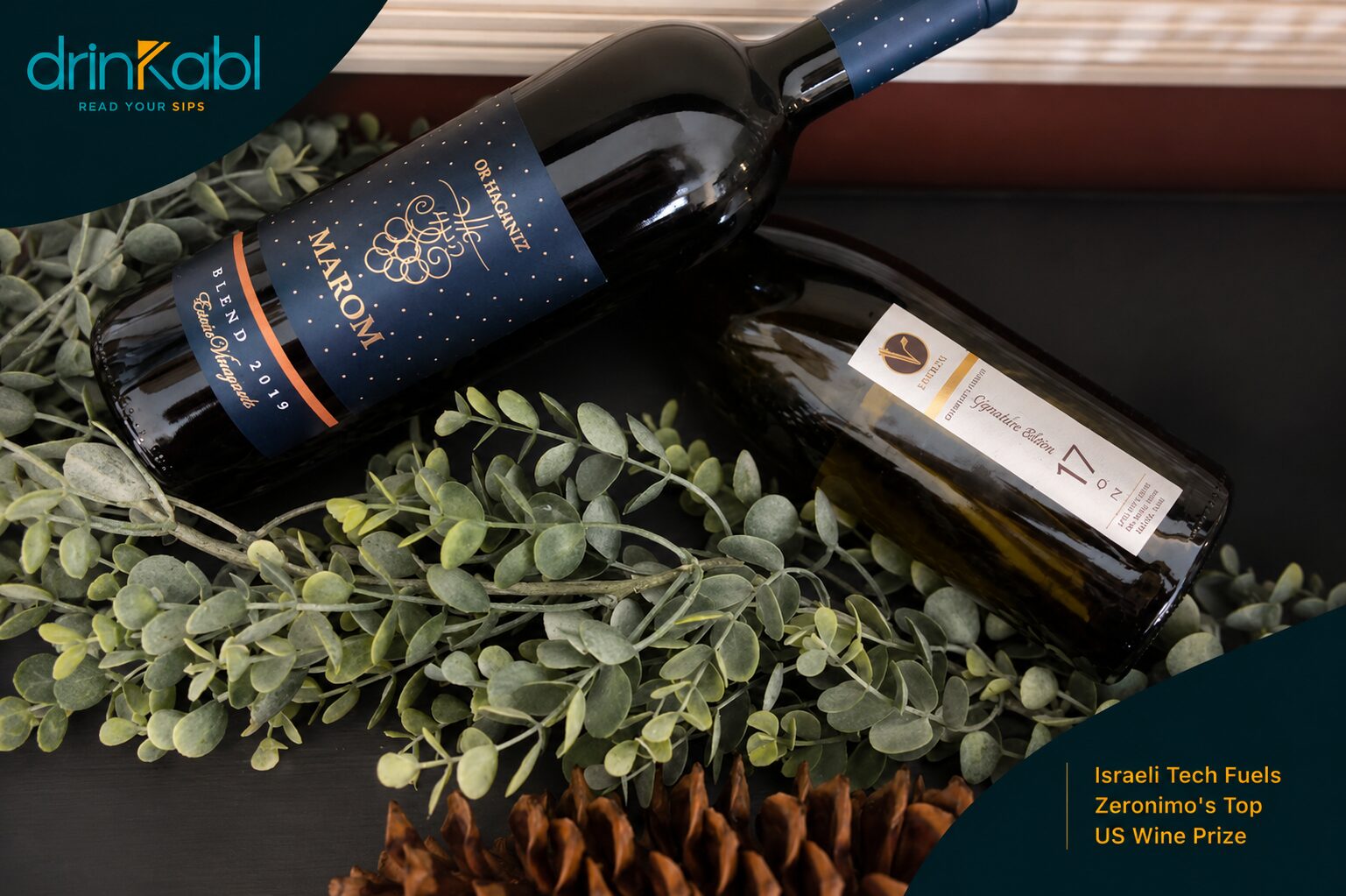

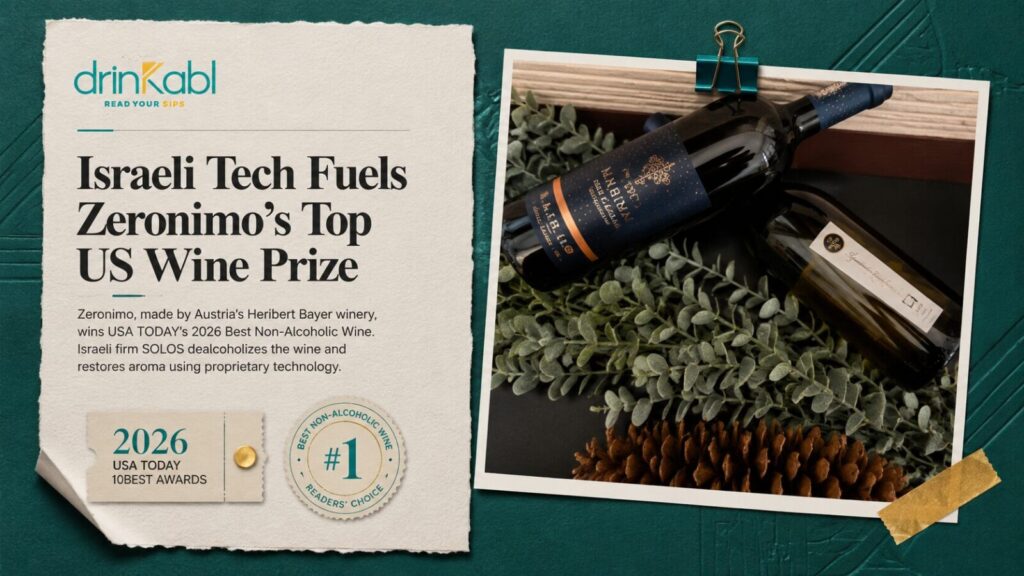
Austria’s Zeronimo has been named Best Non-Alcoholic Wine in USA TODAY’s 2026 10Best Readers’ Choice Awards, and the technology behind the win traces to Israel rather than the vineyard.
Zeronimo, made by the Heribert Bayer family winery, took the top spot in a ten-brand field that included established rivals, after a panel of wine and beverage experts narrowed the nominees and readers voted the winner. The prize recognizes a dealcoholized wine, not a naturally alcohol-free one. SOLOS, the no- and low-alcohol division of Israeli ingredients group Prodalim, stripped the ethanol from a base wine and rebuilt its aroma profile afterward.
That distinction matters commercially. Removing ethanol typically strips out the volatile compounds that give wine its character, which is why so many dealcoholized bottles taste thin. SOLOS pairs dealcoholization with proprietary aroma-recovery technology that captures those compounds during processing and returns them to the finished wine, a process Prodalim says preserves more of the original sensory profile. Zeronimo’s flagship Leonis Blend starts from a base wine that scored 98 points before losing its alcohol, according to the company.
Prodalim CEO Tzachi Barak said the win was “recognition of our vision of producing high-quality alcohol-free wines without compromising on quality.” The company has been building out capacity to back that claim. SOLOS entered the US market in November 2025, its sixth global market, and already runs a dedicated facility in Valencia, Spain.
The category’s momentum echoes gains elsewhere in functional and alternative beverages. Drinkabl.media’s recent coverage of coconut water‘s billion-dollar US run showed a similar pattern, with challenger categories built on health positioning gaining ground on legacy players. A Drinkabl.media market data roundup flagged the same investor appetite building across the beverage sector.
For SOLOS, the win gives Prodalim a marketable case study as it pitches its dealcoholization technology to wineries beyond Austria, at a moment when producers across Europe and the US are still deciding whether to build no- and low-alcohol capacity in-house or license it from outside suppliers.
READ MORE