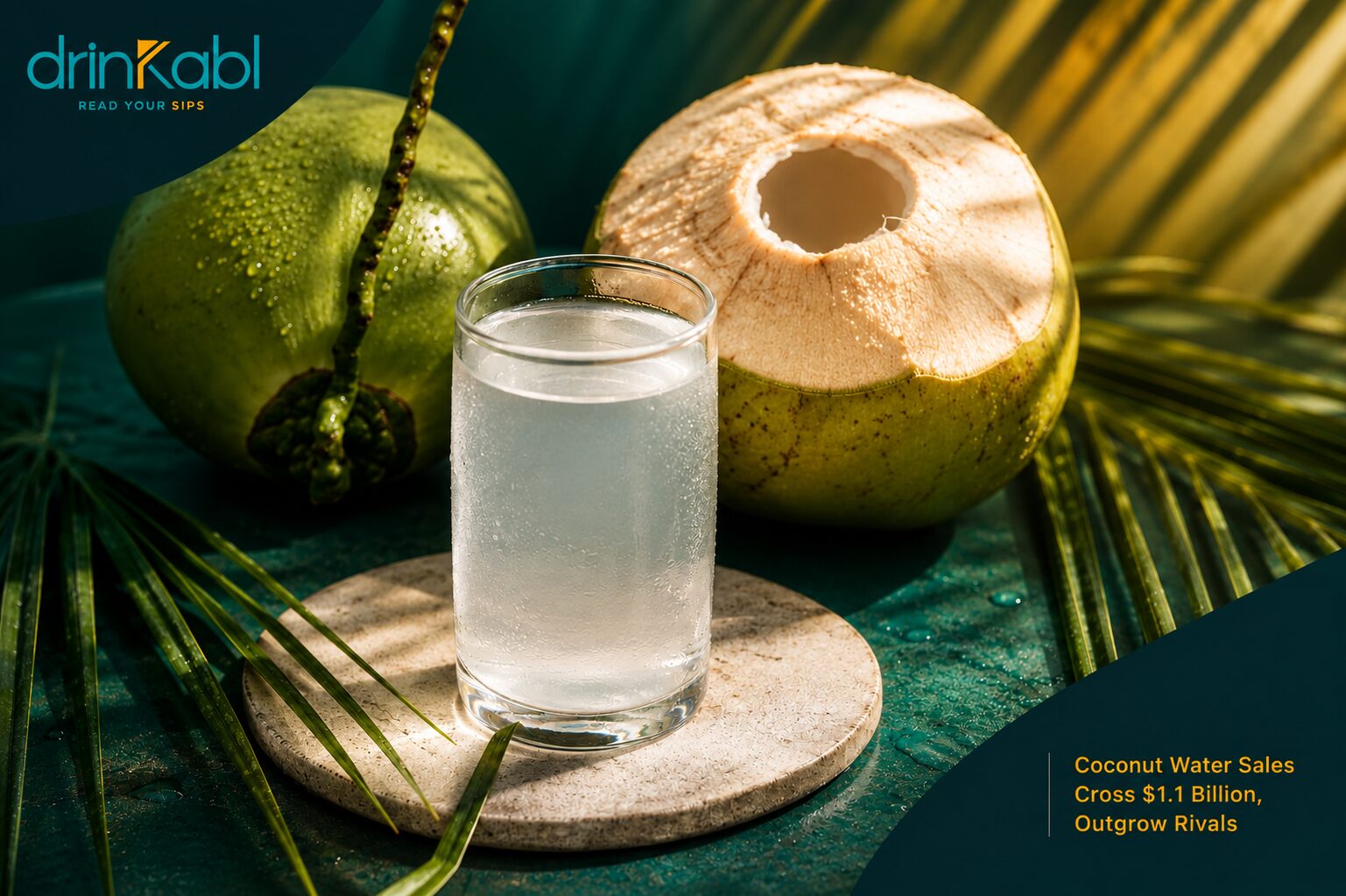

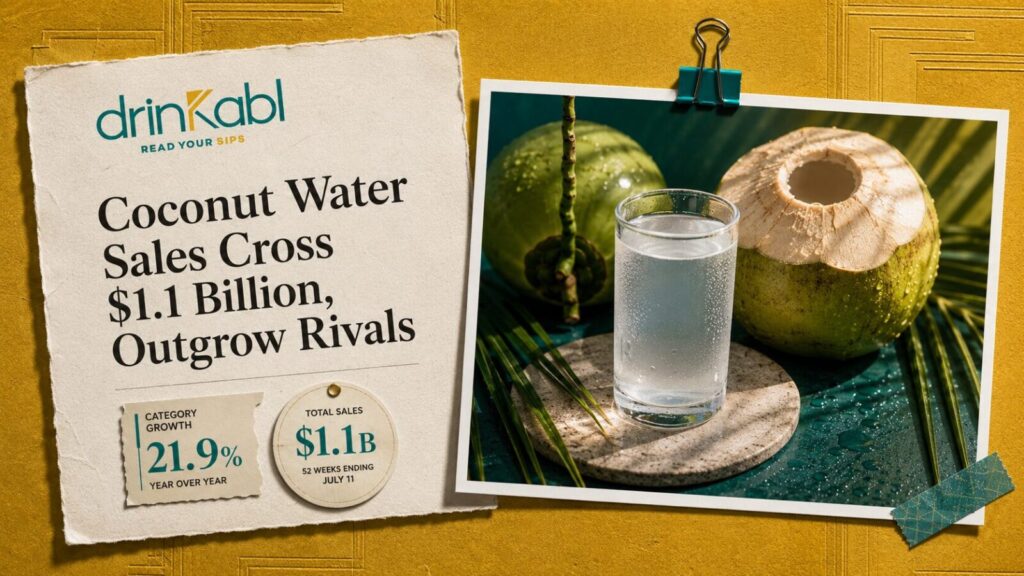
Coconut water sales topped $1.1 billion in U.S. retail and Amazon over the 52 weeks ending July 11, according to NielsenIQ data. The category grew 21.9% year over year, with volume up 13.8%, a rate that outpaces most of the “better for you” beverage set it once trailed.
Vita Coco holds the lead. The brand grew 25.1% to $527.6 million, extending a gap it has held for years. Harmless Harvest is close behind, up 21.8% to $128.9 million.
Both brands are growing faster than the category average, which means smaller players are losing shelf share, not the leaders.
Retailers are responding to that math directly. Growth this size usually pulls in incremental shelf space at the expense of adjacent hydration SKUs, particularly private-label water and lower-margin juice blends competing for the same cold-case real estate.
Supply is the harder problem. Coconut water sourcing runs through Southeast Asia and parts of West Africa, and double-digit volume growth puts pressure on processors already managing seasonal coconut yields and shipping costs. Vita Coco moved to secure its own position last month, buying Thailand-based Copra Coconuts for $175 million, a bet on locking in super-premium supply rather than competing for it on the open market.
Harmless Harvest is making a different kind of bet. The Danone-owned brand recently pushed its coconut water into shelf-stable formats for the first time, a move that frees it from refrigerated distribution and opens up retail space that refrigerated-only competitors can’t reach.
New entrants chasing this growth will compete for the same limited coconut supply as Vita Coco and Harmless Harvest, not build around it. That scarcity is likely to sharpen the divide between brands with locked-in sourcing and everyone else.
Drinkabl.media’s coverage of South Africa’s apple supply chain earlier this year traced a similar sourcing dynamic: category growth eventually outruns raw material capacity, and brands with ownership over supply pull ahead of those still buying on the spot market. It also raises the same branding question this publication explored around hydration positioning in Nigeria’s bottled water market: category growth this fast rewards brands with a distinct territory, not just a bigger shelf footprint.
The open question is whether processors can scale fast enough to keep pace with retail demand, or whether the next twelve months bring a sourcing bottleneck that turns a growth story into a shortage story.
READ MORE