
Ondo Deaths and Kenya’s Cooler Rule Lead Drinks Week
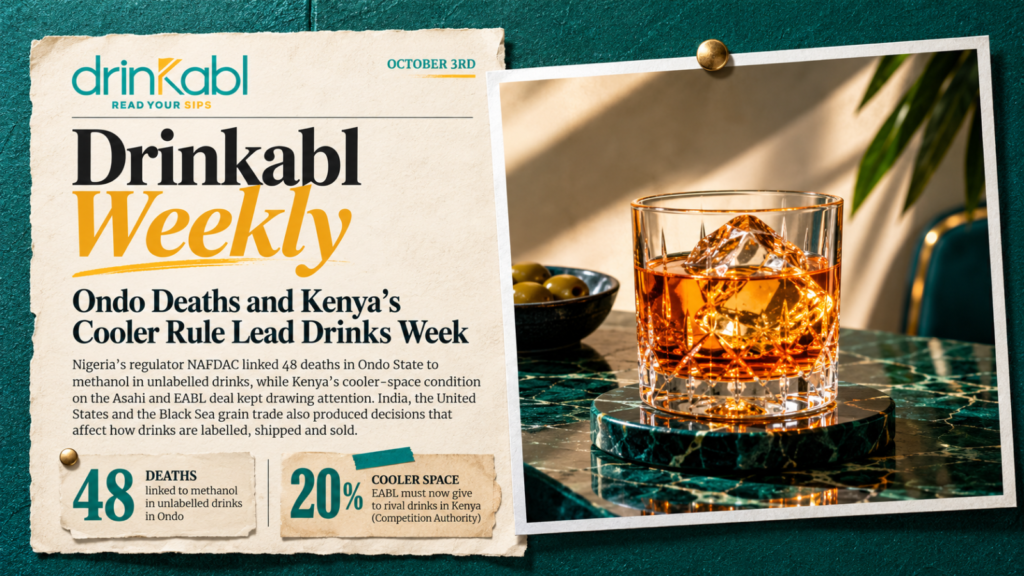
Nigeria’s regulator NAFDAC linked 48 deaths in Ondo State to methanol in unlabelled drinks in the week to 3 October 2026, while Kenya’s cooler-space condition on the Asahi and EABL deal kept drawing attention. India, the United States and the Black Sea grain trade also produced decisions that affect how drinks are labelled, shipped and sold.
Ten developments stood out across the week. Most involve a regulator or a court, and a few were first reported earlier in September and drew fresh attention only now. Each item below states what is confirmed and what is still open.
Nigeria’s week
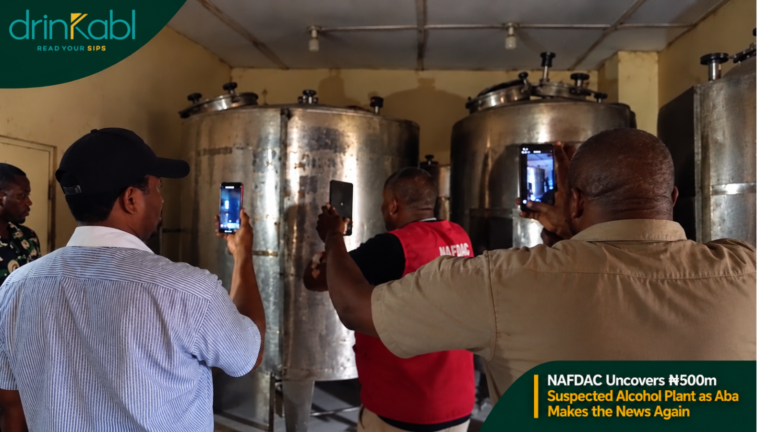
NAFDAC tested 15 unlabelled samples of locally prepared alcoholic and herbal drinks and found high concentrations of methanol, which causes blindness, organ failure and death. The outbreak, first reported in early September in Odigbo, has recorded 182 cases and 48 deaths. Eleven samples also tested positive for Cannabis indica, and it is not clear whether both substances were in the same drinks.
Of the 182 cases, 90 people were treated and discharged, 31 were outpatients and six remained in hospital. Odigbo and neighbouring Irele had a methanol outbreak in 2015 that killed 27 of 37 people affected. The deaths do not by themselves establish negligence by any agency.
A study commissioned by the Coca-Cola system puts its Nigerian value-added output at about US$1 billion in 2024, supporting around 160,000 jobs. Nearly 3,000 of those jobs are direct and more than 157,000 are indirect. The assessment covers Coca-Cola Nigeria and Nigerian Bottling Company, and its figures were cited again at the bottler’s 75th anniversary in September.
Seleem Adegunwa, managing director of Rite Foods, was named Outstanding FMCG Brand Entrepreneur of the Year at the Edge Awards in Lagos on 25 September, and the company took the corporate brand award. Rite Foods won the same corporate award in 2025. It has also added LIDA Malt to a drinks range that includes Bigi soft drinks.
Kenya and EABL
Kenya’s Competition Authority cleared Asahi’s US$2.3 billion purchase of Diageo’s 65 per cent stake in East African Breweries in September. At least 20 per cent of the refrigeration space EABL gives retailers must now go to drinks owned by neither company. Until now EABL has not allowed rival brands in its fridges.
Supermarkets, top-end venues, petrol-station liquor stores and hotels above two stars are exempt. The authority also required funds to be set aside from the sale proceeds for outstanding liabilities. The sale has not closed, because the High Court extended a freeze on the share transfer after a separate petition.
Diageo and Asahi had opposed the cooler rule, arguing that market conditions do not change when a shareholder does. Atsushi Katsuki, Asahi’s chief executive, has said Asahi Super Dry and Peroni Nastro Azzurro will join White Cap and Guinness in Kenya’s premium segment once the investment completes.
Regulation and trade
On 29 September the Delhi High Court set aside a 30 June order telling Red Bull to stop calling its product an energy drink, because the company was not heard first. It did not rule on the merits, so the regulator can issue a fresh order after a hearing.
PepsiCo, which is challenging the same restrictions, says 492 million bottles and 26 million cans carrying the term were in circulation at 31 July. The regulator sent notices to six brands in July, including PepsiCo’s Sting and Monster Energy, and Hell Energy has won a separate stay.
The same day, the United States began blocking Canadian beer, wine, cider and spirits, alongside dairy products, motorcycles and molasses. The covered goods were worth about US$967 million in 2025, and alcohol made up roughly 87 per cent. Spirits were the largest share at US$673 million.
Supply and expansion
Attacks on ports and ships have disrupted Black Sea grain exports since July. Ukraine has rerouted most shipments through Danube ports, adding about US$50 a tonne. Russia’s alternative ports handled only 1.3 million tonnes between July and September against roughly 12 million at its main Black Sea ports, and shipping grain to Egypt by the Baltic costs 30 to 35 per cent more.
Varun Beverages’ new subsidiary Kiva Spirits, incorporated at the end of August, is reportedly in advanced talks to buy India’s Alcobrew Distilleries at an enterprise value of Rs 2,000 to 2,500 crore. Alcobrew sells whisky, vodka, gin, brandy and rum. Terms are not final, and the reports first appeared around 12 September.
In Zimbabwe, Varun is launching Mooju, a dairy-blend juice in 430ml and 1-litre packs, with four flavours at the start. The company laid the foundation stone for a juice and dairy facility in Harare, which it expects to begin commercial production later this year. Varun says its Zimbabwe operations directly employ about 2,000 people.