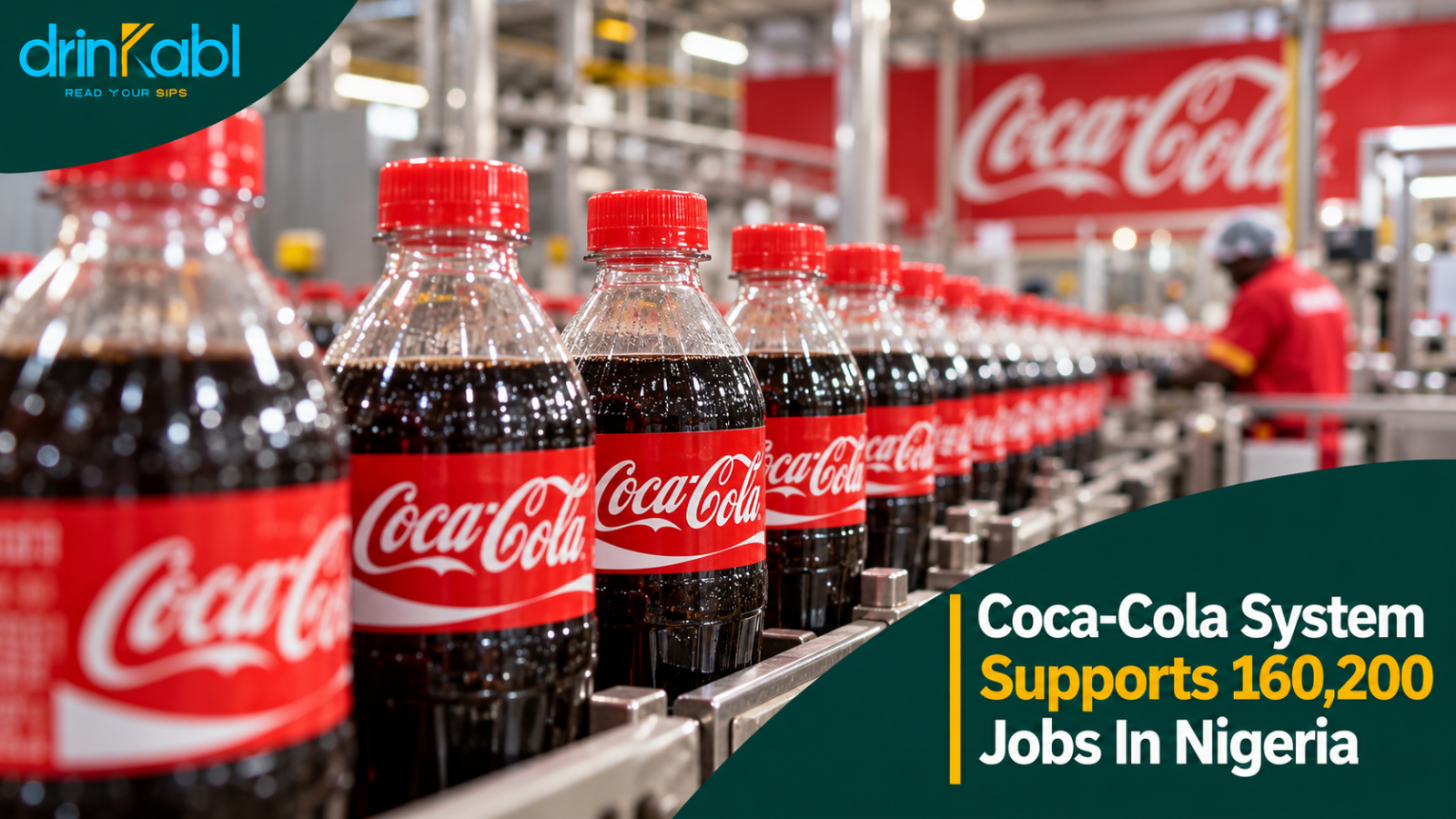

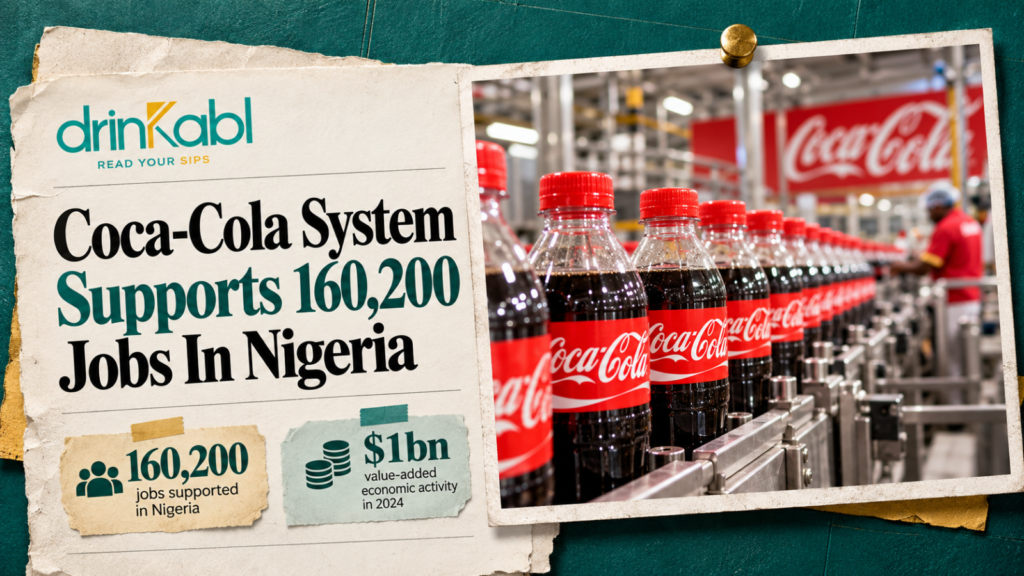
The Coca-Cola System in Nigeria supported about 160,200 jobs and generated an estimated $1 billion in value-added economic activity in 2024, according to a socio-economic assessment published in 2026. The assessment covers Coca-Cola Nigeria Limited and its authorised bottler, Nigerian Bottling Company, and measures activity across their wider supply chain.
The study used the Leontief input-output model to estimate the wider economic effects of production, procurement and distribution. It counted 2,989 direct employees and more than 157,200 jobs supported indirectly across agriculture, logistics, retail, hospitality and distribution.
A 53-job multiplier
The assessment puts the system’s employment multiplier at 53 additional jobs for every direct job. That means the largest share of the estimated employment footprint sits outside Coca-Cola’s factories and offices, among businesses connected to its commercial activity.
The distinction matters because the 160,200 figure is not a headcount of people employed by Coca-Cola or NBC. It is an estimate of jobs supported through the wider value chain, including businesses supplying inputs, moving products and selling beverages to consumers.
Local suppliers take $601m
Local procurement accounted for about $601 million of spending on goods and services in 2024. The system’s purchases link beverage production with Nigerian suppliers across areas including packaging, agriculture, manufacturing and logistics.
That procurement footprint gives the employment figure a commercial dimension for suppliers and distributors. It also helps explain why changes in Coca-Cola’s production capacity can affect businesses that have no direct corporate relationship with the beverage maker.
Recycling adds another layer
The system’s economic footprint also extends into packaging recovery. Its Apapa Packaging Collection Hub in Lagos can process up to 13,000 metric tonnes of plastic bottles annually, with the facility designed to collect PET, produce clean PET bales and support recycled PET production through third-party partnerships.
The wider African sustainability programme includes nearly $25 million in water-related investment between 2024 and 2030 across 20 African countries. Coca-Cola’s African operating footprint also includes more than $10.4 billion in value-added economic activity and more than one million supported jobs in 2024.
$1bn investment remains ahead
The latest employment assessment comes as the Coca-Cola System expands Nigerian production capacity. Nigerian Bottling Company commissioned three new production lines at Asejire and Challawa in 2026, while the system’s previously announced plan calls for up to $1 billion of additional Nigerian investment over five years, subject to a predictable and enabling business environment.
For the Nigerian beverage trade, the larger question is how much of that investment continues to flow through local suppliers, manufacturing, logistics and retail. The 2024 assessment provides a baseline: $601 million in local procurement and 160,200 supported jobs before the latest capacity additions are fully reflected.