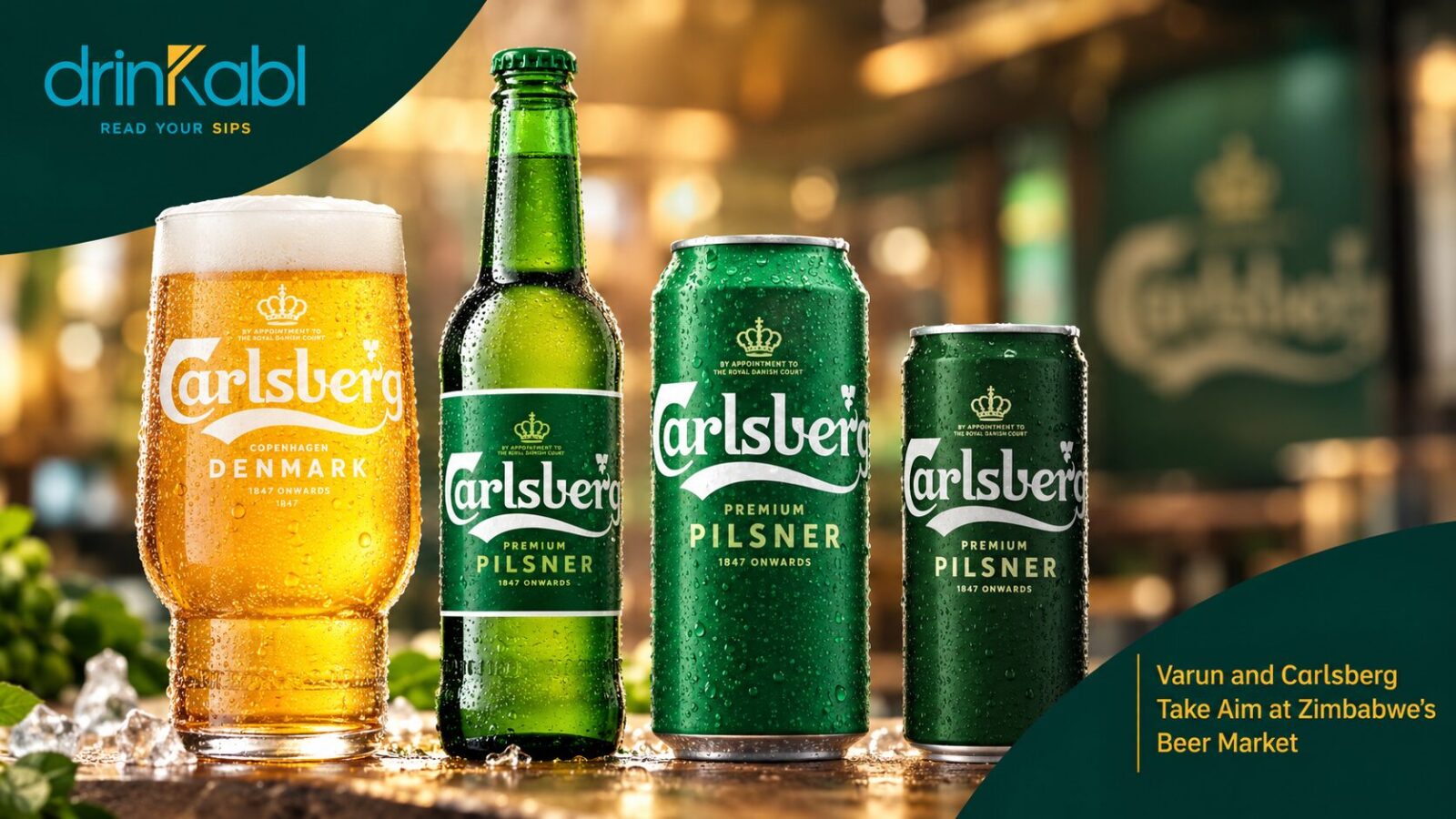

Varun Beverages Zimbabwe is preparing to begin importing and distributing Carlsberg beer, the first operational step in a partnership that could reshape competition in the country’s beer market.
The rollout will start with imported Carlsberg beer on a trading model, while Varun builds a brewery intended to shift the business from distribution to local manufacturing. Zimbabwe is the first market activated under Varun’s wider African distribution agreement with Carlsberg, signed in October 2025.
The move matters because Varun enters beer from a position of strength in Zimbabwe’s soft-drinks market, while Carlsberg brings an established international brand into a category historically dominated by Delta Corporation.
From soft drinks to beer
Varun is best known in Zimbabwe for its PepsiCo-linked soft-drinks business. Its move into beer is more than another product line. Varun Beverages Limited confirmed in its October 2025 exchange filing that certain African subsidiaries had signed an exclusive distribution agreement with Carlsberg Breweries A/S to test-market the beer brand, alongside a formal decision to add alcoholic beverages, including wine and spirits, to the company’s corporate objects. That signals a deliberate diversification strategy rather than a one-off distribution arrangement, and Zimbabwe is its first visible expression.
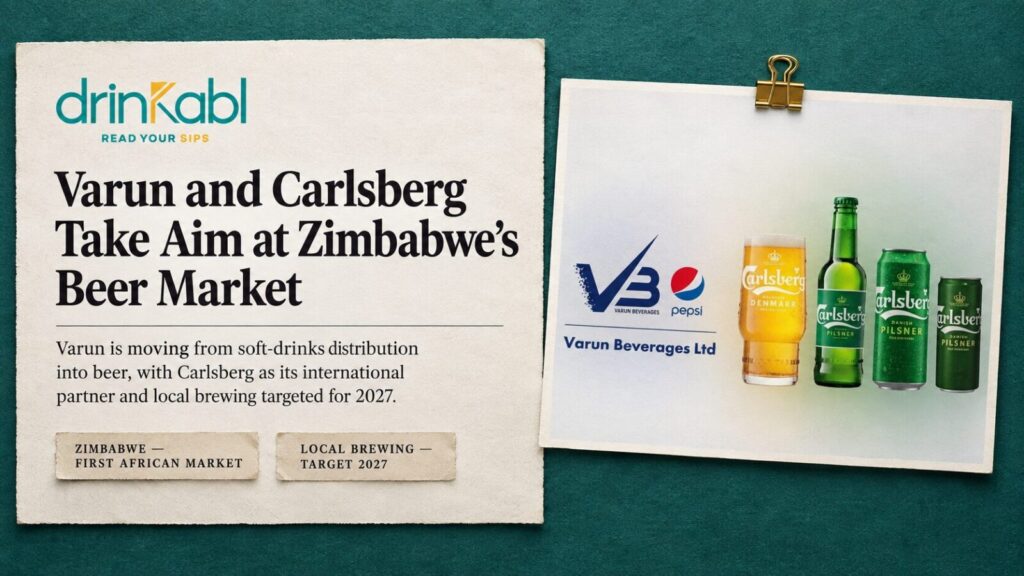
Varun Beverages Zimbabwe CEO Vijay Bahl said the company had signed a sale and distribution agreement for beer with Carlsberg covering Africa, with Zimbabwe as the first phase, adding that “in the second phase, manufacturing will be done in Zimbabwe with the successful launch of beer in the local market.” Using its existing route-to-market infrastructure gives Varun an advantage most new entrants into beer would have to build from scratch.
Distribution first, manufacturing later
The trading-model launch is a market-entry test before full commitment. Varun has indicated it plans to begin distributing imported Carlsberg beer as early as April 2026, with local brewing targeted for mid-2027 once its planned brewery is complete. Construction on that brewery is already underway.
That sequencing matters. It lets Varun test consumer acceptance, pricing and distribution economics before committing fully to domestic manufacturing, and gives Carlsberg time to build recognition in the market ahead of local production.
Varun has not disclosed a specific investment figure or job-creation target tied to the brewery itself. It has, however, outlined a separate US$650 million, multi-year investment programme across energy, agriculture and FMCG in Zimbabwe, developed with RJ Corporation and INOX Energy, which the company frames as part of its broader commitment to the country’s Vision 2030 agenda.
Carlsberg’s own model supports a partnership-led entry of this kind. Its Export & License division, which handles markets where the group has no brewery of its own, operates through local partners in more than 100 countries worldwide.
Delta faces a different kind of competitor
The clearest strategic implication is the challenge to Delta Corporation, Zimbabwe’s dominant brewer. Delta’s position rests on decades of manufacturing capacity, distribution relationships and consumer familiarity, not simply its brand portfolio.
Delta’s results for the year to March 2026 show lager beer volumes growing 19 percent to 3.15 million hectolitres, with the company describing demand as consistently exceeding supply, alongside record group revenue of US$1.09 billion. That means Carlsberg is not entering an underdeveloped category waiting for an international brand. It is entering an established market with a well-capitalised incumbent.
The task for Varun and Carlsberg is therefore less about getting Carlsberg onto shelves and more about persuading Zimbabwean consumers, in a market where disposable income and pricing carry real weight, to redirect some of that spending toward another beer brand.
Why the pairing makes sense
Carlsberg supplies brand recognition. Varun supplies local operating infrastructure; it already understands Zimbabwe’s retail environment and has expanded beyond soft drinks into PepsiCo snacks, including a locally produced Cheetos line. That combination could prove more effective than a conventional greenfield entry, giving Carlsberg a partner with market knowledge and distribution reach already in place, while giving Varun another category to run through its existing commercial network.
What to watch next
The trading-model launch should be read as the start of a longer commercial test, not the outcome. The markers worth tracking are consumer uptake against Delta’s established brands, how the imported product is priced in a cost-sensitive market, whether Varun’s soft-drinks distribution strength translates into beer, whether the brewery stays on track for its mid-2027 target, and whether Zimbabwe becomes a platform for further Varun-Carlsberg rollouts elsewhere in Africa, a possibility the original agreement leaves open without committing to a timetable or a list of markets.
For now, the story is straightforward: Varun is moving from a major soft-drinks operator in Zimbabwe to a challenger in beer, with Carlsberg as its international partner. The distribution phase is step one. The larger test comes once the brewery is running and Carlsberg is competing as a locally made product.
READ MORE