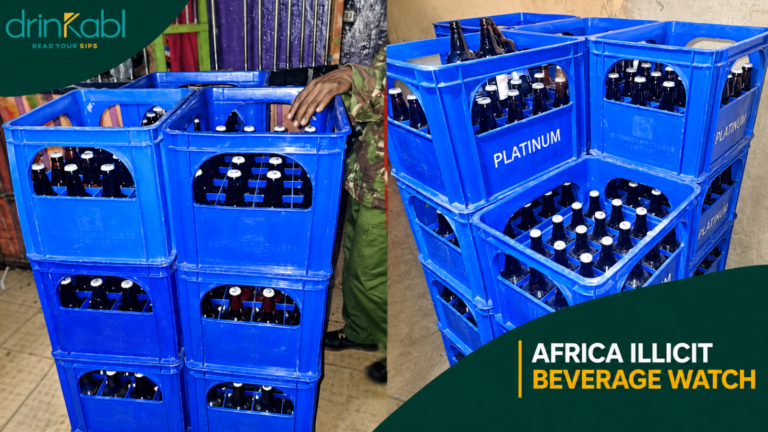
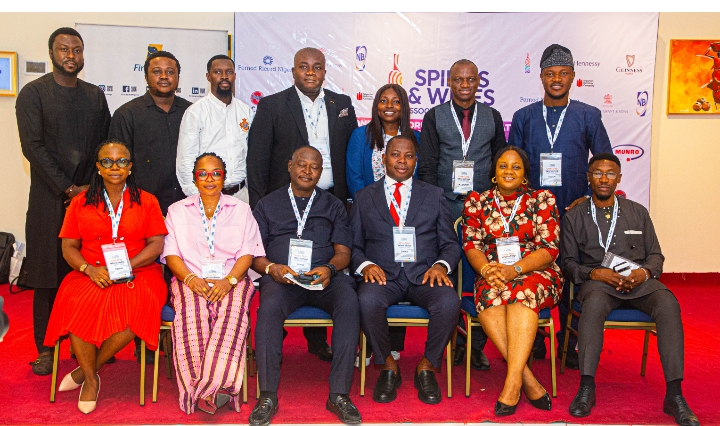

The Spirits and Wines Association of Nigeria convened manufacturers, regulators, law enforcement, and international bodies in Abuja last week to coordinate a cross-sector response to counterfeit and smuggled alcohol, which it says is draining government revenue and undercutting legitimate producers.
The workshop, held at the Continental Hotel, brought together the Standards Organisation of Nigeria, Nigeria Customs Service, NAFDAC, and the FCCPC alongside Interpol and the Alliance Against Counterfeit Spirits. SWAN’s membership includes Bacardi, Diageo, Guinness Nigeria, Moët Hennessy, Nigerian Breweries, Pernod Ricard Nigeria, and William Grant and Sons.
Michael Ehindero, Managing Director of Pernod Ricard Nigeria and SWAN President, framed illicit trade as a supply chain and fiscal problem as much as a brand one. “Governments lose billions in tax revenue, funds that should be supporting education, healthcare, infrastructure, and public safety,” he said. “Legitimate businesses that invest in compliance, quality, and employment are unfairly undercut.”
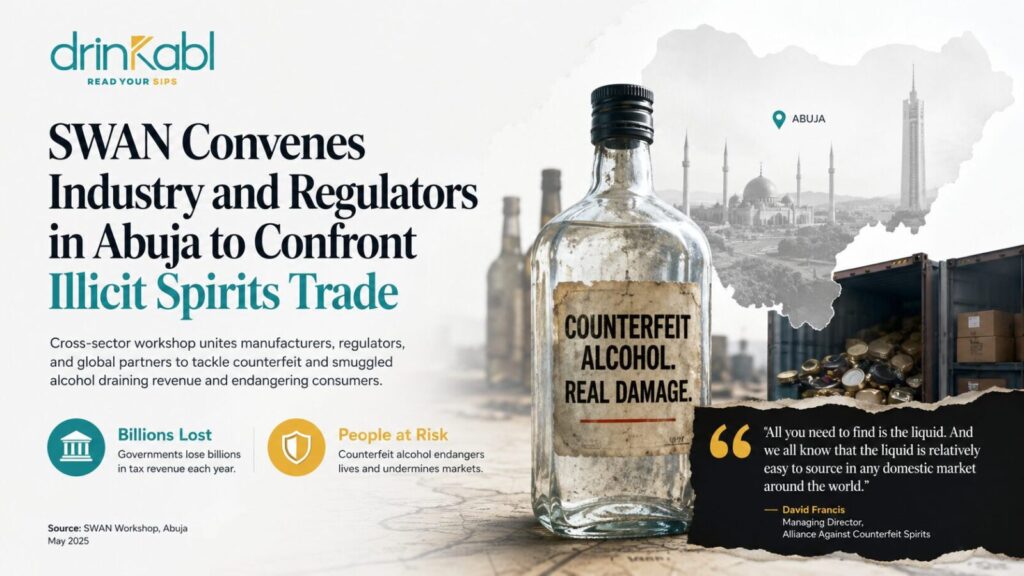
“All you need to find is the liquid. And we all know that the liquid is relatively easy to source in any domestic market around the world.” — David Francis, Managing Director, Alliance Against Counterfeit Spirits
The counterfeit problem has become harder to contain. David Francis, Managing Director of the Alliance Against Counterfeit Spirits, told delegates that sophisticated packaging components, including labels, cartons, bottles, and caps, are being mass-produced in China and shipped into Nigeria as ready-to-use counterfeiting inputs. “All you need to find is the liquid,” he said. “And we all know that the liquid is relatively easy to source in any domestic market around the world.”
Nigeria’s porous borders remain the central operational problem. An Assistant Comptroller of Customs, Kolapo Oladeji, acknowledged that smuggling and tax evasion are directly competing with local manufacturers who pay excise duties. The customs service has enforcement authority at the border but has called for stronger legal and policy frameworks to back it. SON representative Ishaku Mohammed made the same point: no single agency can manage the problem alone.
FCCPC Executive Vice Chairman Tunji Bello described illicit alcohol as a “multi-dimensional crisis” touching consumer safety, public health, and market integrity. The FCCPC’s involvement signals that the enforcement response is being framed increasingly as a consumer protection issue, not just a trade compliance one.
The workshop produced recommendations for a formal multi-stakeholder coordination platform, intelligence-led enforcement, and tighter supply chain controls. Participants also called for whistleblower mechanisms and sustained public awareness campaigns. Whether these translate into operational commitments from agencies with competing mandates and limited enforcement capacity is the question that will determine whether the Abuja meeting produces durable change or another industry resolution.
READ MORE