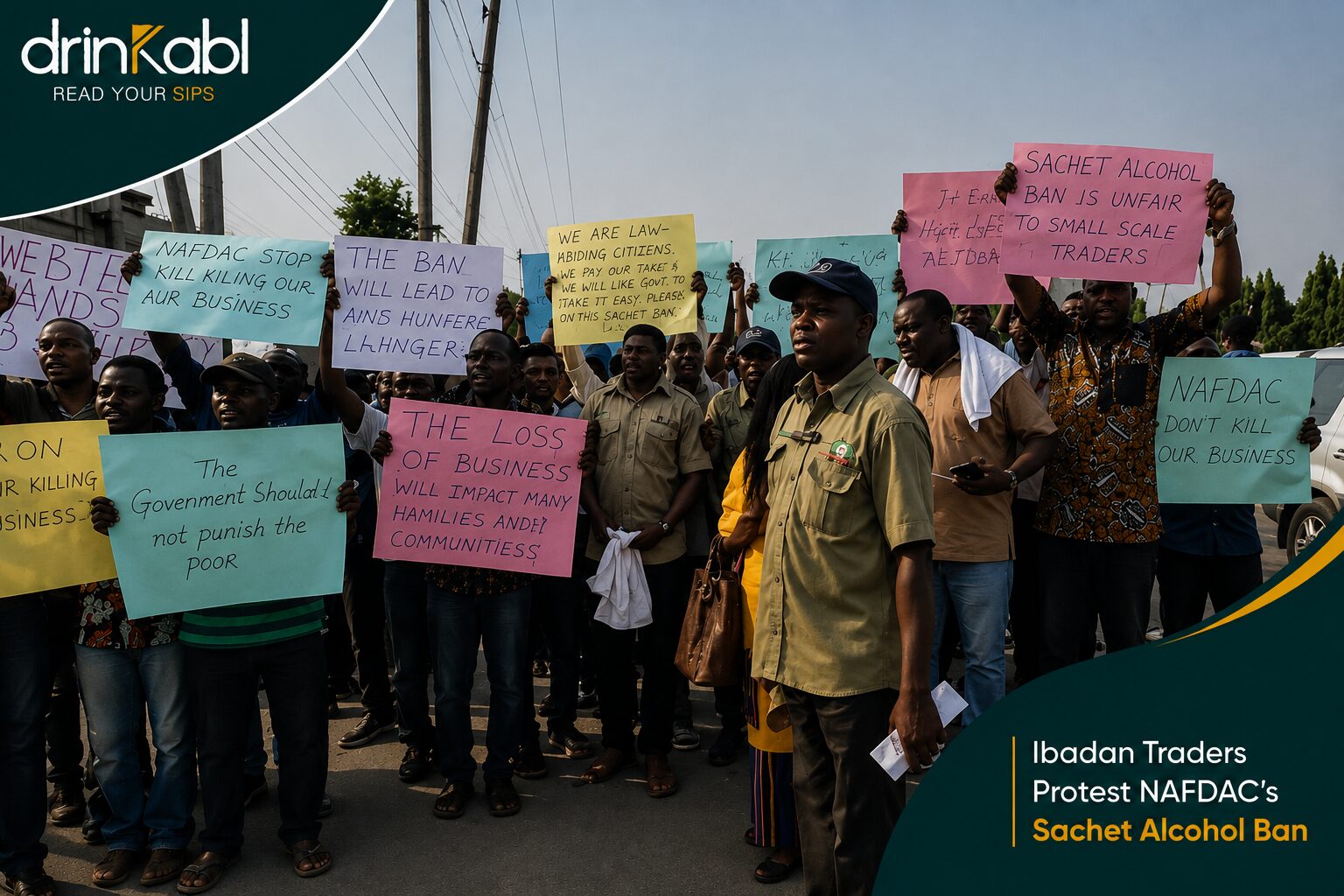

Sachet alcohol sellers in Ibadan’s Beere market protested on Monday, calling on the Federal Government to lift its ban on sachet and small-bottle alcoholic drinks. The traders said the policy has stripped them of their only income, with some warning they could turn to prostitution or street begging to survive. One elderly trader said dozens of people had come to him that morning with nothing left to feed their children.
One protester, a widow raising four children alone since her husband died 16 years ago, said the market was the only way she could provide for her family. Hers is one of many similar stories in a trade that offered low-capital entry into Nigeria’s informal retail economy.
“This market is the only way I feed them.”
Their appeal comes as enforcement shows no sign of easing. NAFDAC opened a nationwide mop-up in July, sending teams into markets, motor parks and retail outlets across all six geopolitical zones, and Director-General Adeyeye has called the ban non-negotiable. The agency has since returned to seal factories accused of resuming production after earlier raids.
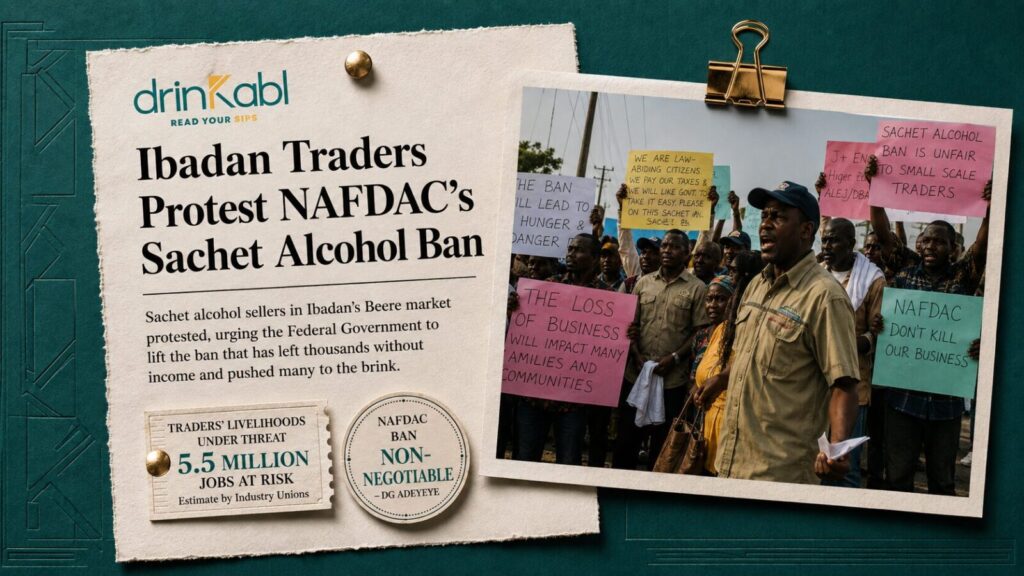
The economic stakes extend well beyond street vendors. A coalition of food and beverage unions estimated in January that the ban could cost as many as 5.5 million jobs across production, distribution and retail, a figure NAFDAC disputes. Sachet formats gave low-income traders a low-capital way into the drinks business; without them, many have no fallback stock to sell.
NAFDAC has held its position since it began enforcing the ban in January, framing it strictly around child safety rather than trader livelihoods. Kenya is weighing a similar trade-off, where regulators have proposed sweeping alcohol retail restrictions over industry warnings that tighter rules could push consumption toward the illicit market. Ibadan’s traders have no assembly hearing scheduled and no sign enforcement will soften, only louder appeals to a government that has yet to respond.
READ MORE