
The case for drinking more is strongest in heat, during effort and in place of sugary drinks. The reference figures behind everyday advice were never written for those days.
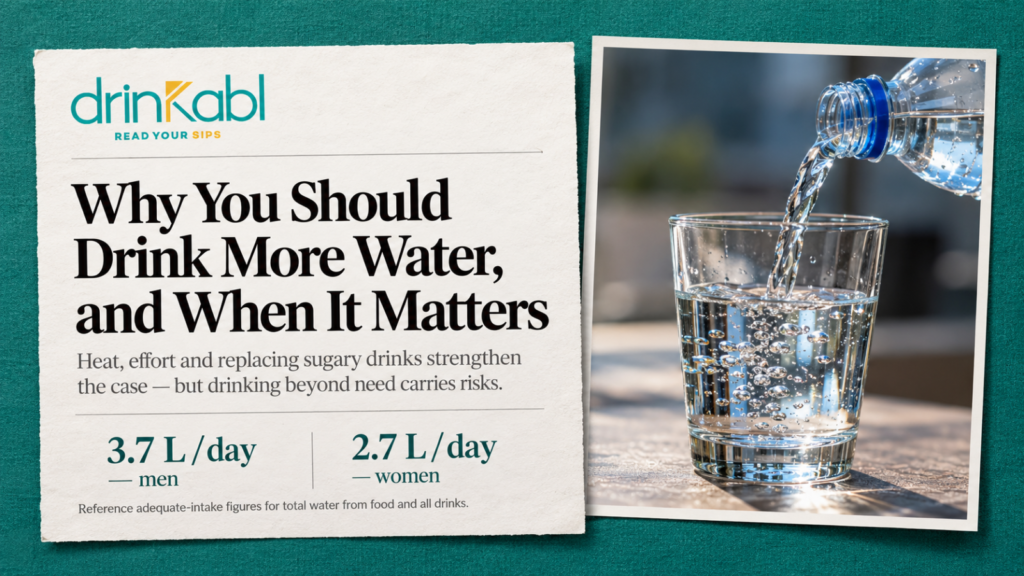
The two numbers most often quoted for daily water are 3.7 litres for men and 2.7 litres for women. Both date from 2004, and both describe what adults who appeared well hydrated in national survey data were already taking in, counting every drink and the water inside food. They were set for healthy, sedentary adults in temperate climates, a group that leaves out anyone whose day involves heat, effort or illness.
This feature sets out the reasons many people should drink more than they do, and the point where that advice stops working. The case has a local edge in Nigeria, where the House of Representatives is being asked to approve a bill that would replace the flat N10-per-litre excise on sugar-sweetened drinks with a levy based on retail price. Public-health advice often proposes water as the swap, so what it can and cannot do is worth settling.
Heat and work take more than the baseline
Hot climates, physical activity, fever, diarrhoea and vomiting all raise the amount the body needs. Sweat is the mechanism, since it evaporates from the skin, carries heat away and takes water and some sodium with it. Studies reviewed when the 2004 figures were set put the total at six litres or more a day for very active people in very hot weather, well above the sedentary numbers. Outdoor work through a Nigerian afternoon is not the day those numbers were built around, and what it costs in sweat depends on intensity, duration and the person.
For exercise lasting under an hour, water is probably enough. Drinks that blend carbohydrate and salts earn their place mostly beyond about an hour or at high intensity, and they bring calories with them. Energy drinks are a different product again, with added sugar and in some cases large amounts of caffeine, so they should not be treated as a hydration choice.
Water is the best thing to pour instead of sugar
Water carries no calories, protein, fat or carbohydrate, so its clearest nutritional advantage shows when it replaces a sugary drink. The swap can lower calorie intake without anyone eating less. The saving comes from what was left out of the cup, and nothing in water burns fat.
Food carries part of the load as well. Many fruits and vegetables hold a lot of water, which is why the reference figures count total water from food and every drink and not only what comes from a tap or bottle. Drinking more, then, often means adding water where a sweetened drink used to be, and not simply adding volume.
The body gives early warning, and it is easy to miss
Water helps the body keep a normal temperature, cushions joints, protects tissue such as the spinal cord and carries waste out through urine, sweat and bowel movements. When intake falls behind, the first signs are ordinary enough to ignore. Thirst, a dry mouth, a headache, tiredness and dizziness all count, as do dark yellow, strong-smelling urine and passing it less often than usual. None of these belongs only to dehydration, so they work as prompts to check intake and not as a diagnosis.
The consequences grow with the deficit. Dehydration can cloud thinking, change mood and push body temperature up, and it can contribute to constipation and kidney stones. Urine colour is only a rough guide because some medicines change it. Confusion or unusual sleepiness alongside dehydration needs urgent medical help, since both can be signs of shock, and anyone a clinician has told to restrict fluids should follow that advice instead of general targets.
Illness changes the sums
Diarrhoea and vomiting drain the body in a different way, because salts leave along with the water. Dehydration from diarrhoea can be prevented with extra fluids at home, and in all but the most severe cases it can be treated cheaply by mouth with a glucose and electrolyte solution known as oral rehydration salts. Plain water supplies none of the salts that solution is built to restore.
Where more stops helping
Drinking more is not automatically safer. Blood sodium can be diluted when someone drinks more than the body can shed during long exercise, a condition called hyponatraemia, and the symptoms include headache, vomiting, confusion and seizures within 24 hours of activity. Sports drinks and salt tablets do not appear to protect a person who overdrinks. Tamara Hew-Butler, who led the 2015 panel of researchers on the problem, has said its main aim was to warn the public about the risks of drinking past thirst while exercising.
The strongest case for drinking ahead of thirst comes from the other end of the problem. In July, Dr Anthony Hemsley, medical director and a consultant geriatrician at Royal Devon in south-west England, said the trust’s emergency departments were seeing many people with advanced dehydration during hot weather, particularly older patients and those with long-term heart and breathing illness. His advice was to spread six to eight cups through the day and not wait until thirsty. The two positions answer different problems, one about people who drink beyond thirst while exercising and the other about people who fall behind quietly at home, which is why the advice to drink more comes with a limit attached.
The 2004 figures remain the baseline most advice starts from, and they still describe a sedentary adult in a temperate place. Whether the House agrees to the sugary-drinks bill is not yet known, and the rate in it has not been confirmed. An earlier version put to a Senate hearing proposed N130 a litre, thirteen times the present duty, which would change the price of the drinks that water is meant to replace.
Read more