
A second inspection, fresh intelligence and allegations of broken regulatory seals suggest Nigeria’s sachet alcohol enforcement is entering a more aggressive phase, raising compliance risks for manufacturers, distributors and retailers alike.
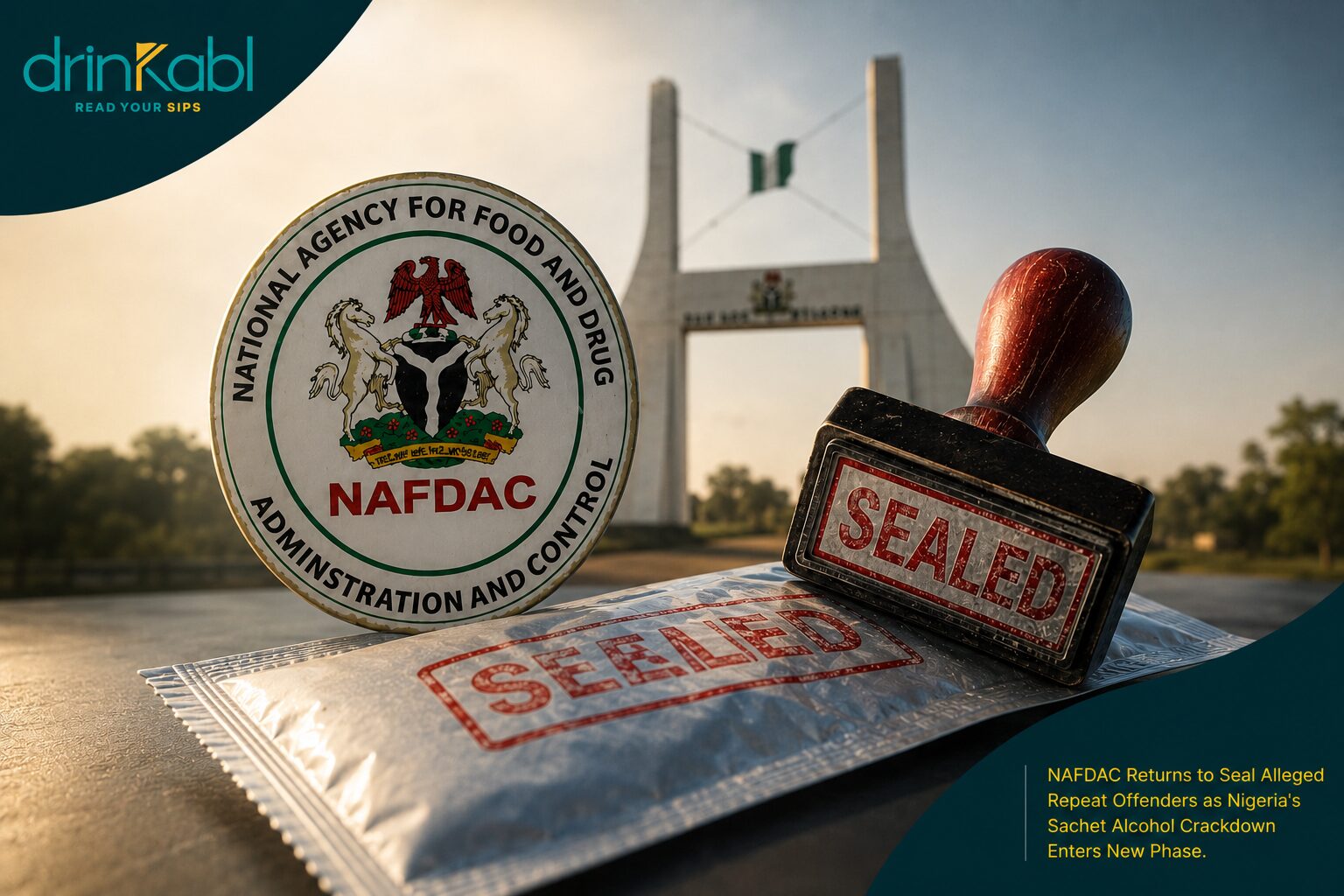
Nigeria’s alcohol industry may have reached a defining moment in its transition away from sachet spirits. The National Agency for Food and Drug Administration and Control (NAFDAC) has sealed three alcohol manufacturing facilities in Ota, Ogun State, alleging they continued producing prohibited sachet alcoholic beverages and small PET bottle products despite previous enforcement actions. While the immediate story is about three factories, the broader significance lies in what the operation says about the regulator’s evolving enforcement strategy.
According to the agency, the enforcement operation was led by officials from its Investigation and Enforcement Directorate. At one facility, inspectors reportedly found sachet alcohol production underway alongside large quantities of PET bottles during an earlier visit. Although production had been halted, a subsequent inspection allegedly revealed that the products placed under regulatory hold had been removed from the premises without authorization, an action NAFDAC described as a serious violation of regulatory procedures.
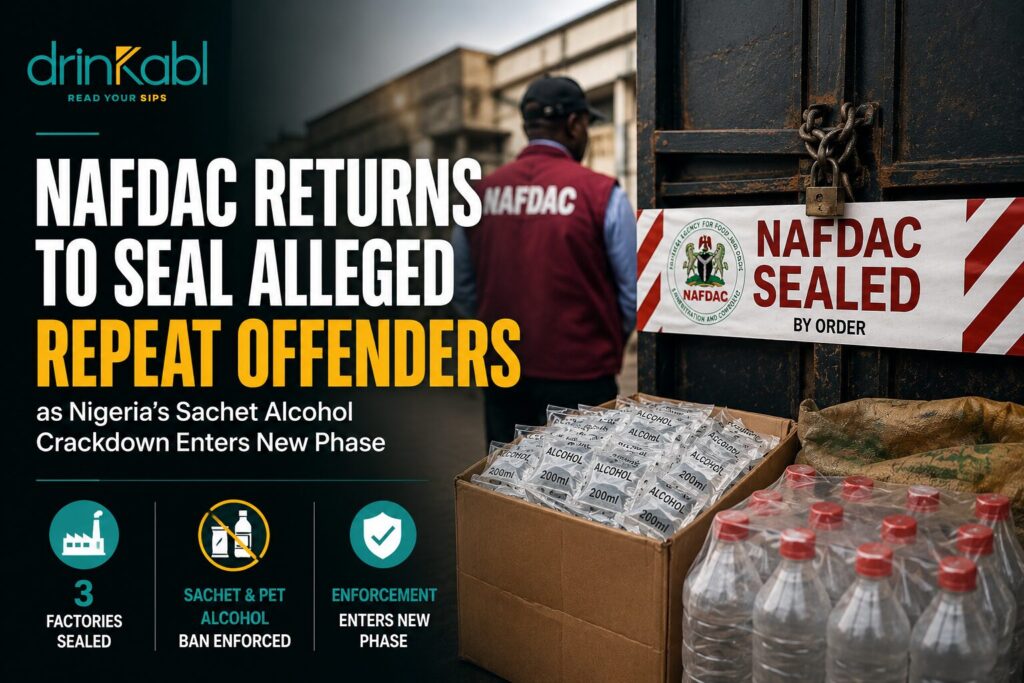
At a second factory, officials alleged that sachet alcohol production was continuing despite the Federal Government’s prohibition, prompting the immediate sealing of the premises.
The third case is perhaps the most consequential. NAFDAC disclosed that it had previously inspected the facility in January, placing 22 production machines on hold while confiscating millions of sachets and PET packaging materials for destruction. During the latest inspection, however, officials alleged that the regulatory seals had been broken and the production lines returned to operation. The agency said millions of additional PET bottles were subsequently discovered, leading to another shutdown of the facility.
Although NAFDAC has not officially identified the affected companies, the allegations represent one of the clearest indications yet that some operators may have attempted to resume production after earlier enforcement measures. Rather than treating the nationwide ban as a one-off exercise, NAFDAC has returned to previously sanctioned facilities, alleging that some manufacturers resumed production after regulatory interventions. For producers, distributors and retailers, the message is becoming increasingly clear: enforcement is no longer episodic. It is becoming sustained, intelligence-led and focused on repeat compliance.
From Policy Announcement to Regulatory Credibility
For much of the industry’s transition period, debate centered on whether Nigeria’s ban on alcoholic beverages in sachets and PET bottles below 200 millilitres would ultimately be enforced with consistency, a question Drinkabl explored in its look at Africa’s sober problem and bigger opportunity.
Manufacturers were granted several years to migrate away from the affected packaging formats following an agreement between regulators and industry stakeholders. That transition period officially ended earlier this year, after which NAFDAC launched nationwide mop-up operations targeting prohibited products across factories, warehouses and retail channels.
The latest operation suggests the regulator is now entering a more assertive phase. Rather than relying solely on initial inspections, enforcement teams are revisiting facilities, verifying compliance and taking action where violations are allegedly found. That evolution is significant because it alters the commercial risk calculation across the industry.
Compliance Is Now an Operational Risk
For beverage manufacturers, the implications extend well beyond the factories sealed this week.
Repeated inspections increase the cost of regulatory non-compliance, particularly for companies that may have delayed packaging conversions or underestimated the likelihood of follow-up enforcement. Internal compliance systems, production controls and inventory management are likely to receive greater scrutiny as regulators demonstrate a willingness to revisit facilities after initial sanctions.
Distributors and wholesalers may also face heightened attention. As production sites become more tightly monitored, enforcement efforts could increasingly shift toward warehouses and distribution networks where prohibited products may still be circulating.
Retailers face similar exposure. With NAFDAC urging consumers to report the sale of banned sachet alcoholic beverages, the agency appears intent on extending enforcement beyond manufacturing to the broader supply chain.
Why Ogun State Matters
The choice of Ota is not incidental.
Located within one of Nigeria’s largest industrial corridors and serving as a critical manufacturing extension of Lagos, Ogun State hosts numerous beverage, food and consumer goods factories supplying markets across the country, several of which feature among the businesses Drinkabl flagged in its list of Nigerian beverage companies to watch in 2026. Enforcement actions within this cluster therefore carry implications well beyond the individual companies involved.
For manufacturers operating in the corridor, the operation reinforces that regulatory oversight is likely to remain concentrated in areas with significant production capacity.
The Questions That Follow
While the factory closures are important, they leave several unanswered questions that could shape the industry’s next phase.
Will NAFDAC pursue criminal prosecutions where companies are found to have deliberately violated regulatory directives? Could product registrations or manufacturing licences be suspended or withdrawn for repeat offenders? Will future enforcement extend more aggressively into warehouses, transporters and retail outlets? And perhaps most importantly, how many additional facilities remain under regulatory surveillance?
The answers will determine whether this week’s operation becomes an isolated enforcement exercise or the beginning of a sustained compliance campaign capable of permanently reshaping Nigeria’s spirits market.
For now, one conclusion is becoming increasingly difficult to ignore. The conversation is no longer about whether Nigeria’s sachet alcohol ban will be enforced. It is about how far regulators are prepared to go to ensure it is.