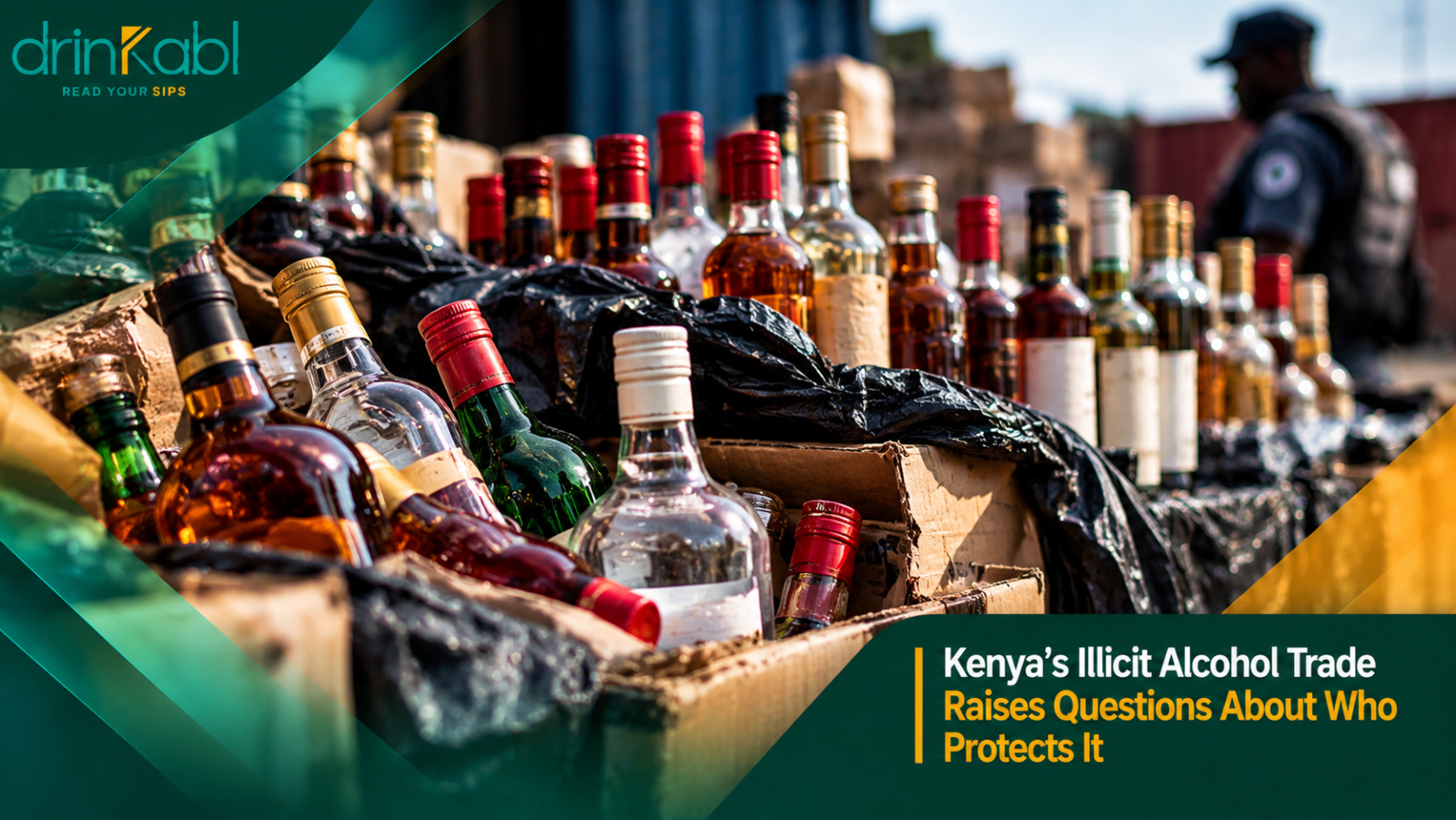

From traditional brews in western Kenya to adulterated spirits in Central Kenya, the country’s illicit alcohol problem takes different forms. The harder question is whether enforcement can dismantle the networks behind it, including any officials who may be helping them survive.
In a video shared on Instagram, a woman identified by the account name Iowa.wanjiru makes a troubling allegation about Kenya’s illicit alcohol trade. “Every election period, new alcoholics are manufactured,” she writes, adding that some never escape addiction and that the alleged participation of government officials is sickening. Her post, accompanied by the hashtag #Kenya, raises questions about the relationship between alcohol, political activity and the people responsible for enforcing the law.
The allegation gains another dimension from a separate video featuring Anthony Omerikwa, chief executive of Kenya’s National Authority for the Campaign Against Alcohol and Drug Abuse (NACADA). He describes differences between the illicit alcohol problems facing western Kenya and the Mount Kenya region, pointing to the distinction between traditional brews and adulterated spirits associated with deadly incidents.
Together, the two accounts raise questions that extend beyond the seizure of illegal drinks. What makes the illicit alcohol trade different across Kenya’s regions? Why do dangerous products continue to reach consumers? And what evidence would establish whether political connections or official interference help sustain the business?
Western Kenya and Central Kenya face different risks
Omerikwa’s regional comparison is more specific than a simple geographical division. Speaking on 12 October 2026, he described western Kenya as facing a substantial problem with traditional illicit brews, while Central Kenya had experienced deadly incidents involving adulterated alcohol. His argument was that authorities must respond to the products and risks specific to each region rather than treating every illicit drink as the same problem. His remarks are documented in this regional assessment of alcohol abuse.
Traditional brews such as chang’aa are associated with informal production, where the ingredients, manufacturing conditions and strength of the finished drink may be difficult to verify. Adulterated spirits present a different concern when alcohol intended for industrial use or other unsuitable substances enter drinks meant for consumption. Counterfeit branded bottles create another problem, particularly when genuine packaging is reused to disguise an unknown liquid. These categories can overlap, but they are not interchangeable, and each requires evidence to establish exactly what has happened.
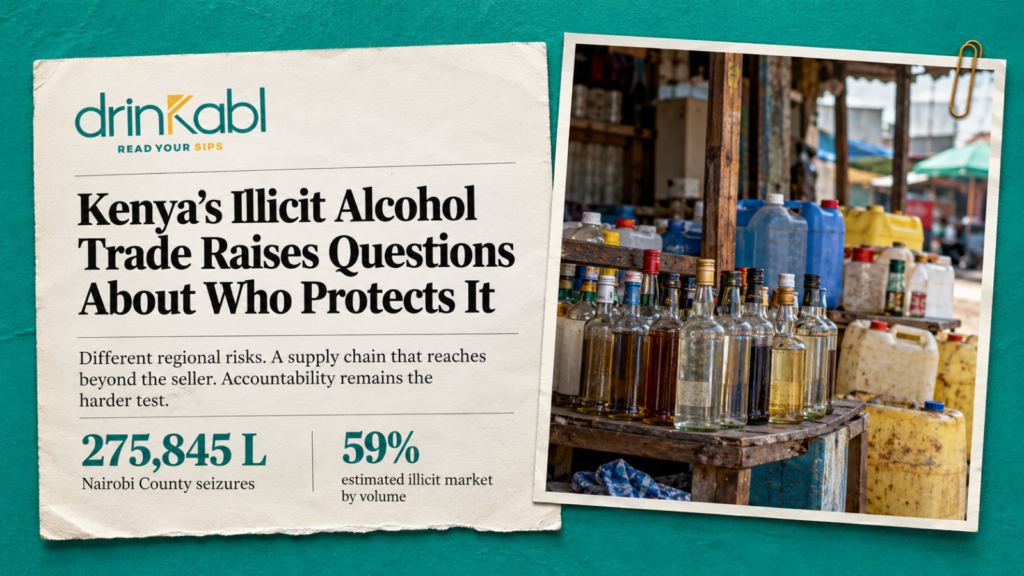
Enforcement figures also caution against assuming that illicit alcohol is confined to western or Central Kenya. NACADA’s reported seizure figures put Nairobi County first, with 275,845 litres of illicit alcohol recovered, followed by West Pokot with 221,338 litres and Meru with 207,031 litres. These figures indicate the geographical spread of enforcement activity, but they do not establish which counties have the highest consumption, the greatest prevalence of addiction or the most dangerous products. Seizures reflect what authorities find and remove, not necessarily the full scale of the underlying market.
The allegation about government involvement
The claim that government officials participate in the illicit alcohol trade is serious, but the available Instagram screenshot does not identify the officials involved, describe a particular transaction or provide documentary evidence of collusion. It is therefore a claim that requires investigation rather than a finding that can be presented as established fact. The same caution applies to the assertion that election periods produce new alcoholics: determining whether alcohol distribution is connected to campaigns requires evidence beyond a social media post.
There are credible reasons to examine the role of public institutions. Kenya’s alcohol control system involves national enforcement agencies, revenue authorities, standards regulators and county governments, each with different responsibilities. County governments, in particular, play a role in licensing alcohol outlets. The possibility of misconduct, selective enforcement or administrative failure deserves scrutiny, but those are distinct explanations and should not be collapsed into a general accusation against public officials.
Establishing political involvement would require more specific evidence. Campaign expenditure records, communications, licensing decisions, witness testimony, enforcement records and court documents could help determine whether alcohol was distributed to influence political participation, whether particular businesses received improper protection or whether officials intervened in investigations. Without such evidence, it would be premature to conclude that election periods systematically drive the illicit alcohol trade.
The supply chain extends beyond the producer
Kenya’s counterfeit alcohol problem is also a commercial and regulatory challenge. In April 2026, the Anti-Counterfeit Authority reported that illicit alcohol accounted for an estimated 59% of the market by volume and 21% by value. It identified porous borders, the diversion of ethanol into illicit production, the refilling of genuine bottles and distribution through social media as problems confronting enforcement agencies. The figures are estimates, but the disparity between volume and value points to a market in which illegal products can compete aggressively on price.
Refilling genuine bottles is particularly difficult for consumers to detect. A familiar label or recognised brand name does not guarantee that the liquid inside came from the named manufacturer or passed the appropriate quality checks. Establishing whether a product is counterfeit or adulterated may require laboratory testing, examination of packaging, verification of tax stamps and investigation of the distribution chain. The distinction matters to legitimate beverage companies because counterfeit products can damage brand trust while leaving consumers exposed to unknown ingredients.
The problem therefore cannot be resolved simply by arresting the person found selling a suspicious bottle. Investigators must establish who supplied the alcohol or ingredients, who provided the packaging, where the finished products were distributed, who financed the operation and whether any oversight failures allowed it to continue. The Anti-Counterfeit Authority, police, revenue authorities and standards regulators each have a part to play, but the value of a raid depends partly on whether the evidence leads to prosecutions and action against the people directing the business.
What accountability would look like
Seizures and public warnings demonstrate enforcement activity, but they do not by themselves establish whether a supply network has been dismantled. A more meaningful assessment would track laboratory findings, prosecutions, convictions, licence cancellations, repeat offences and the recovery of criminal proceeds. It would also examine whether premises found selling illegal products had been inspected previously and whether any documented failures were investigated.
The regional distinction raised by Omerikwa has practical implications for this work. Traditional brewing operations may require investigations into production conditions and the sourcing of ingredients, while suspected counterfeit spirits may require tracing packaging, labels, tax stamps and the movement of branded containers. In both cases, testing the seized product and documenting its origin are essential. Public authorities should disclose enough information about the results and subsequent legal action for the public to assess whether enforcement is working.
The allegation about election periods deserves the same evidential discipline. Investigators and journalists could compare documented enforcement incidents around campaign periods, examine reports of alcohol distribution at political events and interview people with direct knowledge of particular transactions. Any allegation against a named official would need independent corroboration and a fair opportunity for that person or institution to respond.
The woman behind the Instagram post is asking a question about power as much as alcohol. Omerikwa’s remarks identify differences in the products and risks confronting Kenya’s regions, while the evidence on counterfeiting reveals a supply chain that can extend well beyond the person selling a drink. Whether political protection helps that trade survive remains an open question. Answering it will require specific cases, verifiable records and evidence that can withstand scrutiny.